


A fire door can look good at first glance and still raise concerns during an inspection. One of the most common weak points is not the door leaf, closer or seals, but the hinges holding the assembly in place. If hinges are loose, uncertified, badly positioned or mismatched with the tested door set, the fire door may not close or perform as intended.
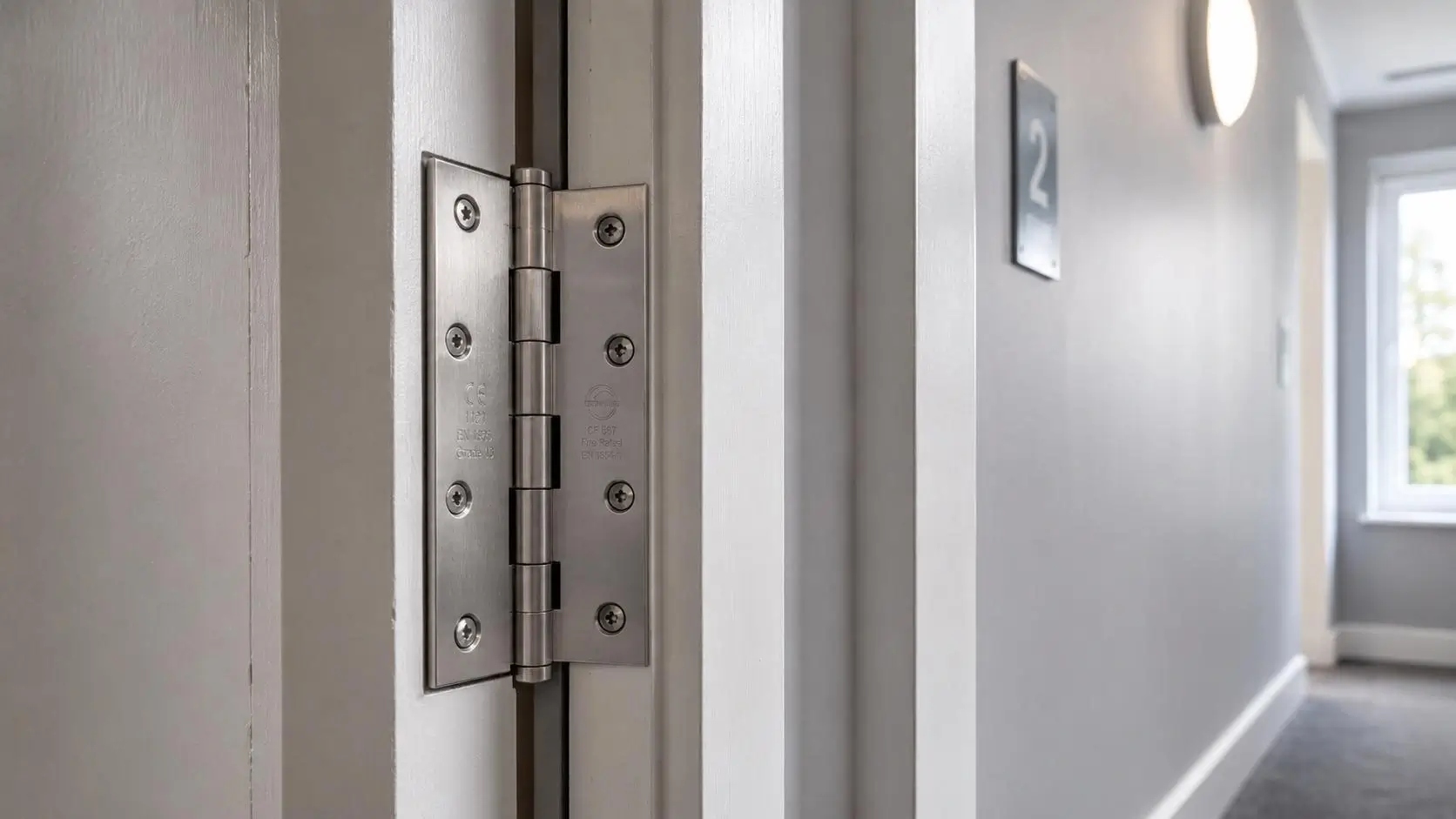
This fire door hinges guide explains how many hinges on a fire door may be required, what fire rated hinges need to prove, why fire door hinge position matters, and when a competent specialist should assess replacement or maintenance.
Why fire door hinges matter before an inspection
Fire doors are complete assemblies. The leaf, frame, seals, closer, latch, glazing, signage and hinges all need to work together. A fire safety door hinge is not just a moving part. It carries the weight of the leaf, keeps the door aligned and helps the door close into the correct position.
If the hinge side drops, the door may drag against the floor or frame. If screws are loose, the leaf may move during normal use. If the wrong fire door hinges are fitted, the door may no longer match the original tested evidence. This fire door hinges guide therefore starts with a simple principle: hinge condition affects gaps, latching, smoke control and inspection confidence.
Hinge numbers, ratings and tested assemblies
The question how many hinges on a fire door is one of the most common before inspections. In many standard UK FD30 and FD60 timber fire-door arrangements, three hinges are commonly used. However, three should not be treated as a universal answer for every door.
The correct number depends on the manufacturer’s instructions, tested door set, door weight, size, frame construction and ironmongery schedule. Heavier, taller or high-use doors may need extra support where the tested specification requires it. A practical fire door hinges guide should therefore start with documentation, not guesswork.
Fire rated hinges are hinges tested and classified for fire-door applications. The hinge must suit the door, not only carry a fire rated label. Fire rated hinges may be sourced through trade counters, online suppliers or searches such as fire door hinges Screwfix, but the important question is whether the exact product is certified for the relevant door set, frame and fire rating.
Position, closing action and concealed hinge details
Fire door hinge position affects how the door carries load and closes into the frame. Poor positioning can cause twisting, dropping, binding, uneven gaps, poor latching and seal damage. Many standard doors use a familiar layout with a top hinge, bottom hinge and middle hinge, but exact positions should not be assumed.
Some heavier, rebated or proprietary door sets need specific tolerances. If there is visible movement, dropped alignment, uneven gaps or signs that hinges have been moved, filled or refixed, the door should be reviewed by a competent person. This fire door hinges guide treats alignment as an inspection issue, not only a maintenance detail.
Self closing fire door hinges and fire rated concealed hinges can be appropriate when they form part of a tested and certified system. The closing action, hinge body, frame preparation and documentation all need to match the door weight, environment and manufacturer’s schedule. This is especially important with architectural doors, EI-rated glazed systems and other proprietary fire-door assemblies.
What inspectors and assessors may look for
A formal inspection should be carried out by a competent person, but building teams can recognise warning signs in advance. A useful fire door hinges guide helps identify issues without turning the reader into an installer or encouraging unsafe repair work.
Before inspection, review whether the number of hinges matches the documentation, whether all screws are present and secure, whether the hinge leaf is flush, whether the knuckle moves freely, whether paint or filler blocks movement, whether corrosion or distortion is visible, and whether the door closes and latches without assistance.
The closing check is especially important. A door that almost reaches the frame but stops short may indicate hinge wear, closer problems, latch resistance, frame movement or poor alignment. Fire hinges should not be judged by appearance alone, because a clean hinge can still be unsuitable if it lacks supporting evidence.
Documentation, defects and replacement decisions
Fire door hinges regulations should be understood as part of wider fire-door compliance. The responsible person should keep records of door locations, ratings, inspection findings, maintenance work and replacement components. Where possible, the ironmongery schedule should identify hinge type, certification and compatibility with the door set.
Replacement may be needed when hinges are corroded, distorted, loose beyond simple correction, unidentified, incompatible with the door set or visibly affecting closing action. Fire hinges that have been painted over, packed out, altered or refixed several times should also be treated with caution. This fire door hinges guide keeps the focus on evidence rather than appearance.
A key point in this fire door hinges guide is that replacement is not ordinary hardware swapping. Fire rated hinges must suit the door, frame, rating and tested assembly. If the existing hinge cannot be identified, or if the original specification is unclear, a competent assessment is the responsible next step.
What to do before the inspection
Before inspection, gather the available documentation for each fire door, including the certificate, manufacturer’s instructions, ironmongery schedule, maintenance history and previous inspection reports. Then compare the visible hinge condition with what the documentation expects.
For buildings with many doors, prioritise high-traffic corridors, communal entrances, stair cores, plant rooms, service areas and flat entrance doors. These locations often experience more wear and may reveal hinge problems earlier than lower-use areas.
A good fire door hinges guide should make one point clear. This fire door hinges guide is not a repair manual: hinges are small components with a large safety role. They affect alignment, closing, latching and evidence of compliance. When the situation is unclear, do not rely on appearance alone. Ask a competent fire-door professional to assess the door set and confirm the correct next step.