


Fire door hinges are easy to treat as routine. Most joiners have hung enough doors to work from habit, but a certified fire door is not a standard internal door. The 3 hinge position on fire doors affects how the leaf sits in the frame, how the closer pulls it shut, how the seals meet the rebate, and whether the doorset still reflects the tested specification.
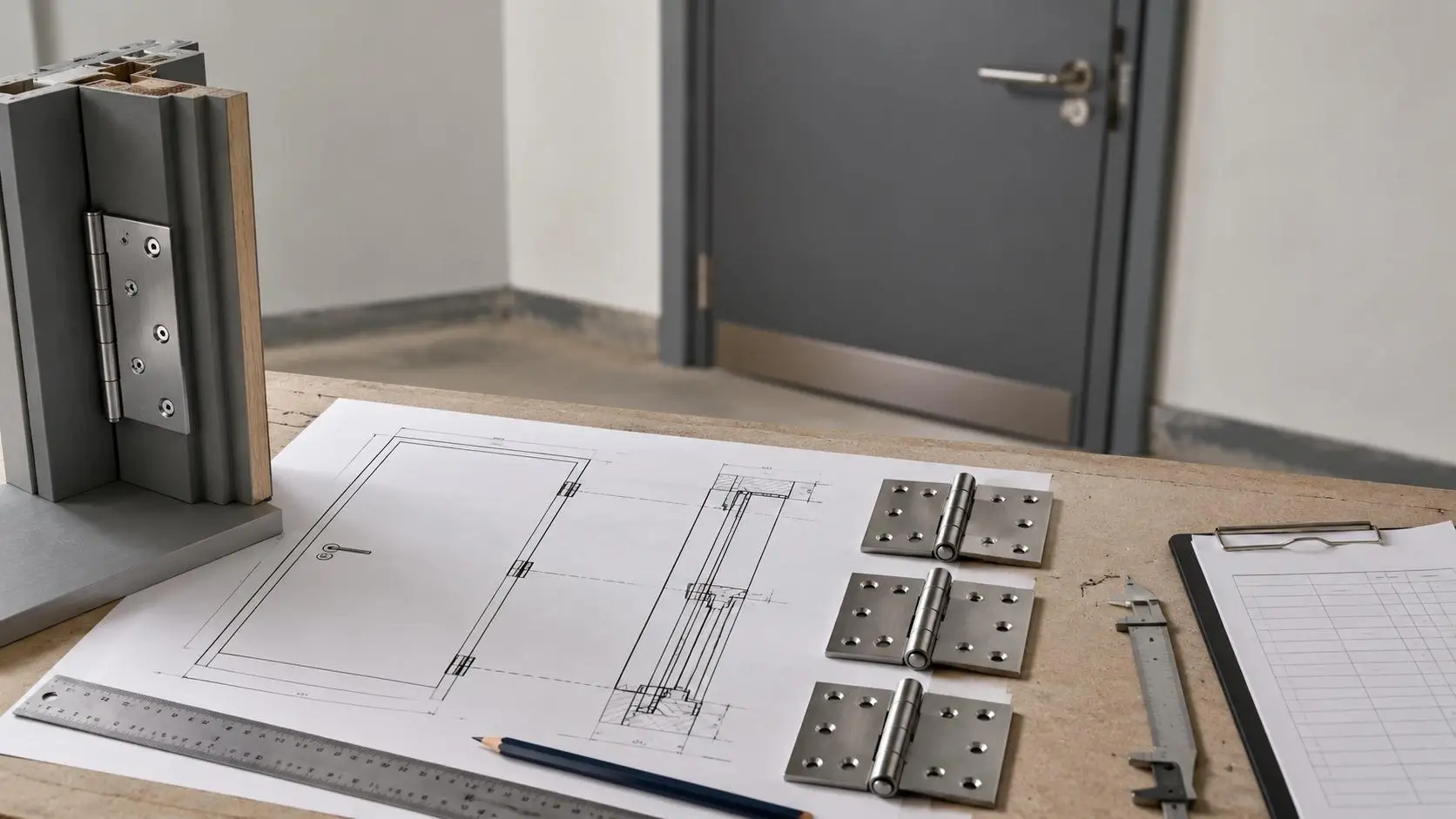
Why Hinges for Fire Doors Matter
Hinges for fire doors do more than carry the weight of the leaf. They help keep the door aligned, support the closer, and maintain the gap around the frame. A fire door is part of a tested fire-resisting assembly, usually with a heavier core, intumescent seals, certified ironmongery and often a self-closing device.
Three hinges are commonly used on UK fire door installations because they give better support and help control movement over time. The exact requirement should come from the tested doorset evidence. If the door manufacturer specifies three certified hinges, fitting two is not a safe shortcut.
This is why the 3 hinge position on fire doors should be treated as part of the fire door specification, not as a joinery preference.
Typical 3 Hinge Position on Fire Doors
A common arrangement for fire door hinge positions is simple: the top hinge sits near the top of the door leaf, the bottom hinge sits near the lower part of the leaf, and the middle hinge is positioned as shown in the manufacturer’s instructions or ironmongery schedule.
Many specifications place the top hinge around 150mm from the top of the door leaf and the bottom hinge around 225mm from the bottom. These are useful reference points, but they are not a replacement for the fire door certificate or installation guidance.
The middle hinge is the one most often fitted incorrectly. On ordinary internal doors, installers may place it centrally by habit. On a certified fire door, it may need to sit in a specific position to match the tested assembly or work correctly with the closer and door leaf size. The correct 3 hinge position on fire doors is not the layout that looks most balanced. It is the layout supported by the specification.
Why the Middle Hinge Is Often Wrong
The middle hinge is more vulnerable to assumption than the top and bottom hinges. It is often placed by eye, copied from another door, or set halfway between the other two hinges without checking the schedule.
That may not cause an obvious problem on a light internal door, but it can matter on a fire door. If the hinge is too high, too low or cut into the wrong back mark, the door may not sit correctly in the frame. Over time, poor hinge positioning can contribute to dropping, binding, uneven gaps or unreliable latching.
For this reason, checking the 3 hinge position on fire doors is one of the simplest ways to catch a problem before sign-off.
Does It Matter Which Side of Hinge Goes on Door?
Yes, it can. The question does it matter which side of hinge goes on door comes up because many hinges look symmetrical at first glance. Some are suitable for either hand of the door, while others have features that make orientation important. Ball-bearing hinges, projection, knuckle position, hinge leaf width and fixing pattern can affect how the door closes into the rebate.
For fire doors, do not assume the hinge can be fitted either way. Check the hinge packaging, markings and schedule. A hinge fitted the wrong way round may still swing, but that does not mean the installation is correct. It may affect the perimeter gap, seal contact, closer action or latch engagement.
The hinge orientation should be checked at the same time as the 3 hinge position on fire doors, because both affect the way the doorset performs.
Self Closing Fire Door Hinges and Closers
The phrase self closing fire door hinges is often used loosely. Some people use it for spring hinges or self-closing hinge devices. Others use it when they really mean a fire door fitted with an overhead closer.
Many fire doors rely on a certified overhead closer rather than spring hinges. The closer must suit the door size, weight, location and usage level. The hinges must also be compatible with the door leaf and the forces created by the closer.
When a closer is fitted, the 3 hinge position on fire doors becomes even more important. If the hinge pockets are poorly cut, the screws are unsuitable, the hinge is underrated, or the middle hinge is wrongly positioned, the door can start to drop or twist.
Hinge Position on Internal Door vs Fire Door
The hinge position on internal door installations is often based on joinery convention, appearance and door weight. On a lightweight door, a small variation in hinge placement will not usually create a compliance issue.
Fire doors are different. The door leaf, frame, seals, hinges, closer, latch and installation method work together as a tested assembly. Standard internal door habits should not become the default method for fire doors.
That is why the 3 hinge position on fire doors must be checked against the relevant fire door documents, not copied from ordinary internal door practice.
What to Check Before Sign-Off
Before signing off a fire door, confirm that the hinges are suitable hinges for fire doors and match the required grade, rating and certification evidence. Check that the number of hinges matches the manufacturer’s instructions and that the fire door hinge positions follow the certificate, installation instructions or ironmongery schedule.
The hinge leaves should be fitted the correct way round, with the right knuckle orientation and fixing pattern. Screws should be the correct type, size and length for the tested specification. If intumescent hinge pads are required, they should be fitted correctly.
Finally, test the door as a complete assembly. It should close fully and latch without manual assistance. The gaps should be even and within the manufacturer’s stated tolerances. The intumescent and smoke seals should be undamaged and correctly seated.
This sign-off process should always include the 3 hinge position on fire doors, because hinge placement affects alignment, closer action and long-term performance.
Common Site Mistakes
Most hinge defects come from rushing the set-out or treating the fire door like a standard internal door. Common issues include placing the middle hinge centrally when the schedule says otherwise, mixing hinges from different batches, using non-fire-rated hinges, omitting required intumescent hinge pads, cutting hinge pockets too deep, using unsuitable screws, fitting the hinge the wrong way round, or failing to re-check gaps after closer adjustment.
If there is any doubt about the 3 hinge position on fire doors, stop and check the tested specification before the door is signed off.
Final Guidance
The correct 3 hinge position on fire doors depends on the fire door specification, not memory. Generic measurements can help with initial understanding, but the certificate, installation instructions and ironmongery schedule are the documents that matter.
For contractors and responsible persons, the safest approach is straightforward: check the hinges before cutting, check the door after fitting, and record any defect that affects compliance. Get the 3 hinge position on fire doors right, and the doorset has a much better chance of closing, latching and performing as intended.