


This FD120 Fire Doors Guide is for projects where a standard FD30 or FD60 approach is not enough. FD120 doors are normally specified where the fire strategy calls for 120-minute compartmentation, such as high-risk plant rooms, protected stair or lobby areas, industrial facilities, specialist healthcare spaces or higher-risk residential buildings.
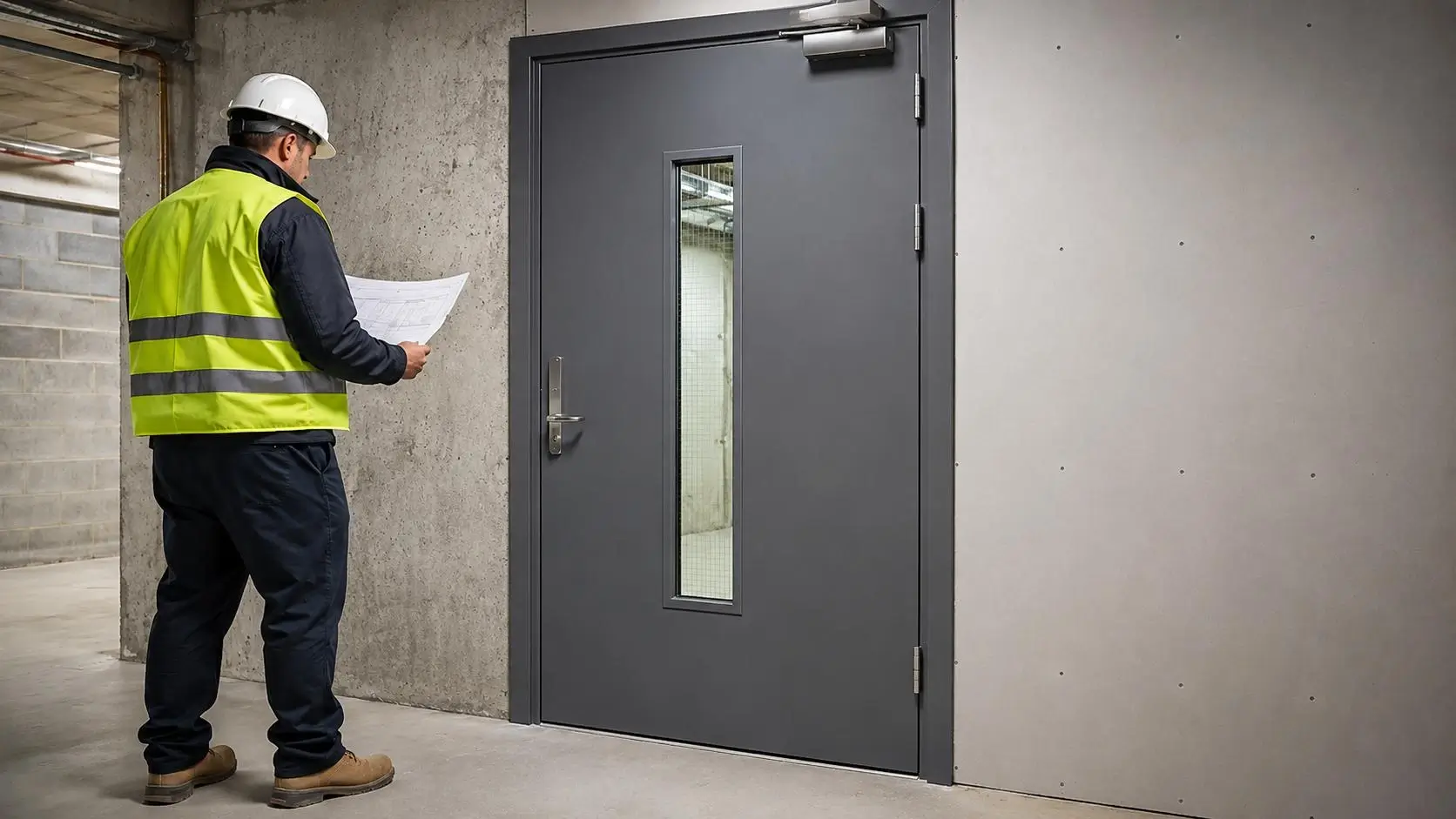
The first point in any FD120 Fire Doors Guide is that the rating applies to the tested assembly, not just the door leaf. The frame, seals, glazing, ironmongery, fixing method and installation instructions all matter. If one part is changed without supporting evidence, the completed doorset may not provide the performance shown on the certificate.
What FD120 Means
FD120 means a fire door has been tested to provide 120 minutes of fire resistance for integrity when installed in accordance with the tested configuration. The relevant evidence may refer to BS EN 1634-1 or BS 476: Part 22. The certificate should confirm exactly what was tested and what scope is allowed.
Integrity means resistance to flames and hot gases. It does not automatically mean insulation on the unexposed face. If the project needs both integrity and insulation, the design may require an EI120 doorset rather than a standard FD120 doorset. This FD120 Fire Doors Guide should therefore be read alongside the project fire strategy, not as a replacement for it.
FD120 Fire Door Specification
A proper FD120 fire door specification starts with evidence. Before the schedule is approved, ask for the certificate, test report, assessment, declaration of performance, installation instructions and ironmongery schedule. Do not rely on brochures alone.
Check whether the evidence covers a complete doorset or only a blank. FD120 doors usually have tighter limits than lower-rated products, so confirm the permitted leaf size, lipping, core construction, frame material, rebate details, intumescent protection, hinge type, closer grade and permitted glazing. If the opening is outside the certified scope, the project may need a different product or a formal assessment by a competent specialist.
Specify from the tested evidence first, then design the opening and ironmongery around it.
FD120 Doors Are Not Upgraded FD60 Doors
FD120 is not just a heavier version of FD60. The core, frame, seals, glazing system and hardware may all be different. A supplier cannot make an FD60 product into FD120 simply by adding heavier hinges or changing the closer.
That distinction matters because substitutions often happen late in a project. A similar-looking seal, hinge, frame section or glazing bead may still fall outside the tested scope. If the supplier proposes an alternative, ask for written confirmation that it is covered by the certificate or a valid assessment. This FD120 Fire Doors Guide recommends treating every substitution as a compliance question, not a procurement adjustment.
FD120 Internal Doors and High-Risk Locations
FD120 internal doors are most likely to appear where the fire strategy requires a longer period of separation. Typical examples can include firefighters’ lobbies, protected stair areas, plant rooms, service risers, basement routes and industrial compartment walls. The exact requirement should always be confirmed against the fire strategy, Approved Document B where relevant, and the building control route.
On higher-risk buildings, documentation needs particular care. The Building Safety Act 2022 and gateway process place greater emphasis on clear design and construction evidence for higher-risk residential projects. This does not mean every FD120 door automatically falls into the same process, but it does mean the project team should confirm documentation expectations early.
FD120 Fire Door and Frame Compatibility
The FD120 fire door and frame should be treated as one system. A certified FD120 leaf fitted into an untested or retained frame can create a compliance risk, even if the frame looks substantial. The frame material, section size, fixing centres, packers, sealing method and connection to the surrounding wall should be checked against the tested evidence.
Pre-hung FD120 doorsets can reduce site risk because the leaf, frame, seals and hardware are supplied as a coordinated assembly. They still need competent installation, but they reduce the number of site decisions that can move the doorset away from its evidence. This FD120 Fire Doors Guide recommends considering pre-hung sets early where programme, access and opening dimensions allow.
Glazing and Ironmongery
Glazing in FD120 doors needs careful control. Fire-rated glass must be approved for the door assembly, not only fire-rated in isolation. Aperture size, glass type, bead material, fixings and glazing seals should all match the certificate or assessment.
Ironmongery needs the same discipline. FD120 leaves can be heavy, but exact weight, hinge count and closer grade vary by manufacturer and doorset design. Do not assume four hinges, a specific EN 1154 closer grade or a standard gap tolerance unless the manufacturer’s schedule requires it. The safest FD120 Fire Doors Guide rule is to verify every item before ordering and again before sign-off.
FD120 Fire Door Installation Checks
FD120 fire door installation should be carried out by a competent installer with access to the current installation instructions. Before sign-off, confirm that the leaf dimensions, frame, hinges, closer, latch, seals, glazing and fixing method match the approved evidence.
Check perimeter gaps with a gauge and use the tolerances stated by the manufacturer or project specification. Confirm that intumescent strips and smoke seals are undamaged and correctly seated. Test the closer through repeated cycles and make sure the door closes and latches without manual help. If the door fails to latch reliably, it should not be treated as a compliant working fire door.
This FD120 Fire Doors Guide also says to record any deviation immediately. Where an installed doorset does not match the evidence, seek competent assessment rather than relying on an on-site judgement.
Final Sign-Off Guidance
Before approving FD120 doors, ask four questions. Does the FD120 fire door specification match the fire strategy? Does the FD120 fire door and frame match the tested evidence? Has the FD120 fire door installation followed the manufacturer’s instructions? Are the seals, glazing, closer, latch and gaps working as a complete assembly?
The main lesson from this FD120 Fire Doors Guide is that performance depends on the whole doorset. Use this FD120 Fire Doors Guide at specification stage, again before ordering, and once more before handover. A final evidence check is far cheaper than discovering after installation that the leaf, frame, glazing or hardware cannot be justified.