


A fusible link is a small component with an important fire safety role. It holds a fire-rated assembly in position until heat reaches a specified activation point. When the link releases, the connected shutter, damper, vent or similar assembly can move into its fire safety position without manual operation.
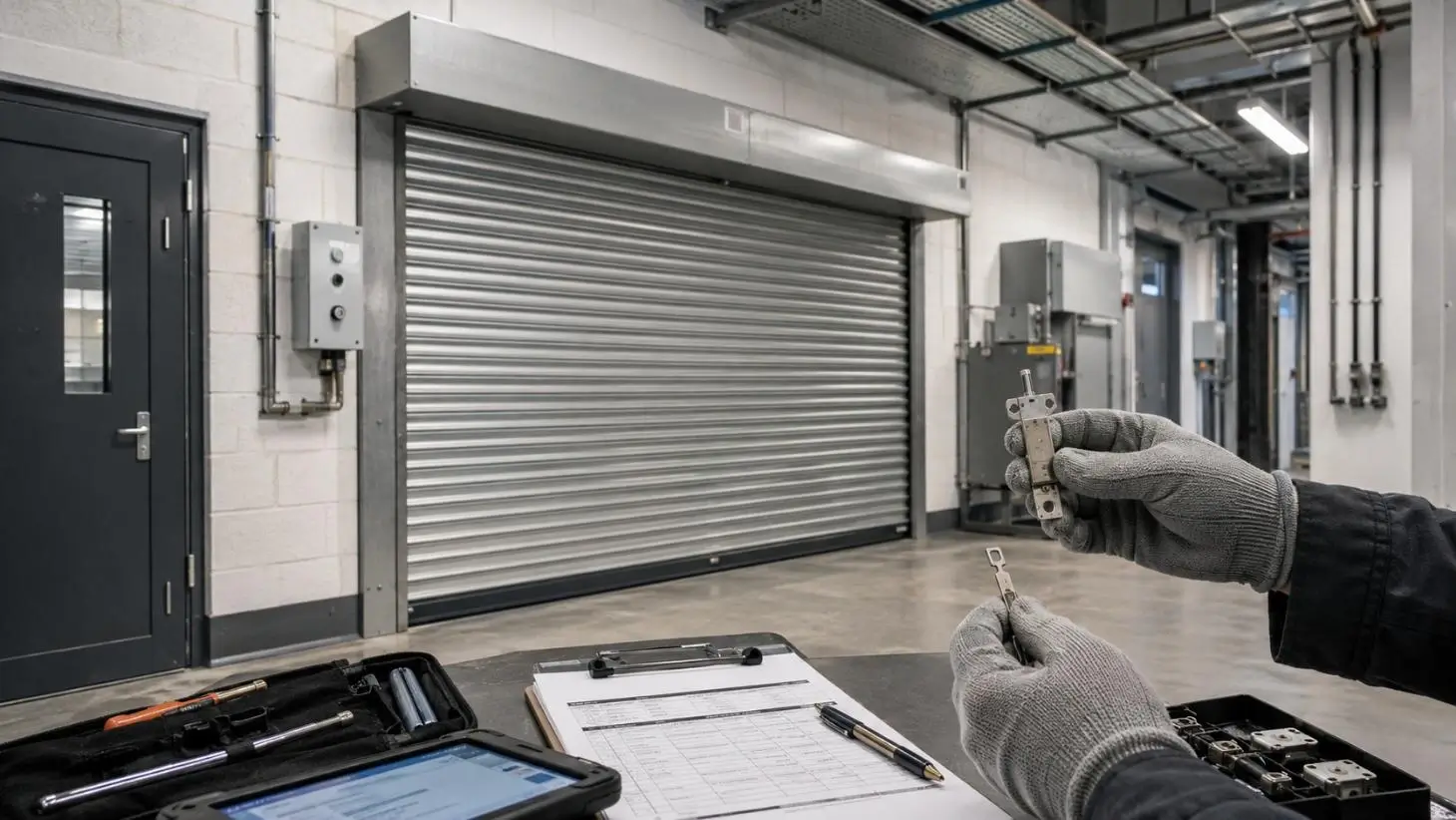
This windowhalt fusible link guide explains how the system works, where it may be used, what to check against fire shutter regulations UK, and how to make sure the component is correctly specified, installed, maintained and recorded.
How a windowhalt fusible link works
A Windowhalt fusible link uses a temperature-sensitive connection that releases when exposed to heat. In normal conditions, the link holds a mechanical restraint under load. During a fire, heat causes the link to separate, allowing the connected assembly to activate.
In a shutter application, that may allow a fire shutter to close across an opening. In a damper application, it may allow a blade to close within ductwork. In some window, vent or release systems, it may form part of an automatic release arrangement defined by the manufacturer.
This windowhalt fusible link guide should not be read as a substitute for the product certificate or manufacturer documentation. The correct activation temperature, load, installation position and replacement requirements must be checked against the specific system being specified.
The principle is simple, but the specification is not. A fusible link must be selected for the actual environment, the assembly it controls and the fire strategy it supports.
Where it fits in a fire shutter assembly
A fire shutter fusible link is commonly used as part of an automatic release system. The shutter may be held open during normal use, then released to close when the link activates. This can help protect a compartment line, loading bay, service opening, corridor opening or other fire-rated barrier.
A fusible link fire shutter should always be considered as a complete tested assembly. The shutter curtain, guides, bottom bar, barrel, release mechanism and fusible link all need to work together. Changing the link, fitting a different temperature rating or using a non-approved component can affect whether the shutter remains within the certified scope.
This is why the specification should not say only fusible link to suit. It should identify the shutter system, the approved fusible link type, the rated temperature if applicable, the location, the release arrangement and the manufacturer’s evidence.
A useful windowhalt fusible link guide should focus less on the link alone and more on the assembly it controls.
For example, a loading bay shutter may be correctly specified at design stage, but later maintenance could replace the original link with a visually similar alternative. If that replacement part is not approved for the shutter assembly, the system may no longer match the evidence used to justify it.
Fusible links in dampers, vents and other systems
The same release principle can also appear in dampers, vents, windows and other fire safety assemblies. A fusible link fire damper, for example, may use heat activation to close a damper blade and restrict the passage of fire and hot gases through ductwork.
However, a shutter link and a damper link should not be assumed to be interchangeable. The activation load, temperature rating, installation position and test evidence may differ. A Windowhalt component suitable for one duty may not automatically be suitable for another.
This windowhalt fusible link guide recommends checking each application separately. The relevant certificate, field of application, manufacturer instructions and fire strategy should confirm that the fusible link is suitable for the exact assembly and location.
The same caution applies to windows and vents. If a release component forms part of a fire-rated or smoke control system, the project team should verify whether the full system has evidence for that function. Adding a fusible link to an ordinary product does not make the product fire rated.
Fire shutter regulations UK and compliance checks
Fire shutter regulations UK should be approached through the wider fire strategy, Building Regulations context, Approved Document B guidance, relevant standards, Building Control expectations and product evidence. The required performance depends on the building type, opening location, compartmentation strategy and use of the space.
If a shutter protects an opening in a fire-resisting barrier, the full assembly needs evidence for the required fire resistance performance. If it is part of an automatic release arrangement, the release mechanism should be included within the tested or approved scope. The same applies where the fusible link forms part of a damper, vent or similar assembly.
For higher-risk or more complex buildings, documentation is especially important. The handover information should identify the system, location, product evidence, approved components, installation details and maintenance requirements. Facilities teams should know exactly which link is fitted and what replacement part is permitted.
This windowhalt fusible link guide avoids treating compliance as a single certificate. In practice, compliance comes from the correct product, installed in the correct way, supported by the correct evidence and maintained through the life of the building.
Rated temperature selection
Rated temperature selection is one of the most important specification points. A link must not release during normal operating conditions, but it must activate early enough to support the fire strategy.
A higher temperature rating is not automatically safer. It may reduce nuisance activation in warm environments, but it can also delay release during a fire. A lower temperature rating may activate earlier, but it may be unsuitable near heat-generating processes, kitchens, plant rooms or industrial equipment.
The correct rating should be checked against the manufacturer’s data, the expected ambient temperature at the installed position, the fire strategy and the assembly certificate. If the environment is unusual, the fire engineer or manufacturer should confirm the appropriate selection.
This windowhalt fusible link guide recommends recording the reason for the chosen rating. That record helps future maintenance teams avoid replacing the component with the nearest available alternative.
Automatic release and what fusible links do not provide
A fusible link can support automatic fire shutter release, but it does not behave like an electrically monitored actuator. It releases mechanically when exposed to the required heat condition. That simplicity can be an advantage because it does not depend on a control panel, signal cable or power supply.
The limitation is that a purely mechanical link may not provide remote confirmation that it has activated. In a large building with multiple shutters or dampers, the fire safety plan may need manual inspection procedures or a separate monitoring strategy if the facilities team must know which assemblies have deployed.
This does not make fusible links unsuitable. It simply means the operational response should match the system. If the building requires remote status indication, the design team should confirm whether the chosen assembly provides it or whether another release and monitoring arrangement is needed.
This windowhalt fusible link guide makes that distinction because mechanical reliability and electronic feedback are different design priorities.
Installation and replacement risks
Installation should follow the manufacturer’s instructions and the tested arrangement. The link must be fitted in the correct position, under the correct load, with the correct connection to the release mechanism. Poor positioning can affect activation. Incorrect loading can affect reliability. Unapproved substitution can affect certification.
Replacement is another common risk. A fusible link may look like a small, generic component, but it should not be treated as one. The replacement part should match the approved type, rating and load requirements for the system.
If a maintenance contractor replaces a link with a different product because it appears similar, the assembly may move outside the approved scope. This is especially important where the fire shutter, damper or vent has been certified as a complete system.
Keep the approved part reference in the O&M manual, asset register and maintenance records. That makes future servicing clearer and reduces the risk of accidental substitution.
Inspection, maintenance and documentation
Fusible links should be included in the building’s fire safety maintenance regime. The exact inspection and replacement frequency should come from manufacturer guidance, the product certificate, the fire strategy and the maintenance provider’s instructions.
Maintenance records should show which assembly was inspected, which link was fitted, whether the release path was clear, whether any test was completed and whether replacement was required. For fire shutters, records should also confirm that the shutter closes correctly and that the guides, curtain, bottom bar and release mechanism remain in serviceable condition.
For property owners and facilities managers, documentation is not only an administrative task. It is how the building proves that the system installed at handover is still the system being relied on years later.
This windowhalt fusible link guide also recommends retaining photographs, product references, certificates and maintenance logs in one accessible fire safety record.
What to check before specification
Before specifying a Windowhalt fusible link system, check:
- The fire strategy requirement for the opening or duct
- The assembly type, such as shutter, damper, window or vent
- The required fire resistance or release function
- The approved fusible link type and rating
- The field of application for the complete assembly
- The installation position and connection method
- The maintenance and replacement instructions
- The documentation required at handover
This windowhalt fusible link guide is not about choosing a small component in isolation. It is about confirming that the component supports the certified fire safety assembly.
Before the spec is locked
A Windowhalt fusible link can be a reliable part of a fire-rated shutter, damper, vent or release system when it is correctly selected and documented. Its strength is mechanical simplicity. Its weakness is that it depends on correct specification, correct replacement and clear maintenance records.
Before the schedule is locked, confirm the link type, rated temperature, activation load if applicable, field of application, installation detail and maintenance route. If any of those items are missing, resolve them before procurement.
The safest approach is to treat the fusible link as part of the life safety system, not as a minor accessory. That is the core message of this windowhalt fusible link guide.