


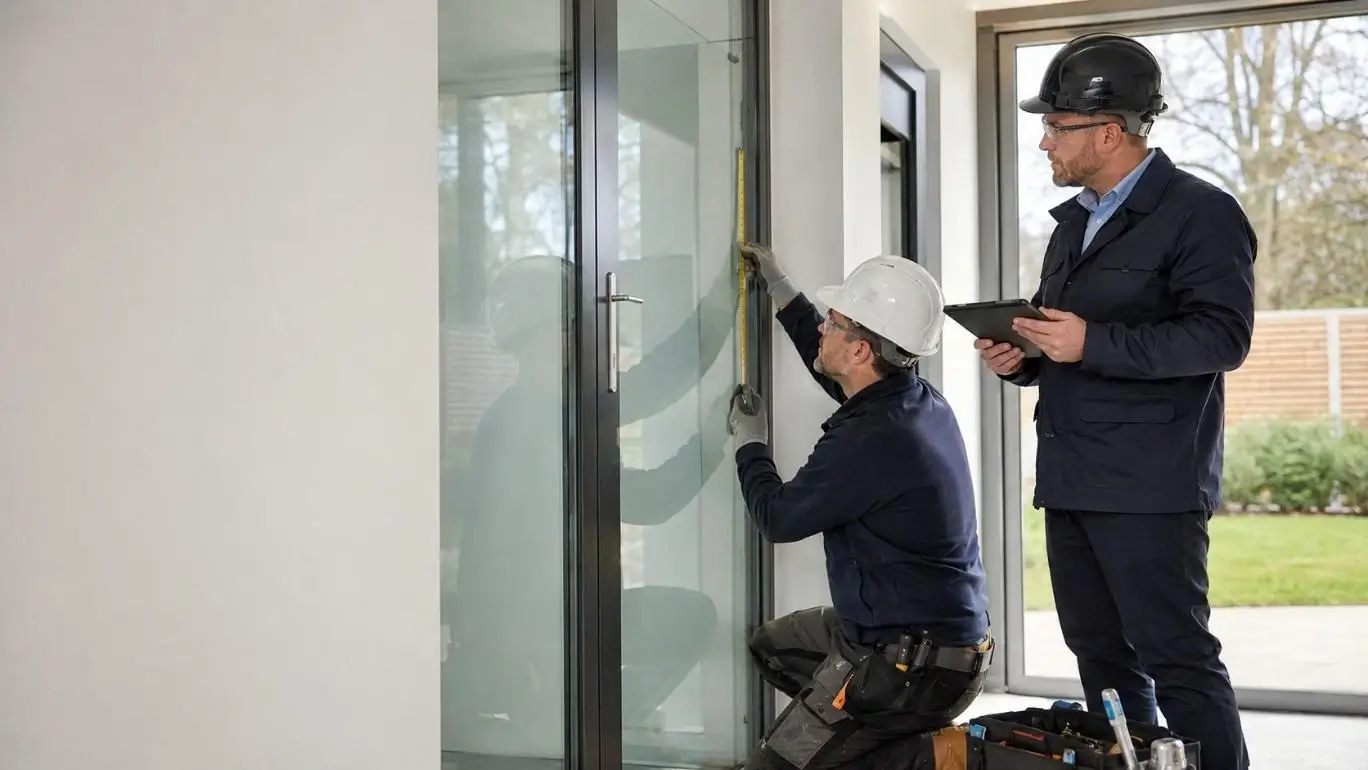
A glazier installs toughened glass in a bathroom door. The job looks clean, the glass is clear, and the product paperwork looks fine at first glance. Then building control asks for proof that the pane is suitable for a critical location. If the paperwork does not show the right bs6206 glass standard or BS EN 12600 classification, the whole unit may need to come back out.
That is an expensive mistake, but it is avoidable. The bs6206 glass standard exists to show that safety glass has been tested for human impact. In plain terms, it helps prove that glass in higher-risk locations will either break safely or stay together if someone falls or walks into it.
For builders, glaziers, architects and developers, the practical question is simple: where is the glass being installed, and does the certificate match that use?
Why critical locations matter
The bs6206 glass standard does not apply to every pane of glass in a building. It matters most in critical locations, which are areas where people are more likely to collide with the glass.
In England, this guidance is now covered by Approved Document K. Older documents and some industry references may still mention Approved Document N, because that was the previous glazing safety guidance. The key point is that safety glazing is required in defined risk areas. These include glass in doors up to 1500mm from floor level, side panels within 300mm of a door up to 1500mm from floor level, and low-level glazing in walls or partitions up to 800mm from floor level.
This is where many site errors happen. A full-height side panel next to a front door is usually a critical location. A high-level window above the risk zone may not be. The issue is not only the type of glass. It is where the glass sits and how likely it is that someone could hit it.
What the BS6206 glass standard tests
The bs6206 glass standard uses an impact test. A weighted impactor swings into the glass from set heights. The test checks whether the glass can resist impact or break in a safer way.
Ordinary annealed glass can break into large sharp shards. That is the danger the standard is designed to avoid. Safety glazing under bs 6206 usually works in one of two ways. Toughened glass breaks into small, less dangerous fragments. Laminated glass holds broken pieces together with an interlayer, often made from PVB.
So the glass standard is not just a label. It tells you whether the glass has been tested for the type of impact that can happen in real buildings.
BS6206 Class A, B and C explained
The bs6206 standard has three main impact classes: Class A, Class B and Class C. Class A is the highest of the three.
BS6206 class a means the glass has passed the impact test at the highest drop height used in the standard. In practical terms, this is the level most commonly expected for critical locations, especially where there is a clear risk of someone walking or falling into the pane.
Class B and Class C are lower impact classifications. They may be suitable in some lower-risk situations, but they need to be justified against the project requirements and the building control position.
On many UK projects, the simplest approach is to specify Class A toughened or laminated safety glass in critical locations. It avoids arguments later and gives the inspector clearer evidence.
How BS EN 12600 fits in
BS EN 12600 is the European impact test standard for safety glass. You may see it instead of, or alongside, the older bs6206 glass standard on product documents.
BS EN 12600 glass classifications look different. A common example is 1(B)1. The first number relates to the impact height, the letter shows the breakage type, and the final number relates to the highest drop height at which the glass did not break or broke safely.
In simple terms, 1(B)1 is often associated with toughened safety glass tested at the higher impact level. But you should not assume every BS EN 12600 result is the same as every BS 6206 result. The certificate should be checked properly.
If a schedule says glass bs6206a but the supplier provides only BS EN 12600 paperwork, ask them to confirm the equivalent classification and provide current UK-accepted certification. The same applies if the product is described as bs6206a tempered glass on a data sheet.
What BS6206A tempered glass really means
The term bs6206a tempered glass usually means toughened glass that has achieved Class A under BS 6206. You may also see this written as glass bs6206a.
Toughened glass is heat-treated to make it much stronger than ordinary annealed glass. It is commonly used in doors, side panels, low-level glazing and other areas where impact safety matters.
But there is an important limitation. Toughened glass cannot be cut, drilled, notched or altered after it has been toughened. If the hinge position, handle hole or notch is wrong, it cannot simply be adjusted on site. The pane usually has to be remade.
That is why dimensions, hardware positions and edge details need to be confirmed before ordering. This is one of the easiest ways to avoid delays and replacement costs.
What the standard does not cover
The bs6206 glass standard is about impact safety. It does not prove fire performance. It does not prove acoustic performance. It does not prove thermal performance. It does not prove structural capacity.
This matters when glass is used in specialist locations. A fire door vision panel, for example, may need both a fire resistance test result and a safety glazing classification. These are separate requirements. Passing one does not automatically mean the glass passes the other.
The same applies to acoustic partitions, high-level facades, balustrades and overhead glazing. Safety impact classification is only one part of the specification.
What to check before ordering
Before placing a glazing order, check every pane against the critical location rules in Approved Document K. If the pane is in a critical location, make sure the product has suitable safety glazing evidence under the bs6206 glass standard or bs en 12600.
Then check the details. Confirm the glass thickness, product type, impact class, certification scope, marking, dimensions and whether any holes, notches or special edges are needed. A certificate for one thickness or make-up may not cover another.
Also check substitutions. A replacement product may look identical on the schedule but have different certification. If the paperwork no longer matches the installed glass, building control may reject it.
The safest approach is simple: identify the critical locations first, specify the correct safety glass, and keep the certificate with the project records. The bs6206 glass standard is not just a paperwork exercise. It is there to reduce injury when people collide with glass, and to help make sure the right product is installed before the inspector asks for proof.