


Fire Windows Specialists in Manchester
Fire windows are a critical safety feature for buildings in Manchester. They provide certified protection against flames and smoke while helping properties comply with UK fire safety regulations. From commercial developments to residential buildings, fire-resistant windows combine safety, compliance, and modern architectural design.
Our certifications







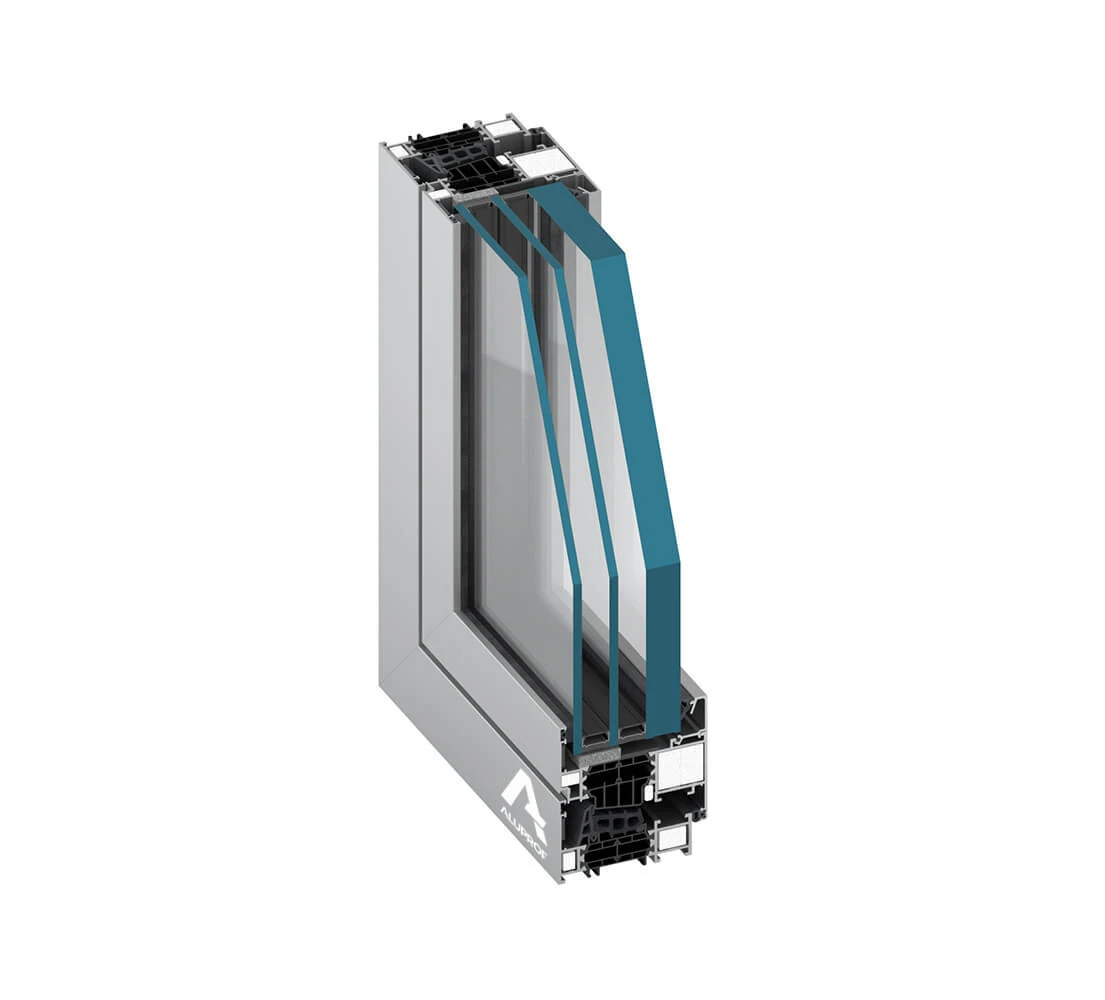
Fire windows, also known as fire-resistant windows, are specially designed glazing systems that help prevent flames, smoke, and heat from spreading during a fire. Unlike standard windows, they are built with tested fire-rated glass and fire-resistant frames, often steel, aluminium, or timber with intumescent seals, to maintain integrity for a specified duration, typically 30, 60, 90, or 120 minutes. Their purpose is to support fire compartmentation, protect escape routes, and improve building safety while complying with UK fire safety regulations.
For Manchester projects, the window should be treated as a complete tested system, not only as glass placed into a frame. The glazing, frame, fixings, seals and surrounding construction all affect whether the system performs as expected during fire exposure before any order is placed or opening is prepared.
Why Are Fire Windows Important in Manchester
Manchester has a wide mix of building types, including residential blocks, offices, healthcare buildings, schools, universities, public buildings, commercial spaces, warehouses, industrial facilities, and heritage properties. Many projects also involve refurbishment, conversion, or mixed-use layouts where fire compartmentation must be carefully planned.
This makes early coordination important. Architects, contractors, fire consultants and building owners should confirm the required rating before openings are built or refurbished, as late changes can affect frame depth, glass thickness, fixing methods and installation details.
In these settings, fire-resistant windows help control how flames, smoke, and heat move through a building. They may form part of a wider fire strategy, especially where glazing is used near corridors, stairwells, compartment walls, internal screens, or protected escape routes.
Fire windows help:
– Protect escape routes, including corridors, stairwells, and protected lobbies.
– Limit fire spread in flats, offices, schools, hospitals, and public buildings.
– Support compliance with UK Building Regulations and fire safety requirements.
– Reduce liability risks for property owners, landlords, developers, and facilities managers.
Why Every Building In Manchester Must Consider Installing Fire Windows
Beyond compliance, fire windows offer:
Life Safety: They help provide additional time for safe evacuation and emergency response.
Property Protection: They can reduce fire spread, structural damage, and disruption to business or building use.
Legal Compliance: They support adherence to Building Regulations, Approved Document B, relevant BS standards, and fire safety duties.
Insurance Advantages: Some insurers may view certified passive fire protection measures positively when assessing building risk.
Aesthetic Flexibility: Modern fire window systems can be designed to suit both contemporary buildings and traditional or heritage-style properties.
A well-specified system can also reduce later disruption because the required rating, frame finish, maintenance access and glazing performance are considered before procurement. This is useful for occupied buildings where installation work must be planned carefully around residents, staff, students or visitors.
How Fire Windows Are Rated in Manchester?
Fire ratings for windows (tested to BS EN 1364-1) are categorized by performance under extreme heat. The rating should be chosen from the fire strategy or Building Control requirements, not only from visual preference. Two windows may look similar after installation but provide different levels of integrity, insulation or radiation control. The three key classifications are:
1. E Fire Windows (Integrity Only)
Measures how long the window prevents flames and hot gases from penetrating (e.g., E30 = 30 minutes).
Use Case: Suitable where heat insulation isn’t critical (e.g., non-escape route partitions).
2. EI Fire Windows (Integrity + Insulation)
Combines flame/heat blockage and limits temperature rise on the non-fire side (max 140°C average, 180°C peak). Critical for escape routes.
Such as:
EI30: 30-minute resistance (common in residential corridors).
EI60: 60-minute resistance (high-risk areas like stairwells).
EI90/EI120: Extended protection for industrial or high-rise buildings.
3. EW Fire Windows (Radiation Control)
Definition: Blocks flames and reduces radiant heat transfer (but doesn’t fully insulate).
Example: EW30 windows might be used in facades where some heat leakage is tolerable.
Why Do fire Windows Ratings Matter?
Escape Routes: EI-rated windows prevent heat transfer, allowing safe evacuation.
Compartmentation: E-rated windows delay fire spread between rooms.
Architectural Needs: EW-rated glazing may suffice for aesthetic façades with lower risk.
For example: A Manchester office block might use EI60 windows in stairwells (to meet 60-minute compartmentation rules) but E30 in internal partitions.
During specification, it is also important to consider how close people may be to the glass during evacuation. A protected corridor, stair lobby or escape route often needs a different level of performance than a screen used only for separation or visibility.
Fire Windows We Offer in Manchester
Interested in Fire Windows?
Ensure your building complies with UK fire safety standards by choosing certified fire windows suitable for Manchester projects. Designed for residential, commercial, public, and industrial settings, fire windows provide essential protection by containing fire and smoke for up to 120 minutes. Contact us to get a quote!
Where Are Fire Windows Typically Used?
Fire windows are critical in buildings where compartmentation and escape route protection are required:
– Stairwells & Fire Escapes: Mandatory for high-rises to protect evacuation paths (typically EI60-rated).
– Commercial Buildings: Offices, hospitals, and schools use EI30/EI60 windows in corridors and atriums.
– Residential Blocks: Flats require fire-resistant glazing in separating walls (meeting Approved Document B).
– Industrial Sites: Factories and warehouses use E-rated windows to slow fire spread between zones.
– Heritage Buildings: Slim-profile fire glazing preserves aesthetics while upgrading safety.
Fire windows in Manchester are also useful in mixed-use buildings where residential, retail, office, and service spaces meet within one structure. They help separate higher-risk areas such as plant rooms, commercial kitchens, bin stores, basement corridors, and service risers while keeping visibility and natural light between spaces. This is particularly valuable where solid fire-resistant walls would make circulation routes feel closed or difficult to supervise.
Compliance with UK Fire Safety Regulations
UK law mandates fire windows meet strict standards, including:
– BS EN 13501-2: Classifies fire performance (E, EI, EW ratings).
– Building Regulations Approved Document B: Requires fire-resistant glazing in escape routes and compartment walls.
– The Fire Safety Order (2005): Ensures ongoing compliance for commercial properties.
– Local Authority Approvals: Manchester projects may require building control approval, fire consultant input, or project-specific certification depending on the building type and use.
For responsible persons, compliance also depends on keeping information accessible after installation. Product certificates, rating details, drawings and maintenance records help future inspections, refurbishment works and fire risk assessments remain connected to the original specification.
Materials and Design Options Available
Modern fire windows balance safety with aesthetics:
Window Glass Types
– Wired Glass: Traditional but less aesthetic (E-rated).
– Ceramic Glass: Slimmer, high-performance (EI-rated).
– Laminated Fire Glass: Combines safety with clarity (up to EI120).
Frame Materials
– Steel: Most durable (high-rise/commercial use).
– Timber with Intumescent Seals: Residential/heritage appeal.
– Aluminium: Lightweight + powder-coated finishes.
Window Design Flexibility: Custom tints, Georgian bars, and dual-functionality (e.g., acoustic + fire resistance).
Made-to-measure fire windows are important in Manchester refurbishments because many properties have older openings, uneven reveals, listed-building constraints, or non-standard partition layouts. Custom sizing allows the glazing system to fit cleanly into the available aperture, align with surrounding doors or partitions, and maintain the tested clearances around the frame. This reduces site alterations and supports a more reliable finished installation.
The visual specification should be matched to the building as carefully as the rating. Steel frames provide a slim, robust profile for commercial, heritage, and high-use areas. Aluminium frames offer a clean modern look with powder-coated colours that match facades, internal screens, or door systems. Timber-framed solutions suit residential and traditional interiors where a warmer finish is needed.
The chosen frame material should suit the building conditions as well as the design. High-use commercial areas need impact resistance and easy cleaning, while heritage or residential interiors may need slimmer profiles, careful fixing details or warmer finishes.
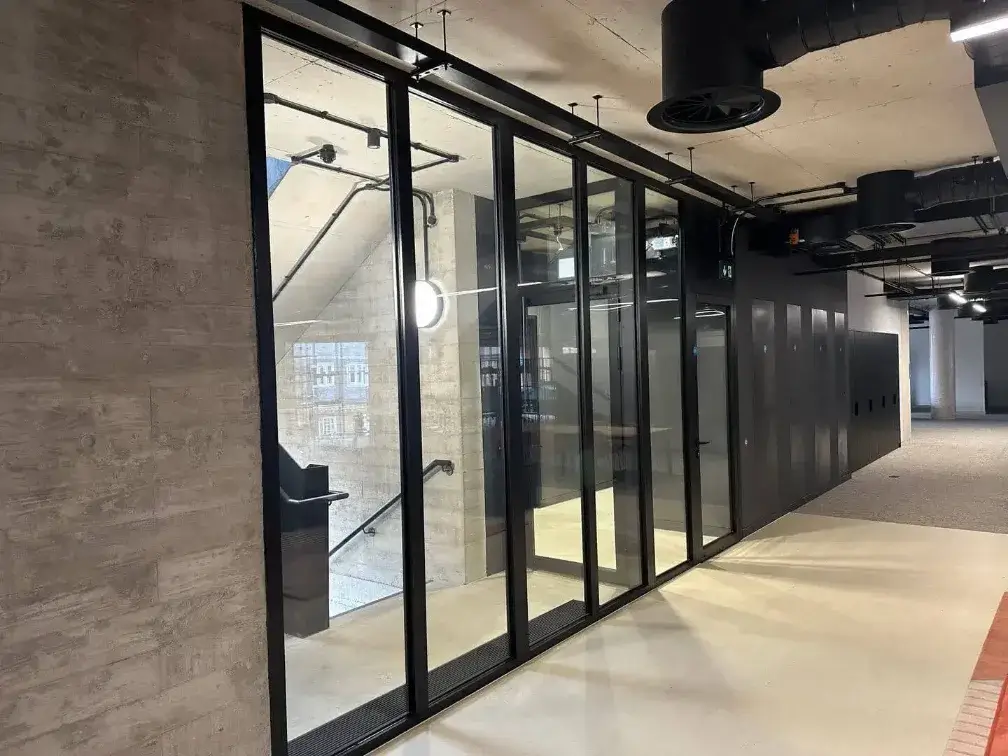
Our most recent completed project
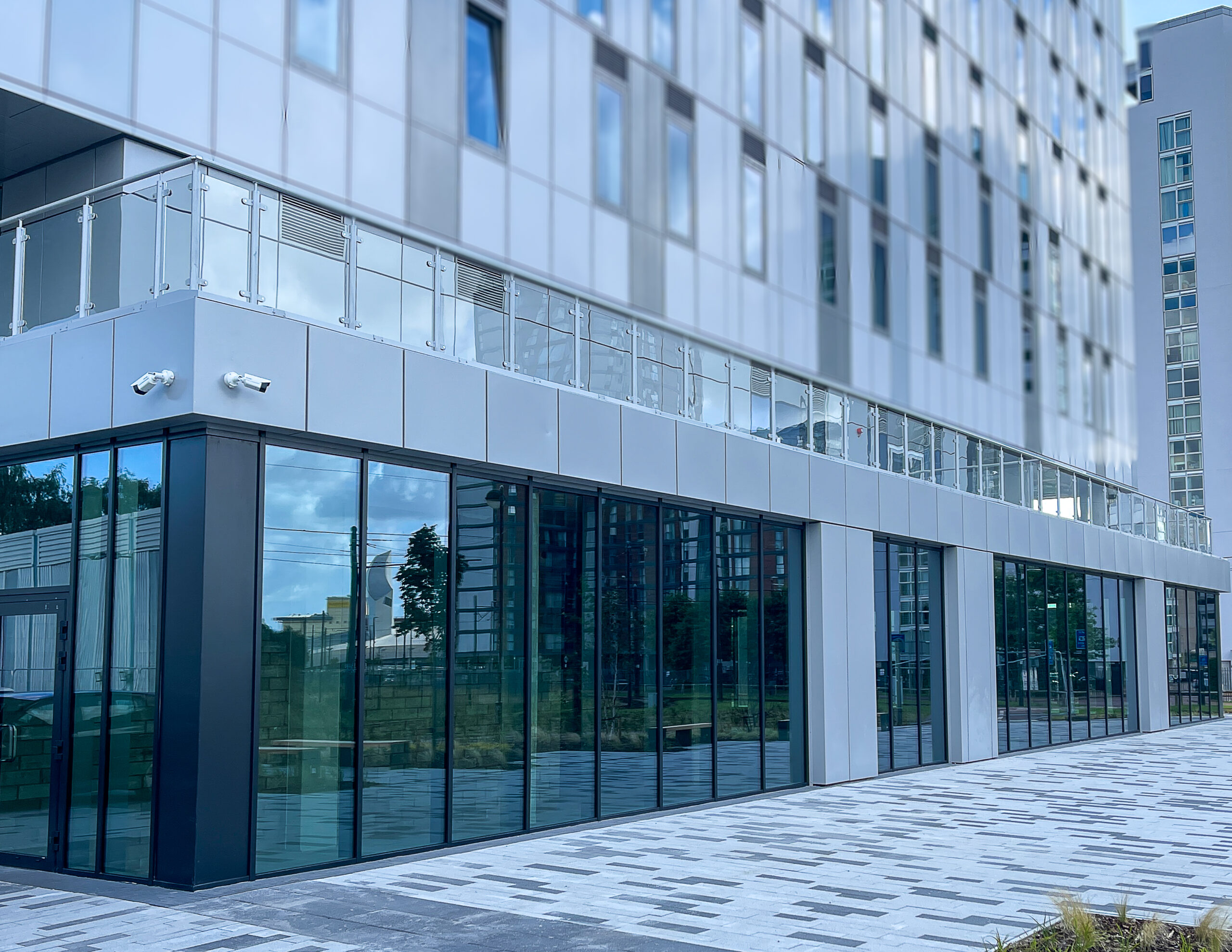
EI60 doors
Project systems MB-86 EI D
Fire Windows Maintenance & Inspection
Lifespan: 20–30 years if properly maintained.
Upkeep:
– Annual inspections of seals and frames (per Fire Safety Order).
– Immediate replacement if glass is cracked or seals degrade.
– Cleaning with non-abrasive products to avoid damaging intumescent strips.
Inspection should look for cracked glass, damaged beads, loose fixings, failed seals, corrosion, movement in the frame and any alterations around the opening. Fire-rated glazing should not be drilled, cut or modified after installation.
Get Fire Windows in Manchester
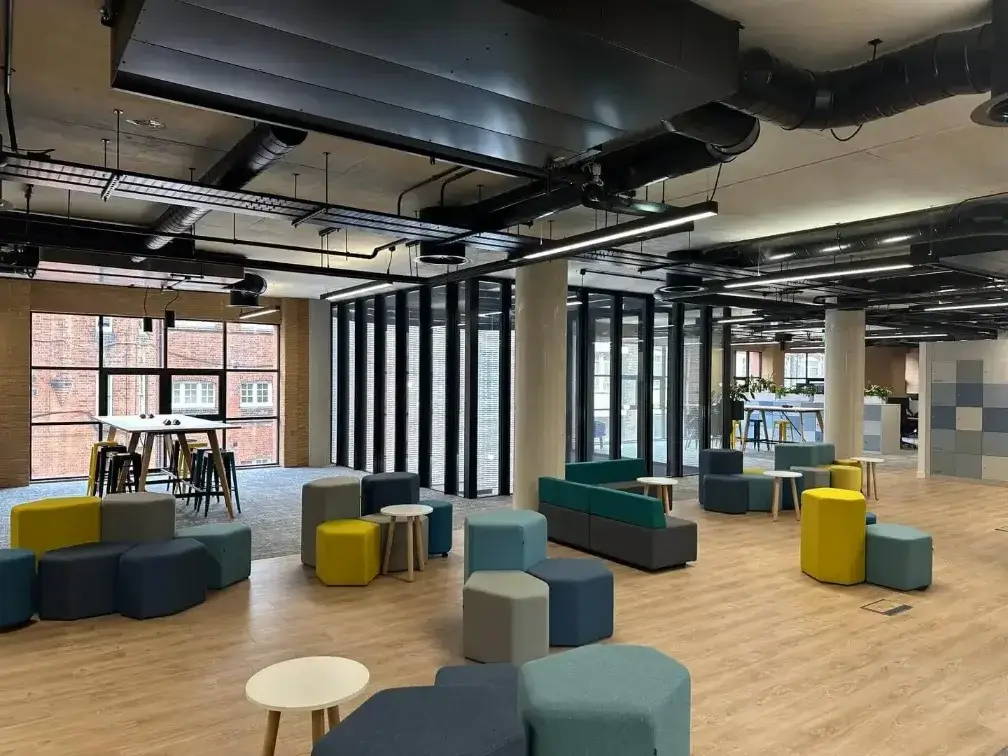
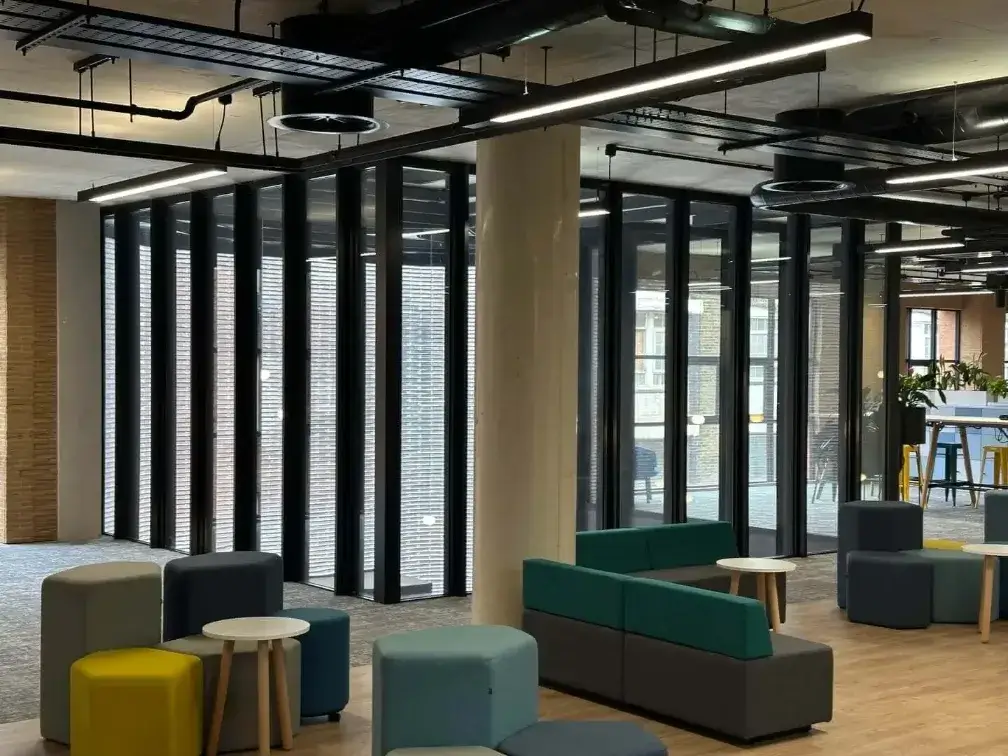
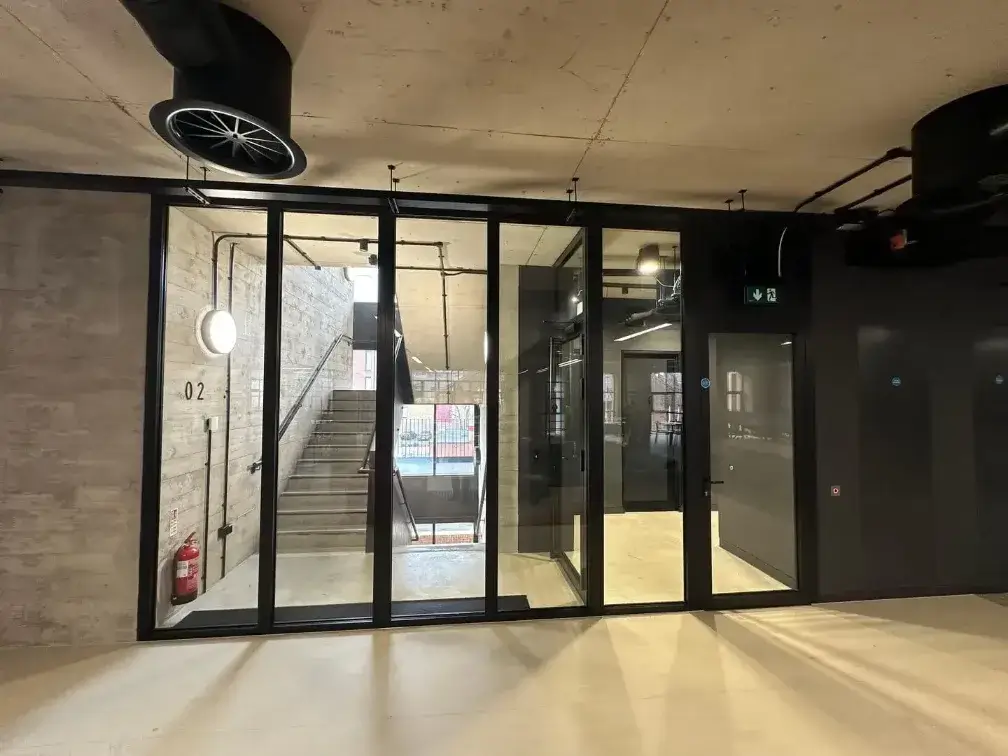
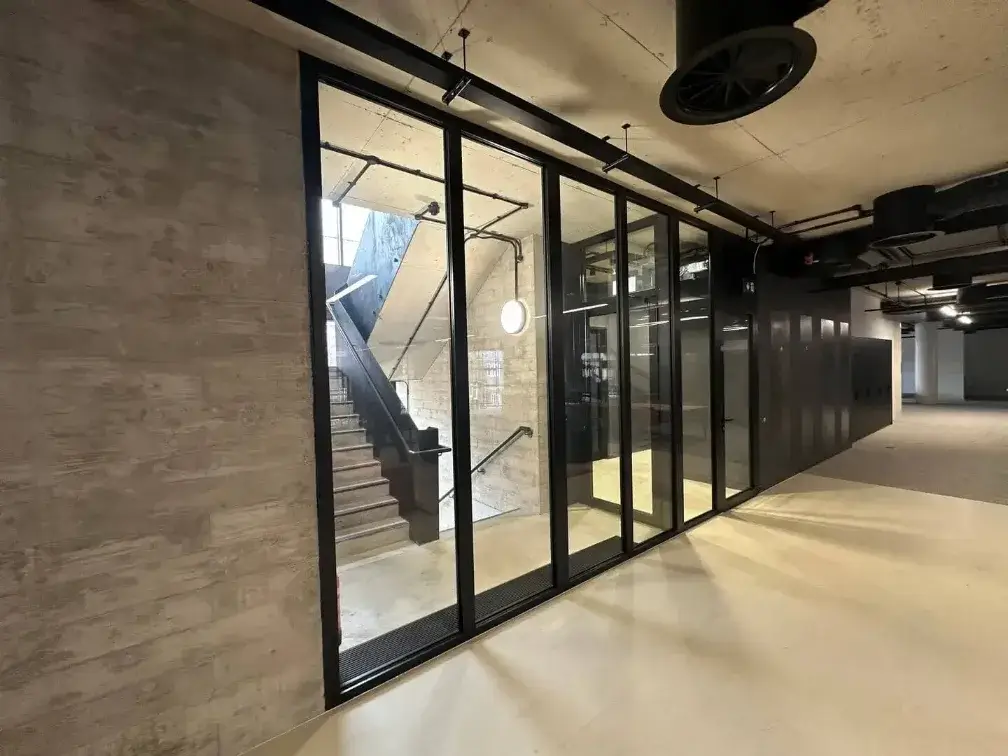
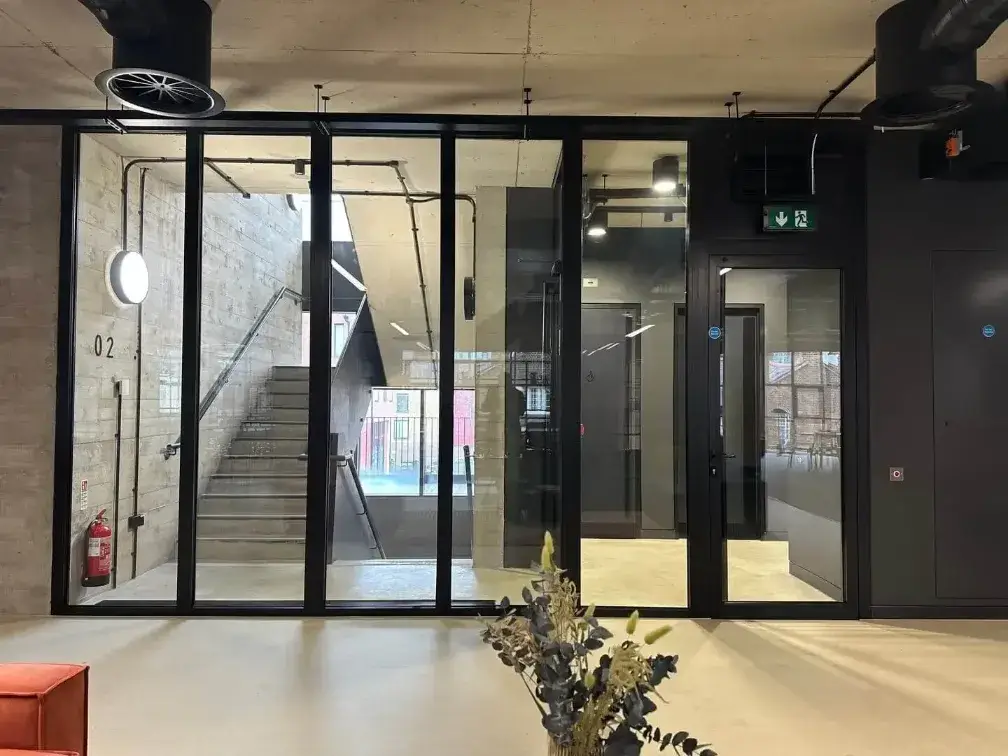
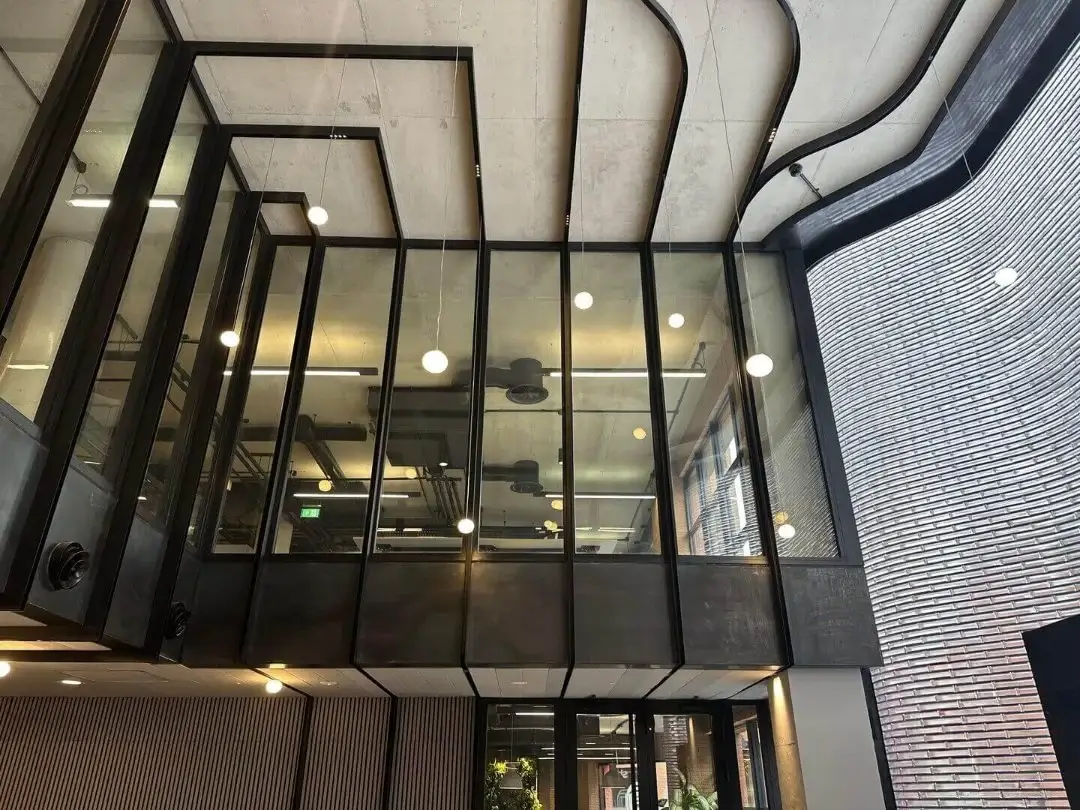
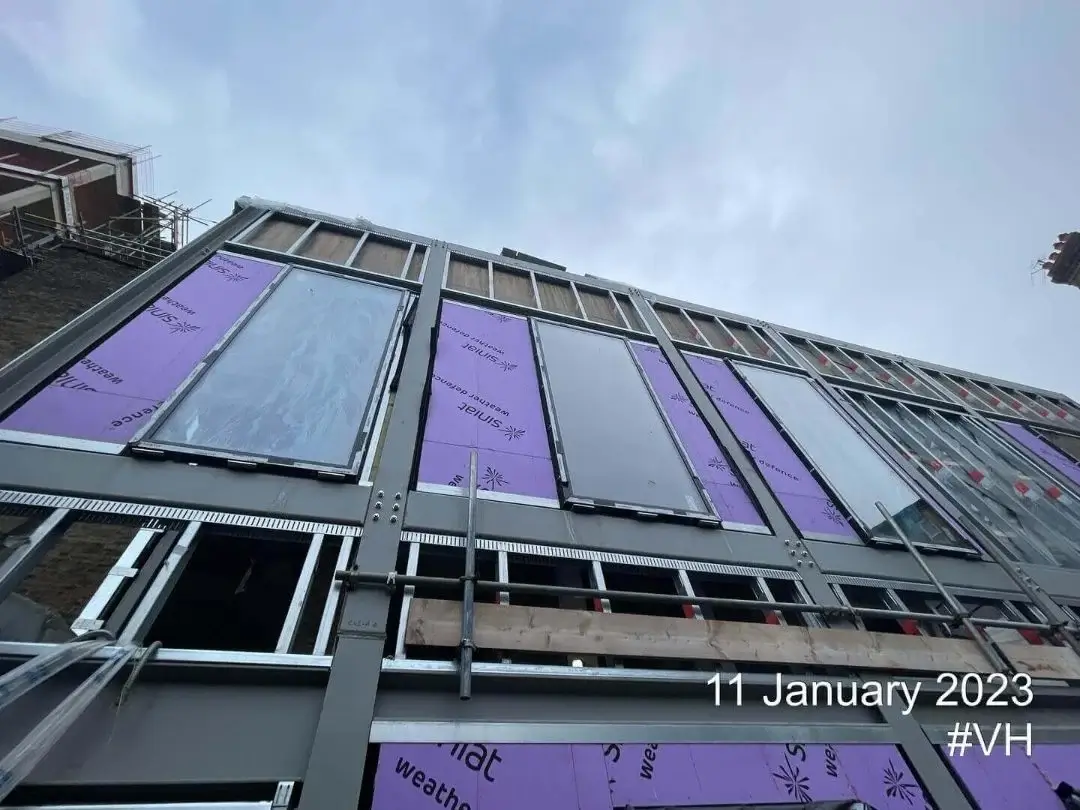
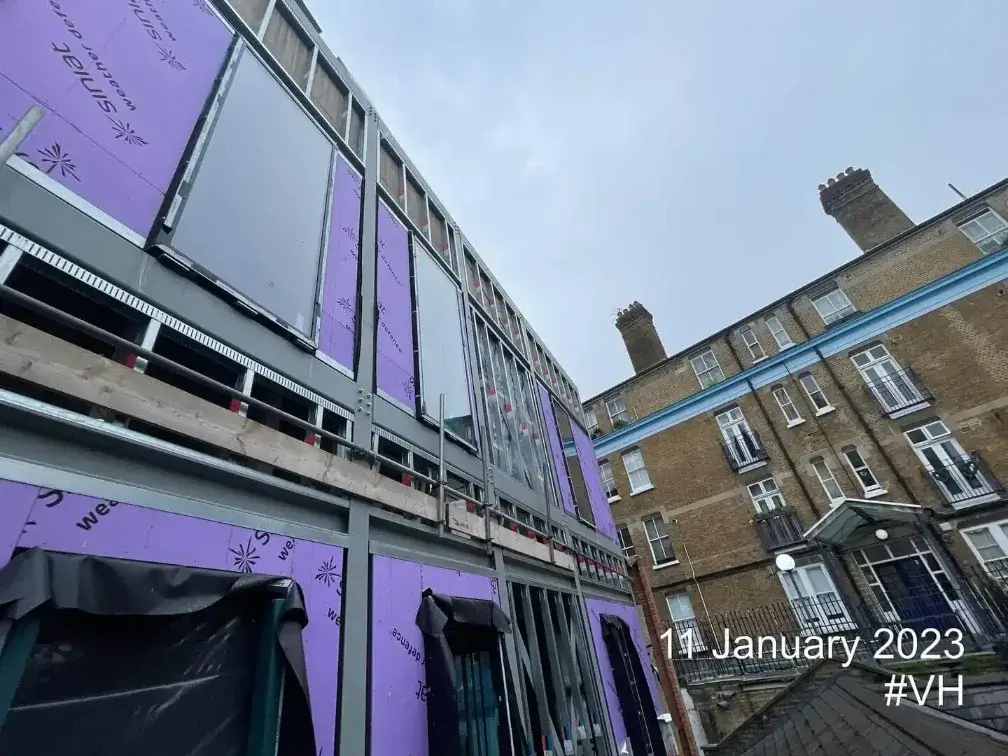
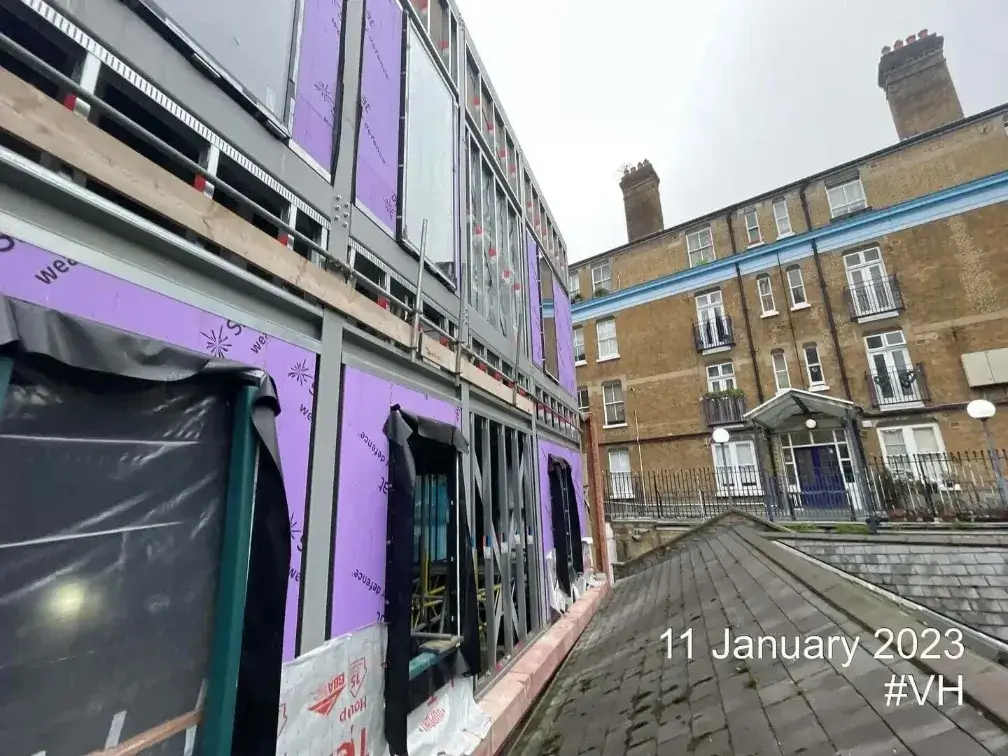
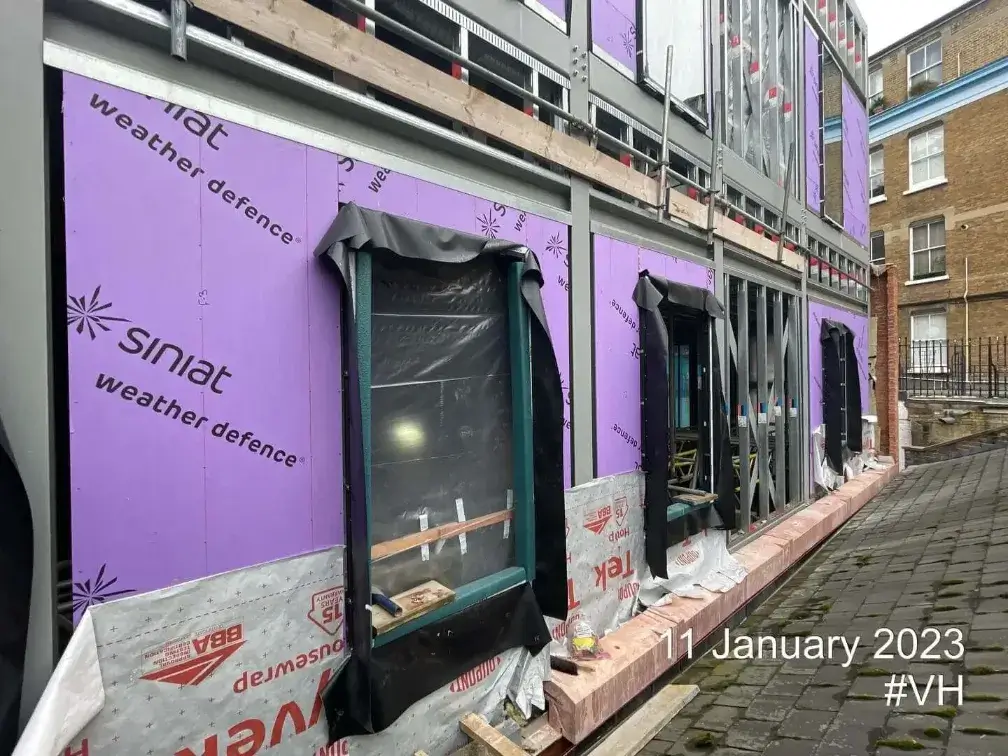
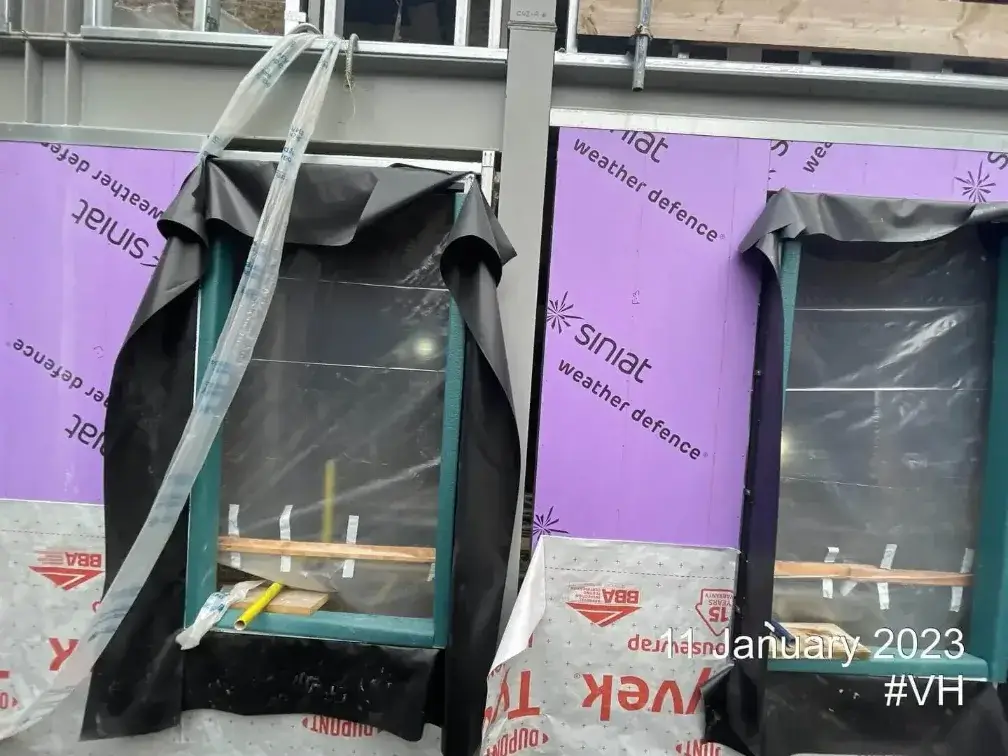
Our Previuos Window Projects in Manchester
Frequently Asked Questions
What is a fire window, and how does it work?
Fire windows are specially engineered glazing systems designed to resist flames, smoke, and heat for a specified duration (e.g., 30–120 minutes). They use tempered or ceramic glass and intumescent seals that expand under heat, sealing gaps to prevent fire spread. Unlike standard windows, they’re tested to BS EN 1364-1 for compliance.
Are fire windows required by law in Manchester buildings?
Yes. Under UK Building Regulations (Approved Document B) and the Fire Safety Order (2005), fire-rated windows are mandatory in escape routes (e.g., stairwells), compartment walls, and high-risk areas—especially in multi-occupancy and commercial buildings. Post-Grenfell, Manchester enforces stricter compliance.
What fire rating should my windows have?
EI30: Minimum for residential corridors (30-minute resistance).
EI60: Standard for commercial stairwells/high-rises.
EI90/EI120: Industrial or critical infrastructure.
Tip: Your architect or fire risk assessor will specify based on building use.
Can fire windows look the same as regular windows?
Modern fire glazing is nearly indistinguishable from standard windows. Options include slim-profile glass, timber or aluminium frames, and even tinted or decorative designs—balancing safety with aesthetics.
How are fire windows tested and certified in the UK?
They undergo rigorous testing to BS EN 1364-1 (fire resistance) and BS EN 13501-2 (classification). Look for third-party certifications like Certifire or BM Trada to ensure reliability.
Where are fire resistant windows typically installed?
Stairwells & escape routes (EI-rated).
Corridors in flats/offices.
Compartment walls between flats or commercial units.
Facades (if part of a fire compartment).
What’s the difference between integrity and insulation in fire windows?
E (Integrity): Blocks flames/smoke (e.g., E30).
EI (Integrity + Insulation): Also limits heat transfer (critical for escape routes).
EW: Reduces radiant heat but doesn’t fully insulate.
Can I replace my existing windows with fire-rated ones?
Yes, but retrofitting requires:
Structural assessment (weight/frame compatibility).
Certified installers to ensure seals and framing meet fire-rating standards.
How much do fire windows cost in Manchester?
Prices vary by size, rating, and material:
EI30: £300–£600 per m².
EI60+: £500–£1,200 per m².
Steel frames or bespoke designs cost more.
Do I need a specialist to install fire windows?
Absolutely. Improper installation voids certifications and compromises safety. Always use UKAS-accredited installers familiar with Building Control sign-off.
Are fire windows environmentally friendly?
Many modern options are energy-efficient (double-glazed with low-E coatings) and use recyclable materials (aluminium/glass). Some qualify for BREEAM credits.