


Fire Windows Specialists in Birmingham
Fire windows are an important part of passive fire protection across Birmingham. They are designed to help slow flames, smoke, and heat while supporting compliance with UK fire safety requirements. Whether used in apartment blocks, public buildings, or industrial facilities, fire-rated windows provide safety, regulatory confidence, and clean architectural design.
Our certifications





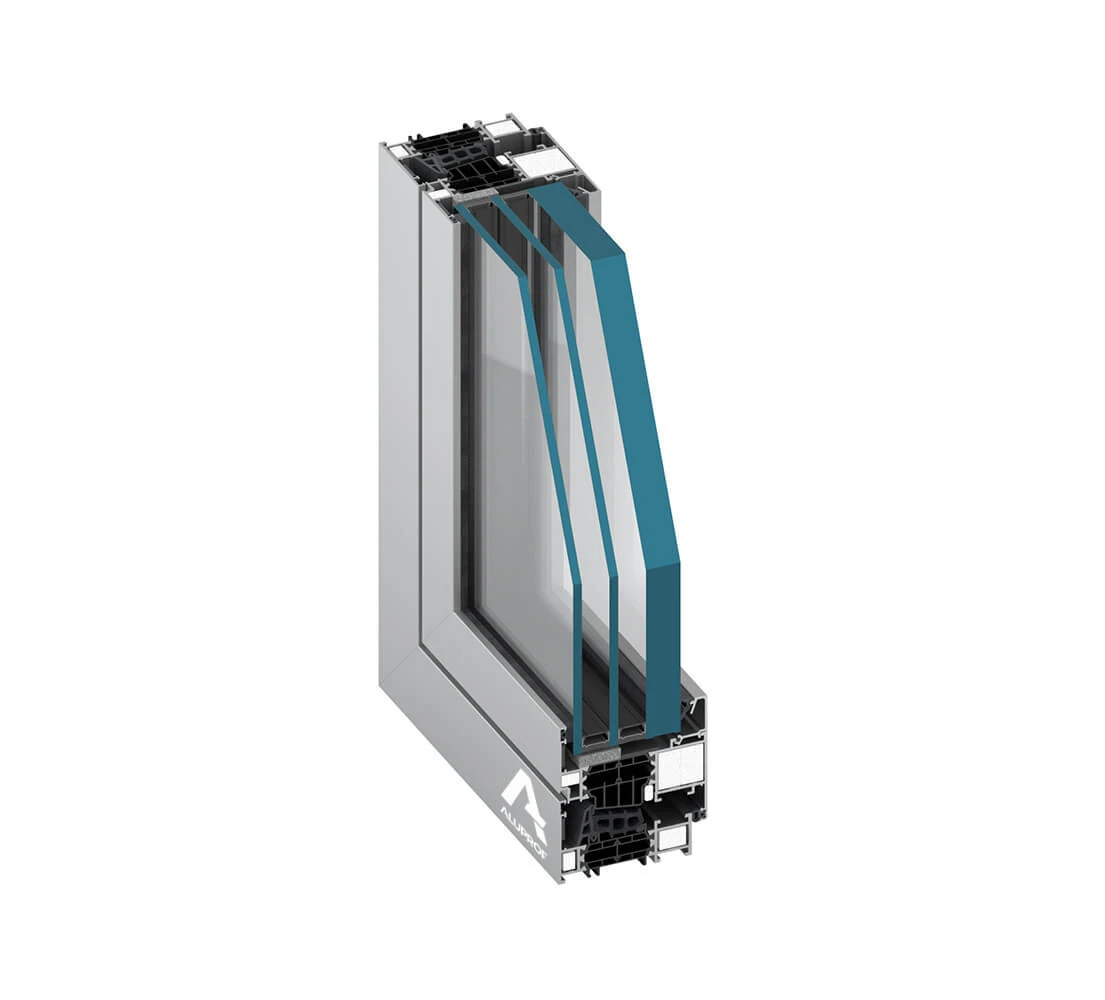
Fire windows, also referred to as fire-resistant windows, are engineered glazing systems created to maintain protection during a fire for a defined period of time. Unlike ordinary windows, they combine tested fire-rated glass, suitable frame materials, and heat-reactive intumescent seals. These components work together to help preserve compartmentation for 30, 60, 90, or 120 minutes, depending on the specified rating. In practice, this means they can help protect escape routes, separate risk areas, and support a building’s overall fire strategy.
For Birmingham projects, correct specification is especially important where glazing sits close to escape routes, stair cores, shared lobbies or compartment walls. The window must support the fire strategy rather than simply match the surrounding architecture. A fire window should be treated as a complete tested system, not only as glass placed into a frame. The glazing, frame, fixings, seals and surrounding construction all affect whether the system performs as expected during fire exposure.
Why Are Fire Windows Important in Birmingham?
Birmingham contains a broad mix of property types, from city-centre offices and student accommodation to hospitals, schools, retail units, warehouses, industrial sites, and residential developments. Many buildings also involve refurbishment, conversion, or mixed-use layouts where fire compartmentation must be carefully planned.
This makes early coordination important. Architects, contractors, fire consultants and building owners should confirm the required rating before openings are built or refurbished, as late changes can affect frame depth, glass thickness and installation details.
In these settings, fire windows are not simply a design detail. They form part of the wider passive fire protection system, helping to control how fire and smoke move through a building. With UK fire safety expectations becoming more demanding, especially under the Building Safety Act 2022 and the Regulatory Reform Fire Safety Order 2005, properly specified fire-rated glazing can help:
– Protect escape routes, including corridors, stairwells, and protected lobbies.
– Reduce the risk of fire spreading between rooms, floors, or separate building zones.
– Support Building Regulations, fire strategy reports, and insurance requirements.
– Help property owners, landlords, developers, and contractors demonstrate responsible fire safety planning.
Why Every Building in Birmingham Should Consider Installing Fire Windows
Fire windows provide practical benefits that go beyond meeting minimum compliance requirements:
Life Safety: They help preserve protected routes and give occupants more time to evacuate safely.
Property Protection: By slowing fire spread, they may help reduce damage to adjoining areas and limit disruption after an incident.
Legal Compliance: Fire-rated windows support the requirements set out in Building Regulations, Approved Document B, relevant BS standards, and site-specific fire strategies.
Insurance Advantages: Certified fire protection measures may be viewed positively during risk assessment, depending on the insurer and property type.
Aesthetic Flexibility: Modern fire window systems are available in designs suitable for offices, residential schemes, heritage refurbishments, and contemporary architectural projects.
A well-specified system can also reduce later disruption because the required rating, frame finish, maintenance access and glazing performance are considered before procurement. This is useful for occupied buildings where installation work must be planned carefully.
How Fire Windows Are Rated in Birmingham?
Fire window ratings are based on how the complete glazing system performs when exposed to fire. The rating should be chosen from the fire strategy or Building Control requirements, not only from visual preference. Two windows may look similar after installation but provide different levels of integrity, insulation or radiation control. The main classifications are:
1. E Fire Windows (Integrity Only)
This rating shows how long the window can prevent flames and hot gases from passing through. For example, E30 means the system provides 30 minutes of integrity performance.
Use case: E-rated windows may be suitable for certain internal partitions or lower-risk areas where heat transfer on the opposite side is not the main concern.
2. EI Fire Windows (Integrity + Insulation)
EI-rated windows provide integrity protection while also restricting the rise in temperature on the non-fire side. This makes them particularly important where people may need to pass nearby during evacuation.
Common examples include:
EI30: 30-minute fire resistance, often used in residential and commercial layouts where shorter protection periods are suitable.
EI60: 60-minute resistance, frequently specified for stairwells, protected corridors, compartment walls, and higher-risk building areas.
EI90 / EI120: Longer-duration protection for more demanding industrial, commercial, high-rise, or specialist applications.
3. EW Fire Windows (Radiation Control)
EW-rated windows prevent flame passage and reduce radiant heat transfer, but they do not offer the same insulation level as EI-rated glazing.
Example: EW30 systems may be suitable for certain façade or internal glazing situations where some heat radiation is acceptable within the fire strategy.
Why Do fire Windows Ratings Matter?
Escape Routes: EI-rated windows help reduce heat transfer, making protected routes safer during evacuation.
Compartmentation: E-rated windows can help hold back flames and hot gases between separate areas.
Architectural Needs: EW-rated glazing can be useful where design, visibility, and controlled radiation performance are required.
For example: a Birmingham mixed-use development may use EI60 fire windows around stair cores or protected corridors, while E30 glazing could be specified for selected internal screens where full insulation is not required.
During specification, it is also important to consider how close people may be to the glass during evacuation. A protected corridor, stair lobby or escape route often needs a different level of performance than a screen used only for separation or visibility.
Fire Windows We Offer in Birmingham
Interested in Fire Windows?
Choose certified fire windows for your Birmingham project and ensure the glazing system matches the required fire rating, design standard, and compliance expectations. Suitable for residential, commercial, public, and industrial buildings, our fire window systems can provide protection against fire and smoke for up to 120 minutes. Contact us to get a quote.
Where Are Fire Windows Typically Used?
Fire windows are critical in buildings where compartmentation and escape route protection are required:
– Stairwells & Fire Escapes: Used to help protect evacuation routes in multi-storey and higher-risk buildings
– Commercial Buildings: Offices, hospitals, schools, universities, retail units, and public buildings may require EI30 or EI60 glazing in corridors, atriums, and compartment walls.
– Residential Blocks: Apartment buildings and flats may need fire-resistant glazing in communal corridors, separating walls, stair cores, and escape routes.
– Industrial Sites: Warehouses, production facilities, and workshops use fire-rated glazing to separate operational areas and reduce fire spread.
– Heritage Buildings: Slim fire-rated glazing systems can improve safety while respecting the visual character of older buildings.
Fire windows in Birmingham are also useful in mixed-use buildings where residential, retail, office, and service spaces meet within one structure. They help separate higher-risk areas such as plant rooms, commercial kitchens, bin stores, basement corridors, and service risers while keeping visibility and natural light between spaces. This is particularly valuable where solid fire-resistant walls would make circulation routes feel closed or difficult to supervise.
Compliance with UK Fire Safety Regulations
UK law mandates fire windows meet strict standards, including:
– BS EN 13501-2: Classifies fire performance (E, EI, EW ratings).
– Building Regulations Approved Document B: Requires fire-resistant glazing in escape routes and compartment walls.
– The Fire Safety Order (2005): Ensures ongoing compliance for commercial properties.
– Local Authority Approvals: Birmingham projects may require approval from building control, architects, fire consultants, or other relevant authorities depending on the building use and risk profile.
Materials and Design Options Available
Window Glass Types:
– Wired Glass: Traditional but less aesthetic (E-rated).
– Ceramic Glass: Slimmer, high-performance (EI-rated).
– Laminated Fire Glass: Combines safety with clarity (up to EI120).
Frame Materials
– Steel: Most durable (high-rise/commercial use).
– Timber with Intumescent Seals: Residential/heritage appeal.
– Aluminium: Lightweight + powder-coated finishes.
Window Design Flexibility: Custom tints, Georgian bars, and dual-functionality (e.g., acoustic + fire resistance).
Window Design Flexibility
Fire windows can be adapted to suit different project requirements, including frame colour, glazing thickness, fire rating, acoustic performance, thermal performance, tinting, Georgian bars, and other architectural details.The visual specification should be matched to the building as carefully as the rating. Steel frames provide a slim, robust profile for commercial, heritage, and high-use areas. Aluminium frames offer a clean modern look with powder-coated colours that match facades, internal screens, or door systems. Timber-framed solutions suit residential and traditional interiors where a warmer finish is needed.
The chosen frame material should suit the building conditions as well as the design. High-use commercial areas need impact resistance and easy cleaning, while heritage or residential interiors may need slimmer profiles or warmer finishes.
Our most recent completed project
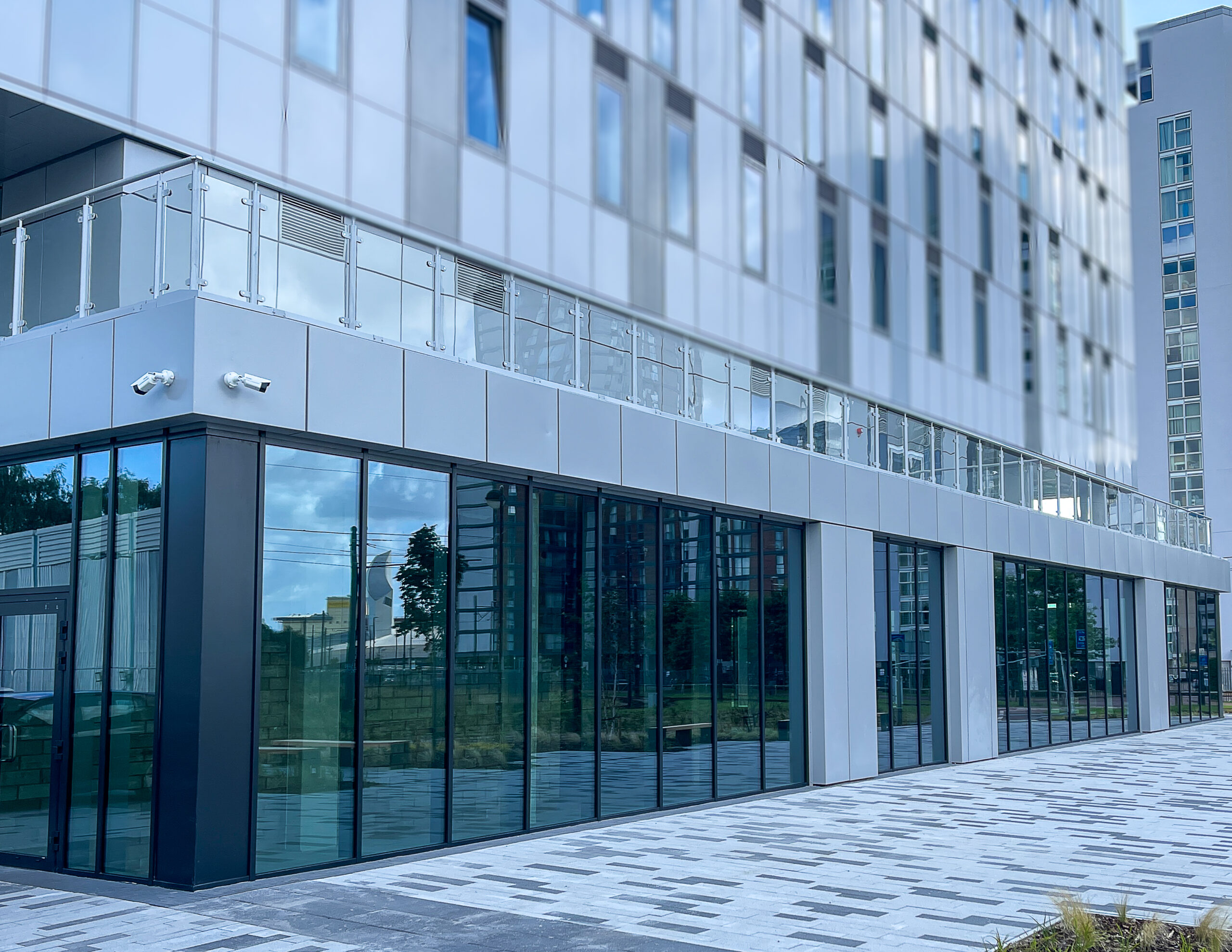
EI60 doors
Project systems MB-86 EI D
Fire Windows Maintenance & Inspection
Lifespan: 20–30 years if properly maintained.
Upkeep:
– Annual inspections of seals and frames (per Fire Safety Order).
– Immediate replacement if glass is cracked or seals degrade.
– Cleaning with non-abrasive products to avoid damaging intumescent strips.
Inspection should look for cracked glass, damaged beads, loose fixings, failed seals, corrosion, movement in the frame and any alterations around the opening. Fire-rated glazing should not be drilled, cut or modified after installation.
Get Fire Windows in Birmingham
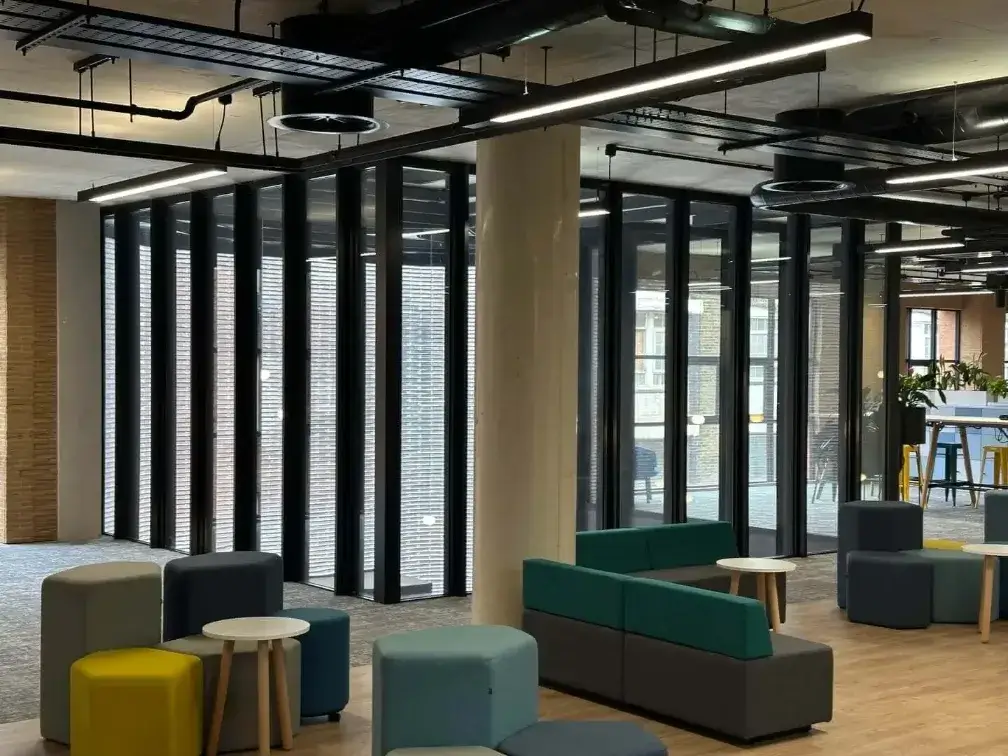
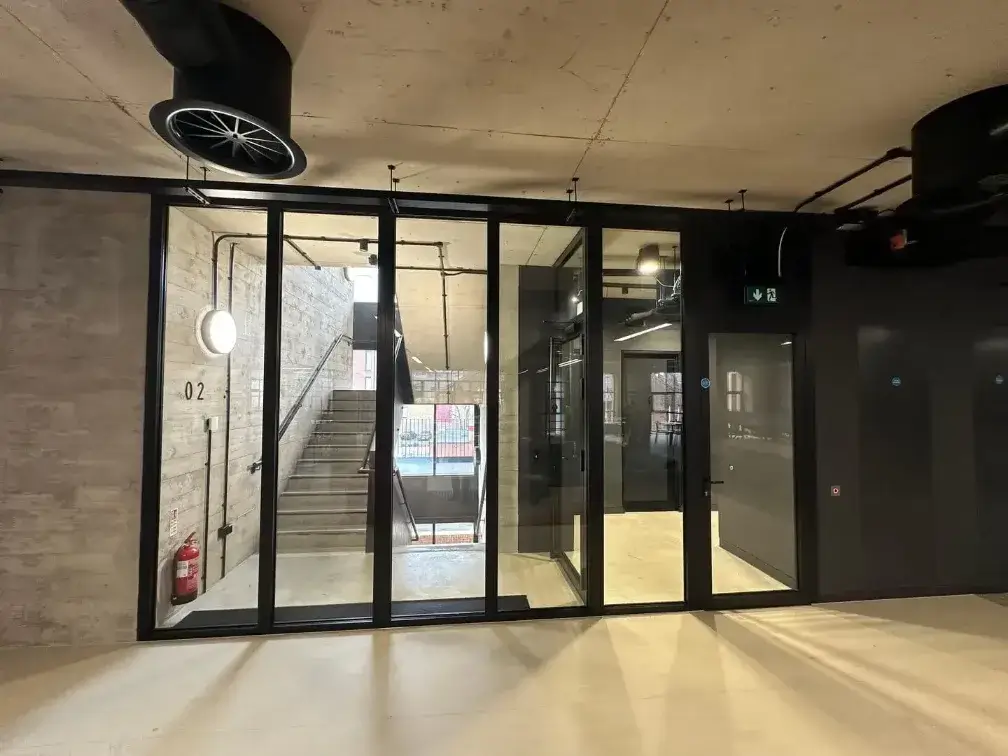
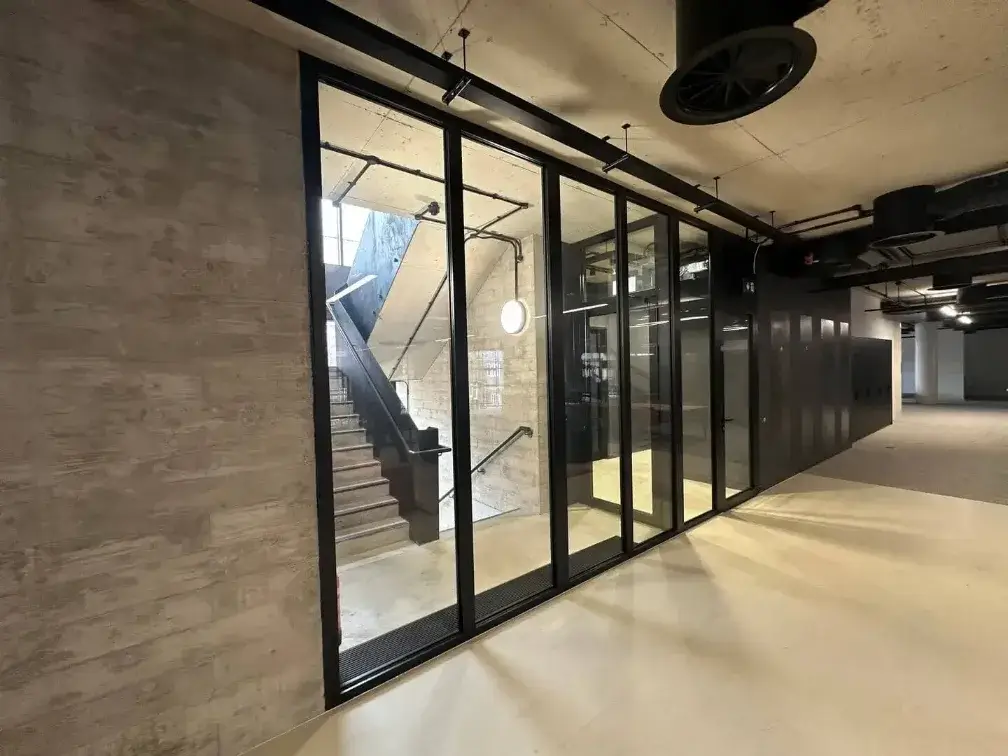
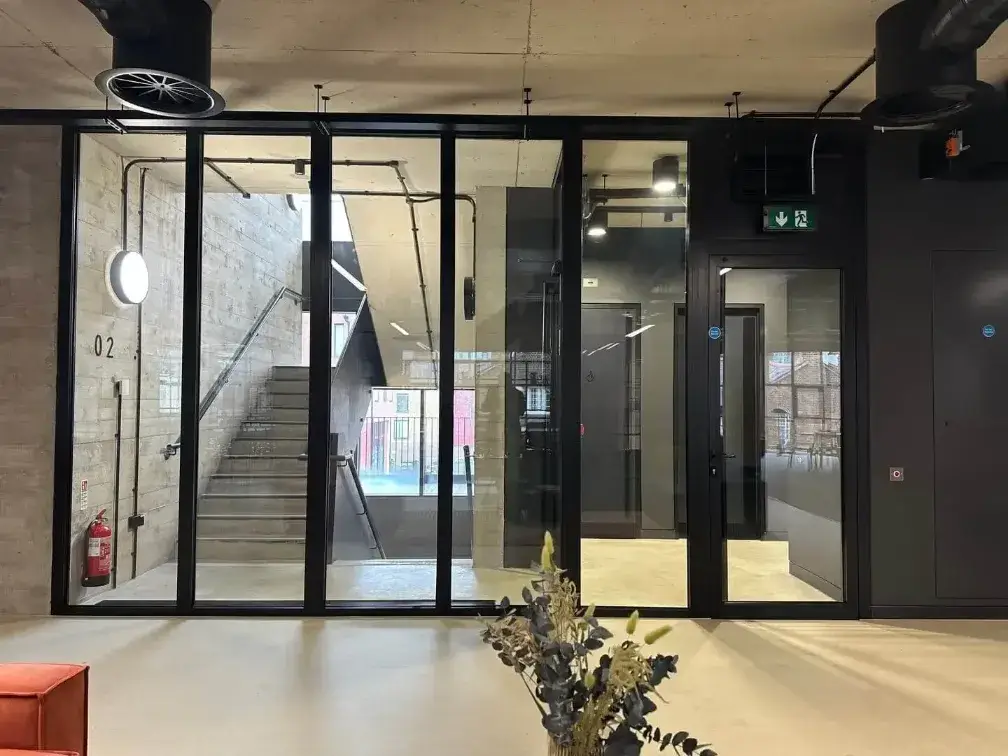
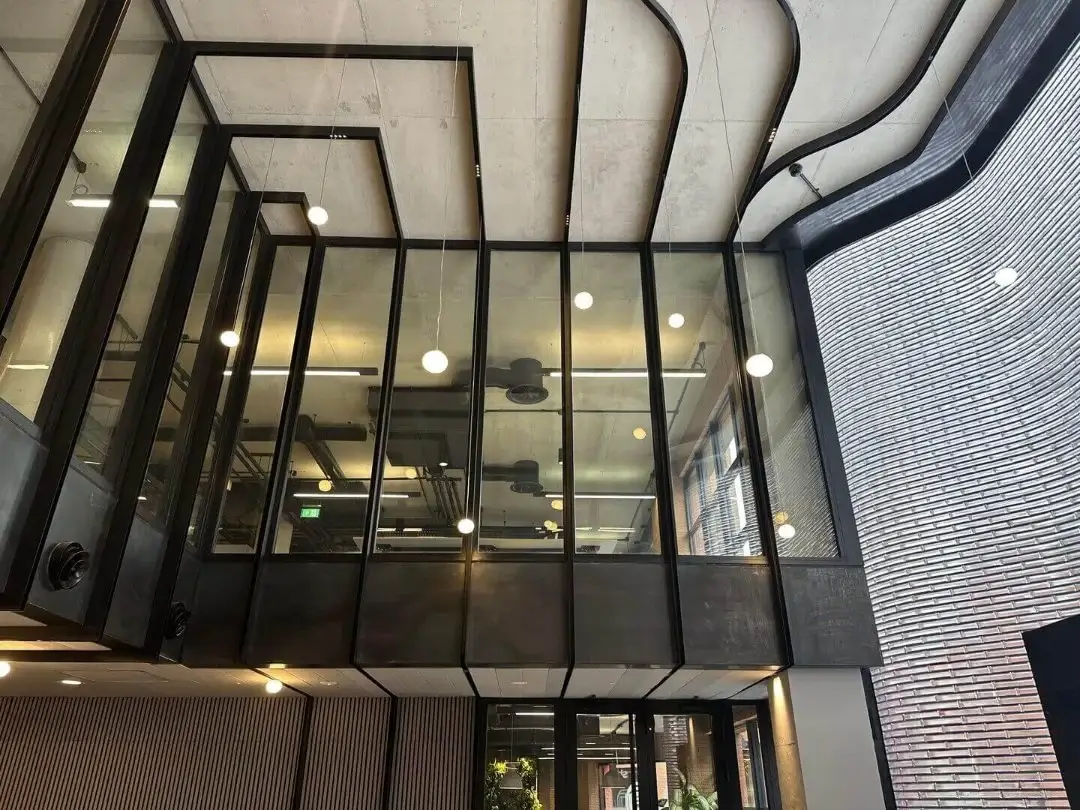
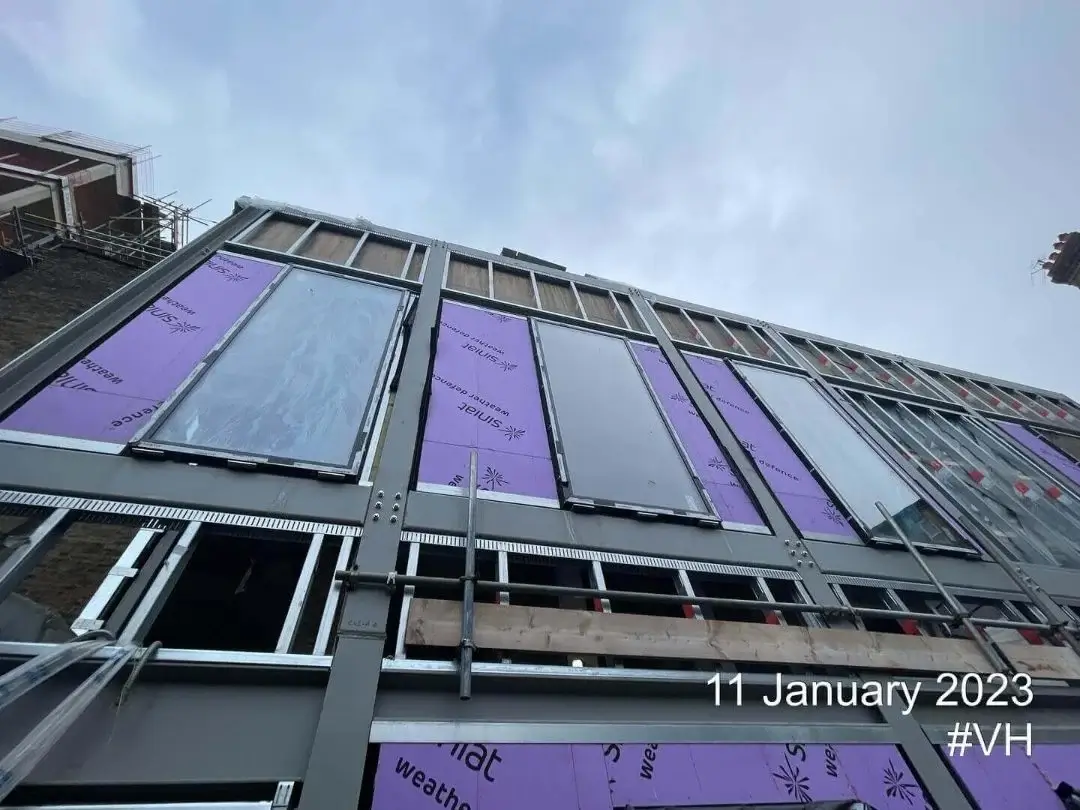
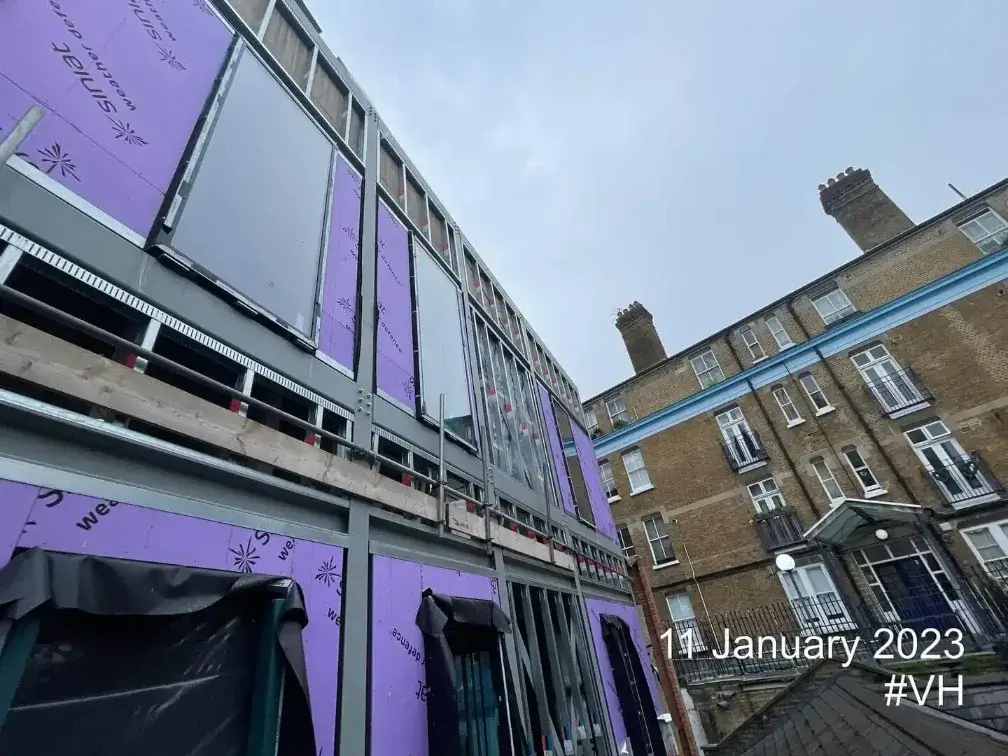
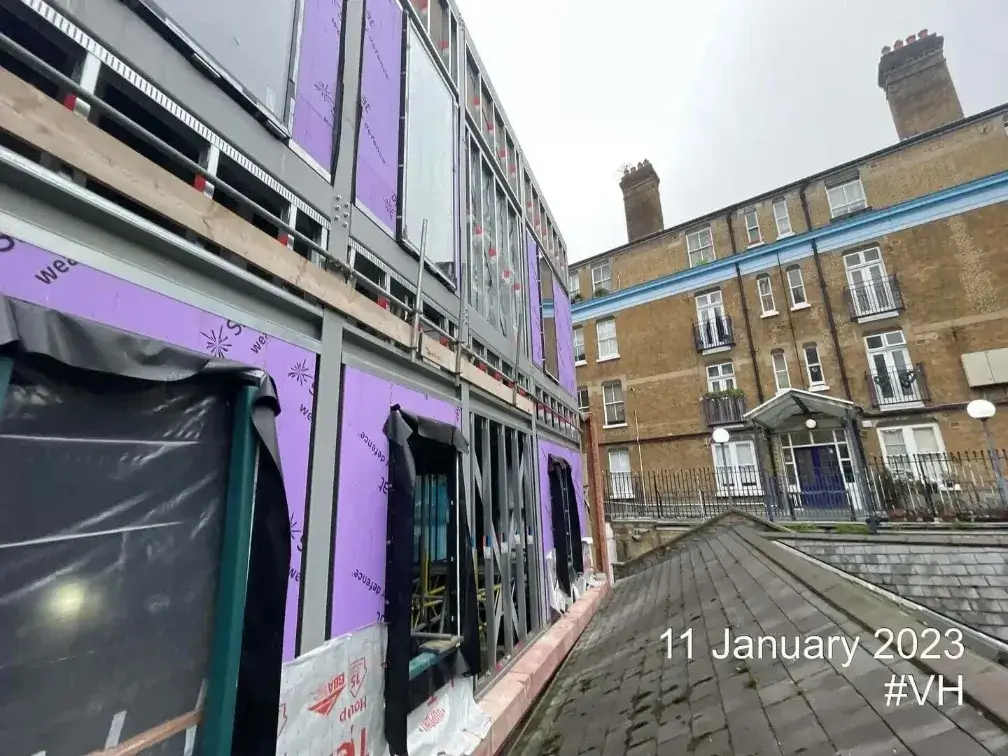
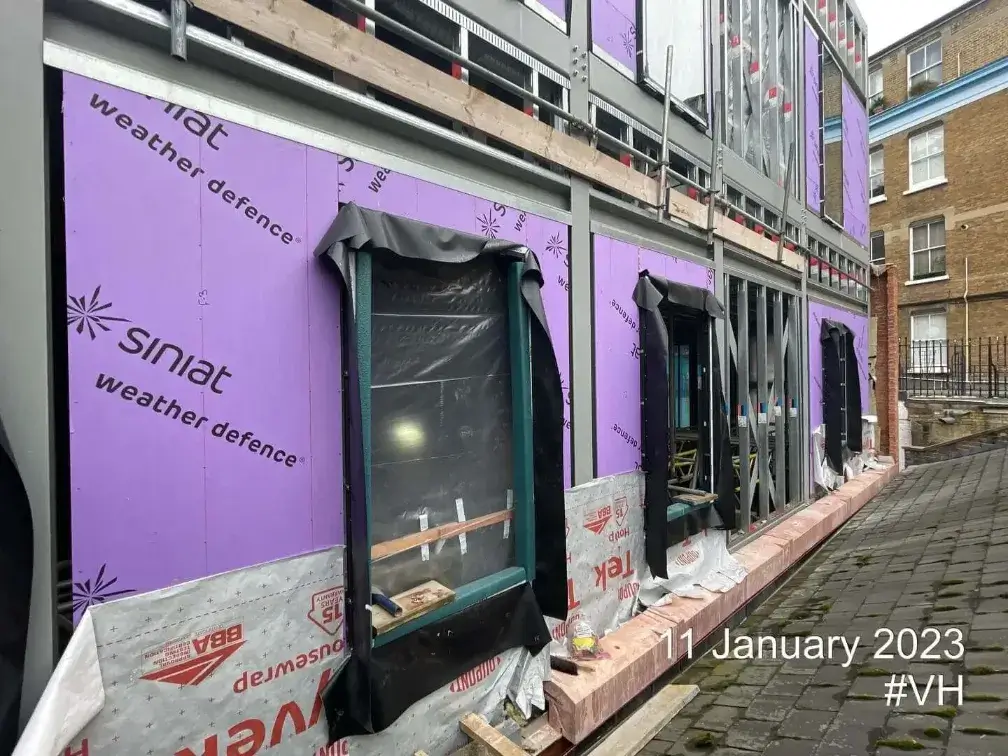
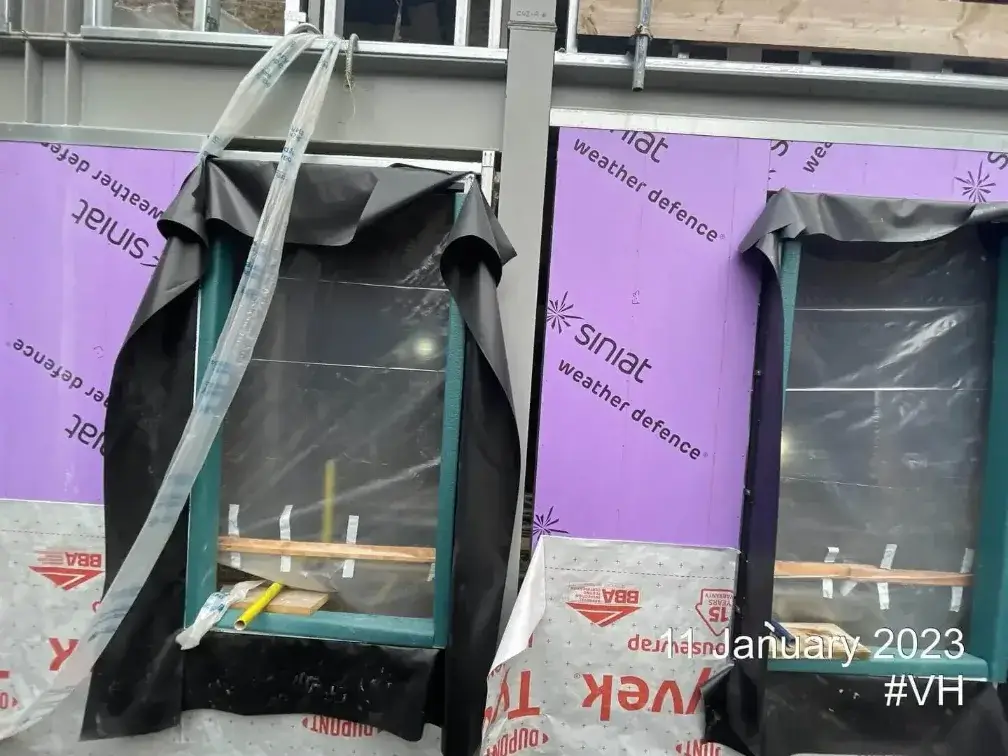
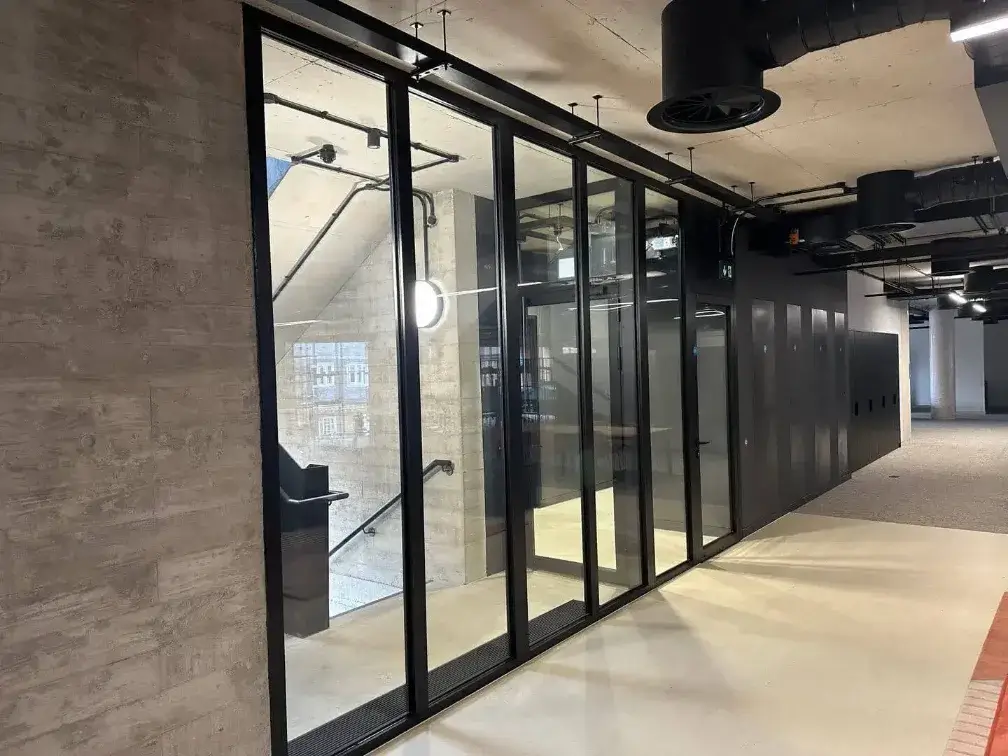
Our Previuos Window Projects in Birmingham
Frequently Asked Questions
What is a fire window, and how does it work?
Fire windows are specially engineered glazing systems designed to resist flames, smoke, and heat for a specified duration (e.g., 30–120 minutes). They use tempered or ceramic glass and intumescent seals that expand under heat, sealing gaps to prevent fire spread. Unlike standard windows, they’re tested to BS EN 1364-1 for compliance.
Are fire windows required by law in Birmingham buildings?
Yes. Under UK Building Regulations (Approved Document B) and the Fire Safety Order (2005), fire-rated windows are mandatory in escape routes (e.g., stairwells), compartment walls, and high-risk areas—especially in multi-occupancy and commercial buildings. Post-Grenfell, Birmingham enforces stricter compliance.
What fire rating should my windows have?
EI30: Minimum for residential corridors (30-minute resistance).
EI60: Standard for commercial stairwells/high-rises.
EI90/EI120: Industrial or critical infrastructure.
Tip: Your architect or fire risk assessor will specify based on building use.
Can fire windows look the same as regular windows?
Modern fire glazing is nearly indistinguishable from standard windows. Options include slim-profile glass, timber or aluminium frames, and even tinted or decorative designs—balancing safety with aesthetics.
How are fire windows tested and certified in the UK?
They undergo rigorous testing to BS EN 1364-1 (fire resistance) and BS EN 13501-2 (classification). Look for third-party certifications like Certifire or BM Trada to ensure reliability.
Where are fire resistant windows typically installed?
Stairwells & escape routes (EI-rated).
Corridors in flats/offices.
Compartment walls between flats or commercial units.
Facades (if part of a fire compartment).
What’s the difference between integrity and insulation in fire windows?
E (Integrity): Blocks flames/smoke (e.g., E30).
EI (Integrity + Insulation): Also limits heat transfer (critical for escape routes).
EW: Reduces radiant heat but doesn’t fully insulate.
Can I replace my existing windows with fire-rated ones?
Yes, but retrofitting requires:
Structural assessment (weight/frame compatibility).
Certified installers to ensure seals and framing meet fire-rating standards.
How much do fire windows cost in Birmingham?
Prices vary by size, rating, and material:
EI30: £300–£600 per m².
EI60+: £500–£1,200 per m².
Steel frames or bespoke designs cost more.
Do I need a specialist to install fire windows?
Absolutely. Improper installation voids certifications and compromises safety. Always use UKAS-accredited installers familiar with Building Control sign-off.
Are fire windows environmentally friendly?
Many modern options are energy-efficient (double-glazed with low-E coatings) and use recyclable materials (aluminium/glass). Some qualify for BREEAM credits.