


A front entrance door is often judged by how solid it looks, how secure it feels and whether it matches the building. For fire safety, that is not enough. A fire rated door only has value when the leaf, frame, seals, hinges, closer, latch and installation evidence work together as one tested system. A fire door is not just a strong-looking front door. It is a documented safety assembly.
Why the door leaf alone is not enough
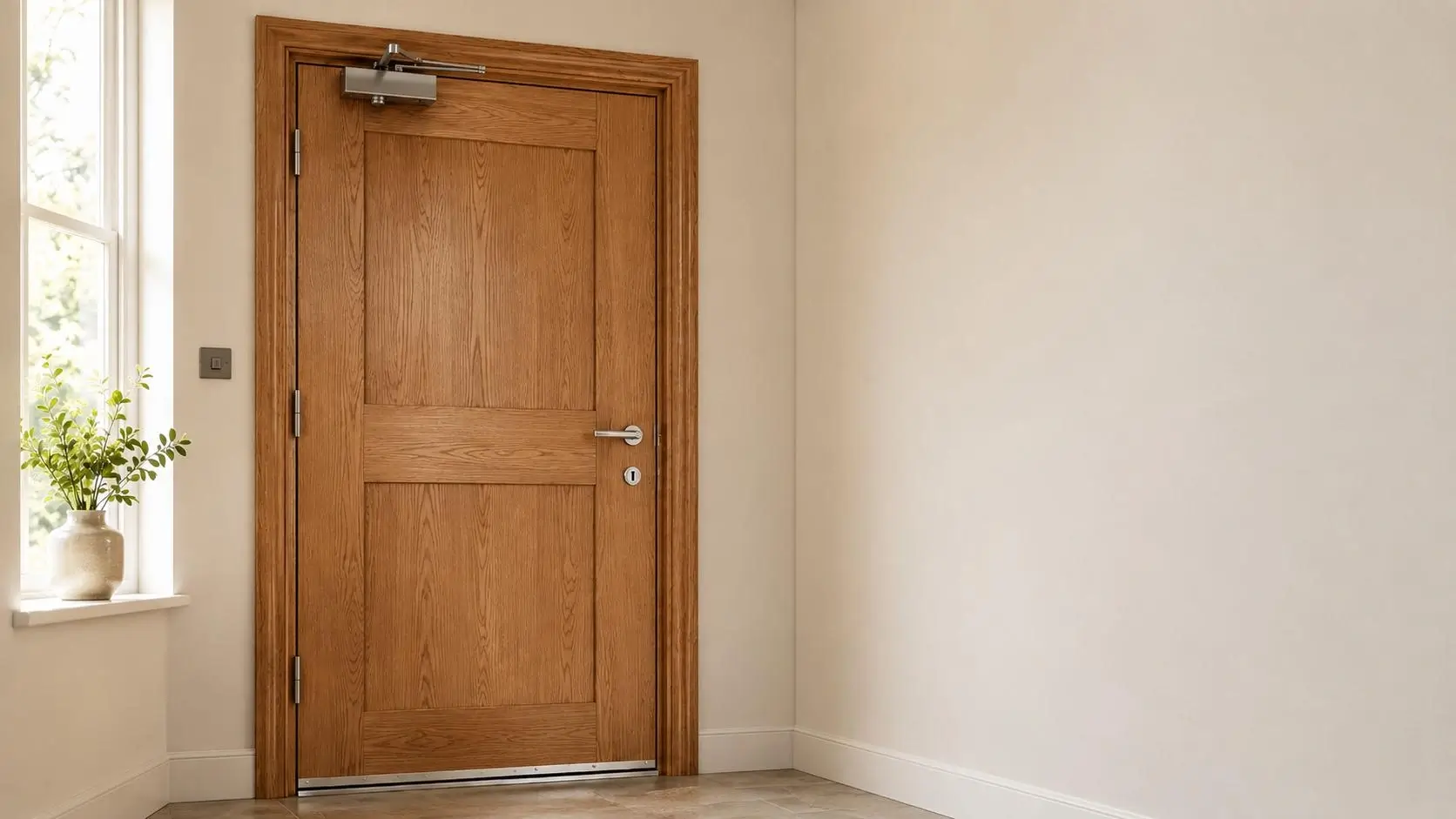
The first mistake this fire front door guide addresses is assuming that the door leaf is the fire door. In practice, the complete fire door set matters. Fire door sets include the leaf, frame, threshold, hinges, seals, closer, latch, fixings and any ironmongery included in the tested arrangement.
This matters because fire resistance is tested as a system. If the leaf is certified but the frame is unsuitable, the closer is substituted, the seal is changed or the installation does not follow the tested configuration, the evidence may no longer match the finished door.
A practical fire front door guide should therefore start with the door set, not the catalogue image. When comparing products, ask whether the complete assembly has relevant test evidence for the opening, rating and hardware being supplied.
Fire door parts and what they do
Searches for “fire door parts name” often come from owners or managers trying to understand inspection reports. The main parts are easier to follow when each is linked to its role. The leaf resists fire for a defined period. The frame supports the leaf. The hinges carry weight and maintain alignment. The closer helps the door shut. The latch keeps the door closed where required.
The seals are especially important. Intumescent strips expand when exposed to heat and help seal the gap between the leaf and frame. Smoke seals help limit cold smoke movement before heat activates the intumescent material. Threshold details matter because the bottom of the door is a common weak point on entrance doors.
This fire front door guide treats each component as part of one safety system. A damaged closer, missing seal, poor threshold or loose hinge should not be dismissed as cosmetic. These details affect whether the fire rated door can perform as intended.
Fire door installation and instructions
Fire door installation is one of the main points where compliant products become questionable installations. The product may arrive with fire door installation instructions, but those instructions need to be available, followed and retained with the project records. They usually explain opening tolerances, fixing methods, permitted gaps, frame requirements, seal positions and compatible ironmongery.
The risk is highest during busy refurbishment or multi-unit work. A door set may be delivered correctly, but the instructions are separated from the product, the opening is adjusted on site, or parts are substituted. These changes may appear minor, but they can affect the evidence behind the door set.
A reliable fire front door guide should avoid turning installation into a DIY checklist. Front entrance fire doors should be installed and checked by competent people who understand the tested assembly. Owners and managers should ask for the specification, installation record and component schedule before sign-off.
Choosing a fire door supplier
A fire door supplier should be able to explain more than the rating label. Certification is important, but it should be linked to the specific door set, opening size, hardware and intended use. A general certificate is less useful if it does not show that the supplied configuration matches the project.
Before choosing a supplier, ask whether the quote includes the complete door set, compatible frame, seals, closer, hinges, latch and relevant documentation. This helps prevent the buyer from having to coordinate technical details that should be addressed at specification stage.
This fire front door guide also applies to fire doors commercial projects, where substitutions are common. Value engineering can reduce cost, but changing hinges, closers, seals or frames without checking the tested evidence may create a documentation problem. A cheaper alternative is useful only when it still fits the required performance, installation and record-keeping needs.
The problem with the phrase fire proof door
Many owners search for a fire proof door, but the phrase is misleading. A fire door does not resist fire forever. It is tested to provide resistance for a defined period. That period supports evacuation, compartmentation and emergency response.
For this reason, a fire front door guide should use the phrase fire rated door rather than fire proof door. The rating only applies when the door set is correctly specified, installed, maintained and documented. Missing seals, poor gaps, failed closers or incompatible components can reduce confidence in the finished assembly.
A strong-looking entrance door, heavy timber leaf or metal security door is not automatically a fire rated door. The evidence behind the product and installation is what matters.
What owners should check before replacement or inspection
This fire front door guide should also help owners prepare better questions before replacing or inspecting a front entrance door. Start by confirming why the door needs to be fire rated. A flat entrance, shared residential block, commercial unit, plant room or protected route may all have different requirements.
Next, review the evidence. Look for the door rating, supplier documentation, installation instructions, maintenance records and previous inspection findings. If the door has been altered, decorated, repaired or fitted with new parts, check whether those changes were recorded and whether compatible components were used.
A competent assessment is important where records are missing, the building is complex or the door protects a shared escape route. The guide can explain the risks, but it should not replace professional judgement where safety and compliance are involved.
Final advice before making a decision
A front entrance fire door should not be chosen by appearance alone. The most common mistakes are buying a rated leaf without a complete door set, ignoring installation evidence, accepting unclear supplier documentation, replacing parts without checking compatibility and using the phrase fire proof door as if it meant permanent protection.
A good fire front door guide should leave owners with one practical principle: check the whole system. The door, frame, seals, closer, hinges, latch, installation and records all matter. Where the evidence is unclear, ask a competent fire-door specialist to assess the door set and confirm the correct next step.