


Fire doors in flats are easy to misunderstand because many problems are not obvious during a corridor walk. A door may close, look solid and carry a fire label, yet still raise concerns during inspection if smoke seals, gaps, closer, frame or documentation do not match the required standard.
This fire doors flats guide explains common mistakes that affect fire doors flats, why FD30S matters, what fire door gaps mean and why the whole door set should be considered.
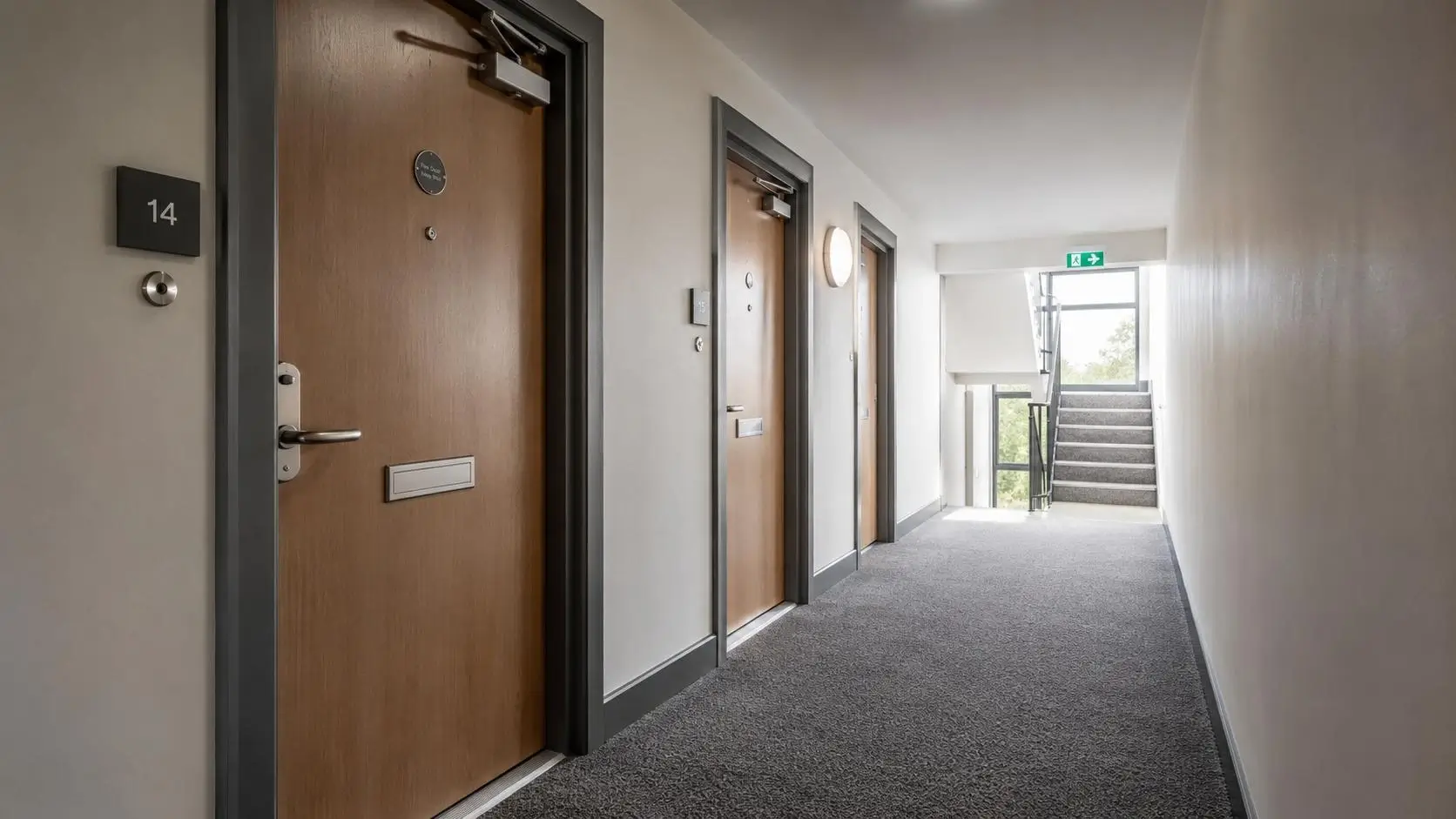
Fire doors in flats are easy to misunderstand because many problems are not obvious during a corridor walk. A door may close, look solid and carry a fire label, yet still raise concerns during inspection if smoke seals, gaps, closer, frame or documentation do not match the required standard.
This fire doors flats guide is written for responsible persons, landlords, facilities managers, building owners, contractors and maintenance teams looking after apartment blocks, HMOs and multi-occupied residential buildings. It explains common mistakes that affect fire doors flats, why FD30S matters, what fire door gaps mean and why the whole door set should be considered.
Why fire doors in flats need careful attention
Fire doors are part of a building’s passive fire protection strategy. In flats, they help protect shared corridors, stairways and escape routes by resisting fire and limiting smoke spread. This matters where several households use the same escape route.
A fire door flat entrance is not the same as an ordinary internal door. It usually needs to support fire resistance, smoke control, self-closing and durability. If one part fails, the door may not perform as expected. That is why this fire doors flats guide focuses on suitability, installation quality, maintenance and records, not only product choice.
FD30S, FD30 and smoke control mistakes
One of the most common mistakes in flats is confusing FD30 and FD30S. An FD30 door is designed to provide 30 minutes of fire resistance. An fd30s fire door also includes smoke control performance, which is important where a flat entrance opens onto a shared escape route.
The S suffix matters because smoke can become serious before flames reach the corridor. Smoke leakage through poor seals, large fire door gaps, unprotected letter plates or damaged thresholds can reduce the protection that the door is supposed to provide.
This fire doors flats guide does not suggest that every older door without visible smoke seals automatically fails. Existing buildings may involve different standards, historic installations and fire risk assessment findings. However, where a new or replacement fire rated door is specified for a flat entrance, smoke control should be treated as a key requirement.
Fire door gaps and everyday inspection issues
Fire door gaps are one of the simplest things to notice and one of the easiest things to get wrong. If the gaps around the door leaf are too wide, the seals may not work as intended. If the gaps are too tight, the door may bind and fail to close fully.
A useful fire doors flats guide should make this clear: the gap needs to be judged as part of the door set, not guessed by eye. The top, sides and threshold area may all need checking, especially in older buildings, conversions or blocks where floors and frames have moved.
Other common problems include damaged intumescent strips, missing smoke seals, painted-over seals, loose hinges, weak closers, poor latching and uncertified letter plates. These issues may look minor, but they can affect how the fire door works during an emergency and how it is viewed during inspection.
Why the door set matters more than the leaf alone
A fire door is not just a slab of timber or metal. The door set includes the leaf, frame, hinges, closer, latch, seals, threshold details, glazing if fitted and other ironmongery. BS fire doors and tested fire-door assemblies rely on this combination.
This is where many fire doors for apartments go wrong. A certified leaf may be installed into an unsuitable frame. A closer may be replaced with a different model. A damaged seal may be swapped for a product that does not match the original evidence. Each change can affect the door’s status.
For this reason, this fire doors flats guide recommends checking the whole installation. If the original fire rated door was supplied with specific components, replacement parts should be compatible with the tested arrangement. Where evidence is unclear, a competent fire-door professional should assess the door.
Documentation and records before inspection
Good documentation is now a major part of building safety management. Responsible persons should understand what fire doors are installed, where they are located, what rating they have and what maintenance has been carried out.
The practical aim of this fire doors flats guide is to reduce uncertainty when doors are inspected, repaired or replaced later. Keep records of door ratings, certificates, installation details, inspection findings, repairs, replacement components and access issues. If a fire door flat entrance cannot be linked to reliable evidence, further assessment may be needed.
Common mistakes that should be fixed early
Many fire-door problems become expensive or urgent because they are found too late. Before a formal review, building teams should look for repeated issues across the block rather than treating each door as an isolated case.
Common mistakes include fitting FD30 where FD30S is required, ignoring excessive fire door gaps, relying on the leaf certificate without checking the frame, fitting uncertified letter plates, allowing closers to weaken, painting over seals, replacing components without evidence and failing to keep inspection records.
Searches such as fire doors flat guide or Fire doors flat guide often come from people who know there may be a problem but are unsure where to start. This fire doors flats guide separates visible issues from evidence issues, because both can affect the inspection outcome.
How to prepare before the next inspection
Before an inspection, review flat entrance doors, communal fire doors and any doors protecting escape routes. Check whether each door closes fully, whether the closer works, whether seals are present and undamaged, whether gaps look consistent and whether glazing, letter plates or ironmongery appear uncertified or altered.
Then review the paperwork. The inspection process is easier when the responsible person can show what each door is, where it is installed, what rating it carries and how it has been maintained. If documentation is missing, arrange a competent assessment rather than relying on memory or old invoices.
This fire doors flats guide should not be treated as a repair manual. It is a practical guide to recognising risk, preparing records and understanding when professional repair, replacement or further assessment is needed.
Final check before decisions are made
The most serious mistakes are small gaps, weak closers, missing smoke control, undocumented substitutions and door sets that no longer match their original evidence. A practical fire doors flats guide should leave responsible persons with one priority: do not judge compliance by appearance alone. Check the rating, smoke control, gaps, closer, frame, ironmongery and records before deciding on the next step.