


Glass does not burn, so it is easy to assume a glass building facade is automatically safe. The problem is that fire safety in curtain walling is not just about the glass. It is also about what happens behind the glass, especially where the facade meets each concrete floor.
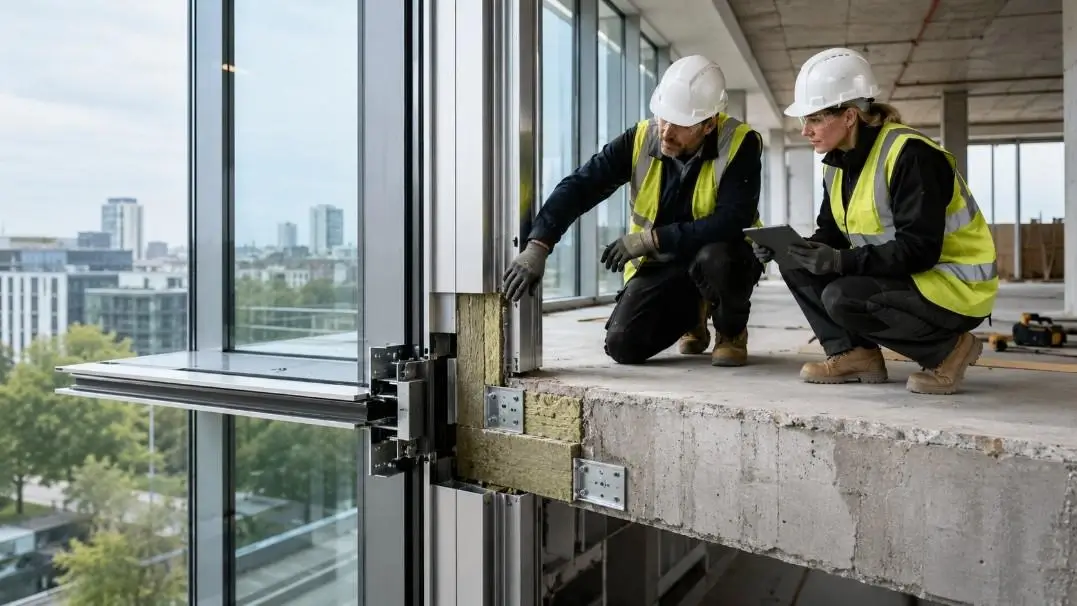
If you own, manage or are planning a building with curtain walling, the main thing to understand is simple: fire can spread through hidden gaps if those gaps are not properly sealed. This article explains where that risk sits, why it is often missed, and what to check before a curtain walling installation is signed off.
The Part of the Wall Nobody Looks At
When you look at a curtain wall facade, you see the glass, the aluminium frame and sometimes the panels between floors. What you do not see is the gap behind the facade.
This gap sits between the back of the curtain wall system and the edge of the concrete floor slab. It runs along each floor. If it is not properly sealed, smoke, hot gases and flames can move upwards through the building.
In a fire, this hidden space can act like a chimney. Hot air rises, and if there is a clear path between floors, fire and smoke can travel faster than people expect.
That is why the slab edge gap matters so much. The outside of the building may look solid, but the hidden junction between the facade and the floor can be the weak point.
Why Fire Stopping Matters
Fire stopping is the work done to seal gaps and slow the spread of fire and smoke. In curtain walling, this usually means fitting a continuous fire barrier where the curtain wall meets each floor.
This barrier is not a small finishing detail. It is a key part of the building’s fire safety.
For a compliant curtain walling installation, the fire barrier should be shown clearly in the design. The drawings should explain what product is being used, where it goes, how it is fixed and what fire rating it provides.
This applies to different curtain walling systems, whether the facade is built piece by piece on site or installed in larger factory-made sections. The system may be different, but the basic question stays the same: has the gap at each floor been properly sealed?
What Curtain Walling Details Often Miss
Many drawings show the visible parts of the facade very well. They show the glass, aluminium frame, panels, fixing brackets and drainage routes. But they do not always show the fire stopping clearly enough.
This is where curtain walling details become important.
A good detail should not only show how the facade looks. It should show what happens behind it. It should explain how the fire barrier fits between the curtain wall and the concrete slab, and how it works with the movement of the building.
Buildings move slightly because of wind, temperature changes and normal structural movement. The fire barrier has to allow for that movement while still doing its job in a fire. That is why you cannot just fill the gap with any fire-resistant material and assume it is safe.
The product and method should match the tested system. If a manufacturer provides specific fire stopping guidance, that guidance should be followed before the glass and frames are installed.
Where Projects Go Wrong
One common problem is that nobody clearly takes responsibility for the hidden fire stopping.
The facade contractor may say it is part of the main contractor’s work. The main contractor may say it belongs with the facade package. If this is not agreed early, the gap can be sealed badly, sealed with the wrong product or missed completely.
That is why the responsibility needs to be clear before work starts.
Before curtain walling installation begins, the project team should know:
- The required fire barrier
- The fire rating needed
- The exact product being used
- Who is installing it
- How it will be inspected
- How the installation will be recorded
Without this, the building may look finished from the outside but still have a serious fire safety issue hidden behind the facade.
Why Records Matter Later
For residential buildings, this can create problems long after the work is complete.
Fire safety assessors, lenders and building owners may need proof that the external wall system was installed correctly. If the records do not show what fire stopping was installed at each floor, the building can become difficult to assess.
This can affect sales, remortgaging and future safety reviews.
The issue can apply to buildings with fixed glazing, opening vents or curtain walling windows as part of the external wall system. The important point is not just the glass itself. It is how the full facade is built and sealed at every floor level.
Good records should show what was installed, where it was installed and whether it matched the tested curtain walling system. Without that evidence, even a correctly installed barrier may be hard to prove later.
What Fire Stopping Cannot Do
Fire barriers are important, but they are not magic. They only work if they are correctly chosen, correctly installed and kept in good condition.
They also need to be protected from later damage. For example, if another contractor cuts through or removes part of the barrier during later works, the fire protection may no longer perform as intended.
That is why curtain walling installation should not be treated as a job that ends when the glass is cleaned. The fire safety information should stay with the building for its whole life.
If the building is older and the original records are missing, the next step is usually inspection. A specialist may need to open up selected areas to check what is actually behind the facade.
What to Check Before Sign-Off
Before a new curtain walling installation is signed off, ask one clear question:
Does the drawing show the fire barrier at every floor junction, including the product, fixing method and tested system reference?
If the answer is not a clear yes, the detail needs to be resolved before the project moves on.
For an existing building, ask for a fire risk appraisal that specifically checks the slab edge condition. A general visual inspection is not enough, because the main risk is hidden behind the facade.
The glass may look clean, modern and solid from the outside. But with curtain walling, the part you cannot see is often the part that matters most.