


Soffit vents specifications matter because the eaves are where most pitched roofs take in fresh air, helping the roof void stay dry and stable through the seasons. Soffit air vents are not just a finishing detail, they are part of the moisture control strategy that reduces condensation risk, protects timber, and supports insulation performance when the roof is detailed and maintained correctly.
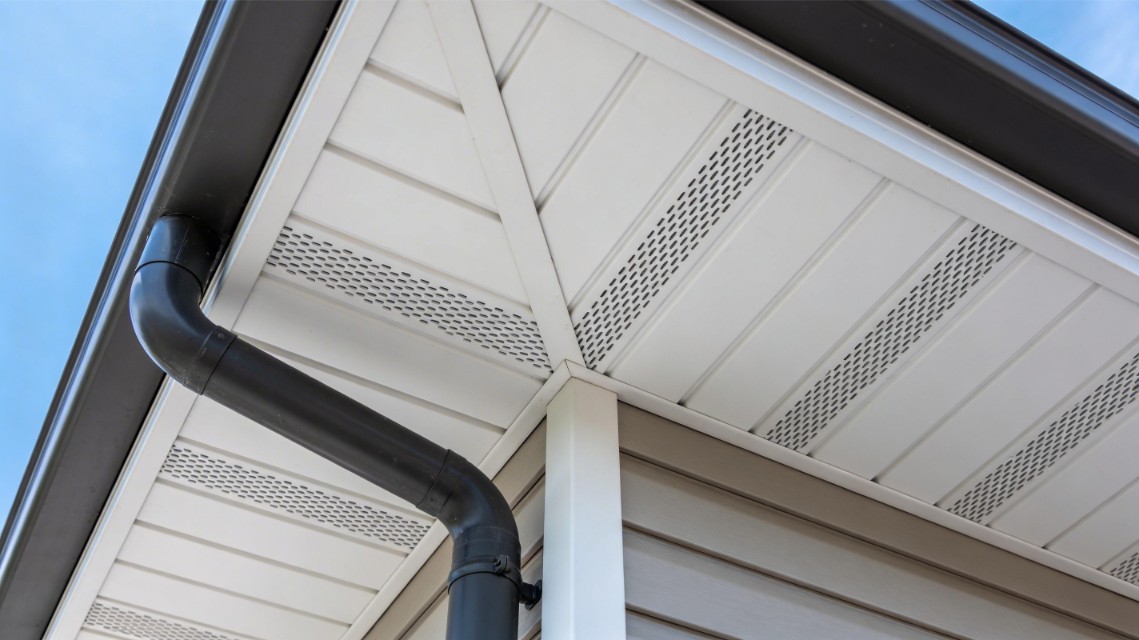
If you are new to the topic and asking what is a soffit vent, it is simply a low level vent fitted in the soffit at the roof edge that allows outside air to enter, supporting soffit ventilation across the loft or out towards high level outlets. The key is choosing soffit air vents with clear published soffit vents specifications, then matching the equivalent ventilation area to the roof design so the soffit vents roof intake is effective without being easily blocked by insulation, debris, or poor detailing.
What soffit vents do
If you are wondering what is a soffit vent, it is a ventilation opening located in the soffit at the eaves that lets outside air into the roof space so moist air can dilute and leave via high level outlets.
In practice, soffit air vents are part of a low level intake system that supports cross flow from eaves to eaves, or stack effect flow from eaves to ridge, depending on the roof design. Poor ventilation can contribute to hidden condensation and long term defects such as mould, timber decay, and reduced insulation performance, which is why UK guidance puts strong emphasis on roof moisture management.
Soffit vents specifications that matter
When people search soffit vents specifications, they often focus on vent size in millimetres, but the key performance number is usually ventilation area expressed as square millimetres per linear metre. UK roof ventilation guidance commonly converts continuous gaps into equivalent areas, for example 5 mm equals 5,000 mm² per metre, 10 mm equals 10,000 mm² per metre, and 25 mm equals 25,000 mm² per metre.
Use these checks when reviewing soffit vents specifications for soffit air vents:
- Equivalent area and coverage: Decide whether you need a continuous strip vent or spaced individual vents, but make sure the total equivalent area matches the design target.
- Vent type and airflow path: Vents must provide a continuous, weatherproof path from roof void to outside, and should not be easily blocked by insulation, debris, or paint build up.
- Insect and bird protection: Guidance commonly recommends a 4 mm mesh or grille size as a balance between stopping pests and avoiding clogging and excessive restriction.
- Materials and durability: Select UV stable, corrosion resistant materials suited to coastal exposure if relevant, and confirm the soffit board itself will not distort and close the airway over time.
- Fire aware detailing: In higher risk designs, consider whether the eaves ventilation line interacts with cavity barriers or fire stopping details, and confirm responsibilities between roofer and fire stopping contractor.
This is where soffit ventilation becomes a specification exercise rather than a simple product choice, because one weak link can negate the intended airflow.
Sizing soffit air vents for your roof
For UK pitched roofs, BS 5250:2021 sets out ventilation provision in terms of area per metre, with the exact requirement depending on roof pitch and other factors. For roof pitches more than 10 degrees, BS 5250 indicates 10,000 mm² per metre at eaves or low level as a typical provision beneath the underlay. Where the roof pitch is above 35 degrees, or for mono pitch and lean to roofs, or where roof span exceeds 10 m, BS 5250 adds an additional 5,000 mm² per metre at ridge or high level. For roof pitches 10 degrees or less, BS 5250 indicates 25,000 mm² per metre at eaves or low level beneath the underlay.
Translating that into soffit vents specifications is straightforward if you keep two rules in mind:
- Start with the roof design target in mm² per metre, then choose soffit air vents that deliver that equivalent area once you account for insect mesh, baffles, and any free area reduction from the vent design.
- Do not assume more ventilation is always better, because the airflow route must remain weather protected and balanced between low and high level openings for the roof type.
If you are selecting soffit vents roof products for a refurbishment, remember that older roofs may be less airtight at ceiling level, which can increase moisture migration into the void and make correct ventilation provision more important.
Soffit vent installation and replacement
Good soffit vent installation is mainly about continuity, clear airflow, and a clean finish that stays clear over time. Use this practical checklist for soffit vent installation:
- Keep the air path open: Do not let insulation quilt or rigid board block the eaves zone, and use rafter trays where needed so air can travel into the void.
- Maintain weathering: Fit vents as part of a complete eaves detail so wind driven rain and snow are managed, not pushed into the roof structure.
- Avoid over painting: Heavy paint layers can bridge mesh and baffles and reduce free area, so treat painted vent lines as a maintenance item.
- Verify total area: If using individual circular or rectangular vents, set out spacing so the combined equivalent area matches the design requirement.
Soffit vent replacement is usually needed for one of four reasons: brittle plastic, clogged mesh, poor original spacing, or a roof upgrade that changes the moisture risk. When planning soffit vent replacement, match the new vent to the existing cut outs where possible, but do not let convenience lock you into an undersized equivalent area or an easily blocked design.
If you suspect persistent condensation, staining, or mould in the loft, treat soffit vent replacement as one part of the fix, alongside checking ceiling air leakage routes and confirming whether high level ventilation is present where the roof configuration calls for it.
Fire aware soffit vents specifications
Many standard soffit air vents are designed for moisture control, not for fire performance, so you should consider the wider passive fire protection picture at eaves level. BS 5250 highlights that obstructions such as compartment walls and fire barriers can divide roof voids, which means each void may need its own high and low level ventilation provision rather than relying on airflow to pass through the barrier line.
Where a project requires ventilation openings to limit fire spread into the roof space, intumescent soffit ventilators exist that are designed to close in high heat conditions and can be used as replacements for common plastic grilles in some situations. If you specify these, make sure the soffit vents specifications clearly state the intended fire performance evidence, the exact opening size they fit, and how they integrate with any cavity barrier and compartmentation details.
Quick FAQ about soffit vents
How many soffit air vents do I need?
Size them by equivalent area per metre and the roof design requirement, not by counting vents, because a small vent with heavy baffles may deliver much less free area than it appears.
Is soffit ventilation enough on its own?
Often you also need a high level outlet, especially on steeper, wider, or mono pitch roofs, because BS 5250 includes cases where additional high level ventilation is required.
When should I plan soffit vent replacement?
Plan it when vents are cracked, blocked, painted over, or when a loft insulation upgrade changes the moisture balance, and treat replacement as a chance to correct the equivalent area and spacing.
Final checks for soffit vents
Getting soffit vents specifications right is a small detail that protects the whole roof build up, because it supports consistent airflow at the eaves, helps manage moisture risk, and reduces the chance of avoidable call backs later on. Use BS 5250:2021 as your benchmark for ventilation provision, then select soffit air vents that genuinely deliver the required equivalent area once mesh and baffles are accounted for, and make sure the airflow path is kept clear during soffit vent installation and future maintenance. And where the “high-level outlet” is a powered opening (rather than a passive ridge vent), the motorised vent actuator needs to achieve the intended opening under real loads so the designed airflow is actually delivered. If you are upgrading insulation, changing the roof covering, or seeing signs of condensation, plan soffit vent replacement as an opportunity to correct spacing, continuity, and any fire aware detailing so the completed system performs as intended for the life of the building.