


Passive fire protection is the built in layer of fire safety that helps a building hold together, protect escape routes, and slow the spread of fire and smoke. This passive fire protection guide explains what to look for, how the parts fit together, and how to avoid common specification and site mistakes.
In real projects, passive fire protection succeeds when it is designed as a connected system, installed without gaps, and kept intact through the life of the building. If you are responsible for a property, managing contractors, or planning upgrades such as new doors, glazing, walls, or smoke vents, this passive fire protection guide will help you ask the right questions and document the right evidence.
What is passive fire protection
If you have ever asked what is passive fire protection, think of it as fire safety measures that are built into the fabric of the building to restrict the growth and spread of fire and smoke. ASFP describes passive fire protection as including measures such as controlling the flammability of wall and ceiling linings, dividing a building into fire resisting compartments, protecting the structure to prevent premature collapse, and providing protective routes for escape.
A useful way to understand passive fire protection is to split it into three job types:
- Compartmentation: limiting how far fire and smoke can travel.
- Structural protection: helping the building maintain stability for the required period.
- Escape route protection: keeping stairwells and corridors tenable long enough for people to leave.
Examples of passive fire protection include fire doors, fire resisting walls, floors and ceilings, fire stopping, fire resisting ducts and dampers, and fire protection to structural members. This list is a good baseline for surveys because it reminds you to check doors and walls, but also the less visible details such as service penetrations and structural protection.
Types of passive fire protection
There are many types of passive fire protection, but they should always be specified as part of a tested or assessed construction and not treated as interchangeable. A strong specification focuses on what the system must achieve, where it sits in the compartment line, and what evidence proves the rating in the final installed build up.
Below are the core components you will see in UK buildings, and what the specification should typically cover.
Fire resisting walls, floors, and ceilings
Passive fire protection relies on fire resisting construction to separate risks, protect escape routes, and create compartments. When you specify walls and floors, focus on the fire resistance period required by the fire strategy, continuity at junctions, and how services will pass through without breaking the line. The choice of fire retardant boards within that build-up — whether gypsum, fibre cement, or calcium silicate — changes the tested system reference, so board type, declared standard, and exposure conditions need to be locked before framing or substrate work begins
Practical specification notes that reduce failure on site:
- State the required fire resistance and the exact wall or floor build up, including board type, thickness, stud type, insulation type, and fixing centres.
- Include rules for changes, for example no unapproved substitutions for boards, insulation density, or sealants.
- Require photo records before ceilings are closed, because many critical details become hidden quickly.
Fire stopping and penetration seals
Fire stopping is where passive fire protection most often fails, because every new cable, pipe, or duct is a chance to puncture a rated element. Getting the fire stop insulation specifics right—from substrate matching to sealant depth—ensures penetrations reinstate the compartment line without hidden weak points. ASFP includes fire stopping as a core passive fire protection product area and highlights the need to consider penetrating services when evaluating escape route protection.
A good fire stopping scope should:
- Define the compartment line on drawings, then list every service type that crosses it
- Require a tested system for each penetration type, including backing materials, seal depth, and support spacing
- Include labelling and a traceable register, so future works do not unknowingly break the seal
Fire doors and smoke control doorsets
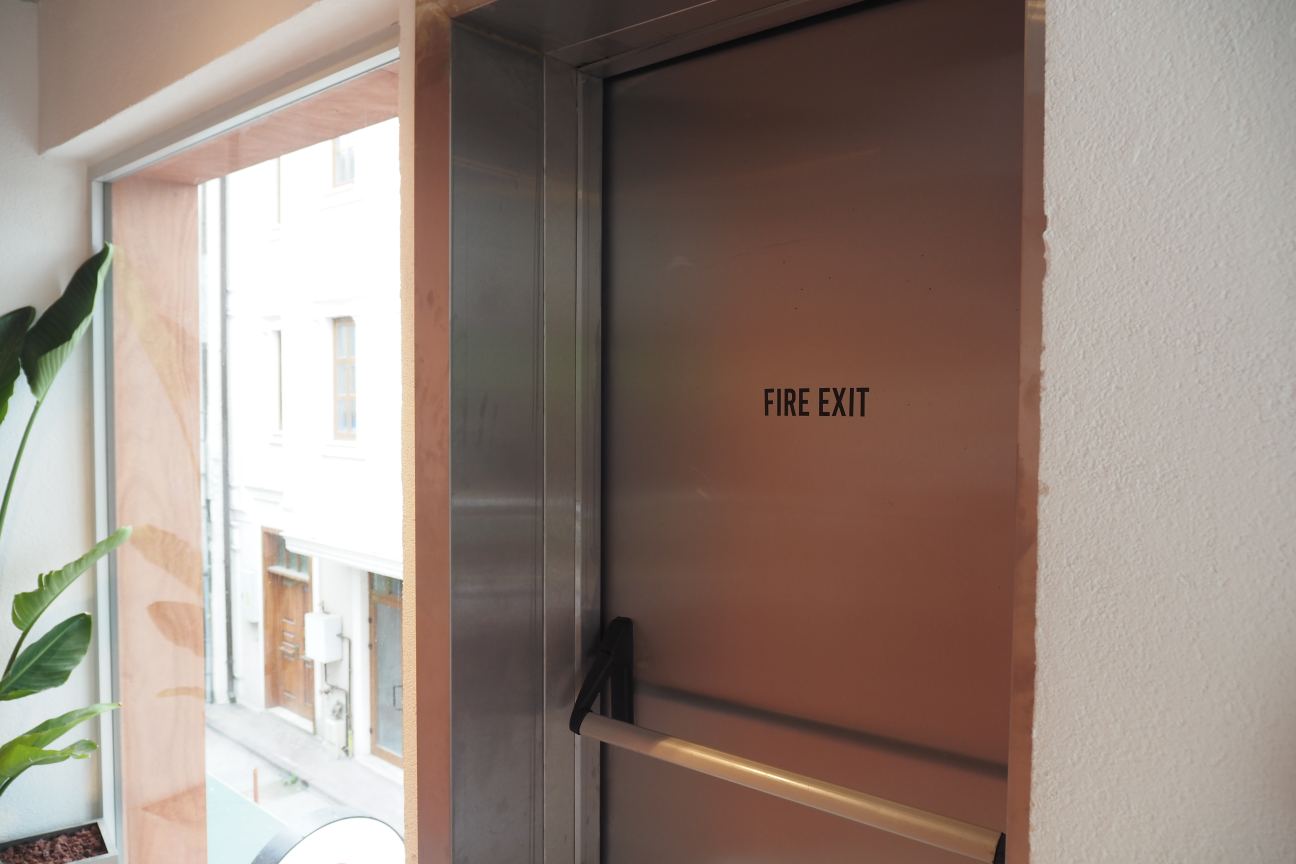
Fire doors are a major part of passive fire protection because they protect openings in fire resisting walls and help keep escape routes tenable. In UK maintenance, doors commonly drift out of tolerance through wear, changing floor finishes, or poor adjustments, so your plan should include regular inspection and clear repair responsibilities.
Specification essentials:
- Doorset rating, for example FD30 or FD60, and whether smoke control is required
- Compatible frame, hinges, closers, glazing system, and seals as a doorset, not as separate items
- Clearances and thresholds that match the doorset evidence and do not encourage site trimming that breaks performance
Fire resisting glazing and compartmentation visibility
Fire resisting glazing lets you maintain lines of sight and daylight while preserving compartmentation, but only when the full assembly is correct. ASFP includes fire resisting glazing among the passive fire protection items a risk assessor may need to identify and consider.
When specifying:
- State the required integrity and insulation performance where applicable, not just the glass type
- Ensure the framing system, beads, gaskets, and fixings match the tested system
- Confirm how glazing interfaces with surrounding walls and fire stopping at the perimeter
Structural fire protection and passive fire protection coating
Structural protection is part of passive fire protection because it helps prevent premature collapse and supports evacuation and fire service intervention. One common approach is a passive fire protection coating, such as an intumescent coating or a cementitious protection system, specified to deliver the required fire resistance for the steel section and exposure conditions.
When you write the clause, include:
- Required fire resistance period, section factors where relevant, and finish requirements
- Substrate preparation and environmental limits, because coating performance depends heavily on correct preparation
- Inspection hold points and dry film thickness checks, because a visually complete coating can still be under applied
Passive and active systems in one fire strategy
Passive fire protection is only one half of a complete approach. Active measures detect, alert, control, or suppress, while passive measures resist and contain.
To make this practical, here are active and passive fire protection system examples that often appear together in UK buildings:
- Passive: compartment walls, fire doors, fire stopping, cavity barriers; Active: detection and alarm, emergency lighting, sprinklers or water mist, smoke control and smoke vents
- Passive: protected stair enclosure; Active: automatic opening ventilation in the stair, plus an alarm interface and power supplies
The key coordination point is that active systems often rely on passive measures to work properly. A smoke vent may clear smoke from a stair, but if the stair enclosure is compromised by unsealed penetrations, smoke can still flood the escape route from elsewhere. Likewise, a sprinkler system can control fire growth, but damaged compartmentation can still allow smoke spread into adjacent areas.
Site checklist you can actually use
Use this passive fire protection guide style checklist for surveys, handovers, and periodic inspections. It is designed for busy UK sites where you need fast, defensible checks.
Compartmentation and fire stopping
- Can you identify the compartment line on drawings, and does what you see on site match it
- Are service penetrations sealed with a tested system for that service type, and is the seal continuous
- Are there any hidden void routes that bypass the compartment line, such as above ceilings, behind risers, or through cupboards
Fire doors
- Does every fire door close fully onto the latch without slamming or sticking
- Are seals continuous and undamaged, with no missing sections at corners
- Are glazing beads, apertures, and ironmongery consistent with the doorset evidence
Structural protection and coatings
- Is the protection continuous on all required faces, including awkward areas around connections
- Are penetrations through protected elements correctly detailed, not simply patched
- For passive fire protection coating works, are thickness checks recorded and areas of damage repaired promptly
Documentation and traceability
- Is there a clear register of passive fire protection measures, especially fire stopping locations and door sets
- Are certificates and product data sheets available at handover, not only at procurement stage
- Are photos captured before close up, especially at risers, ceiling voids, and service corridors
Passive fire protection is at its best when it is boring. Doors that close every time, risers that are sealed and labelled, and walls that stay intact through refurbishments rarely make headlines, but they are exactly what keep people safe.