


Intumescent strips for firedoors are a critical part of a fire door assembly because they expand in heat and seal the gap between the door leaf and the frame, helping to contain fire and smoke. If you specify, install, or maintain fire doors in the UK, choosing the correct intumescent strip for fire door performance is as important as the door rating itself.
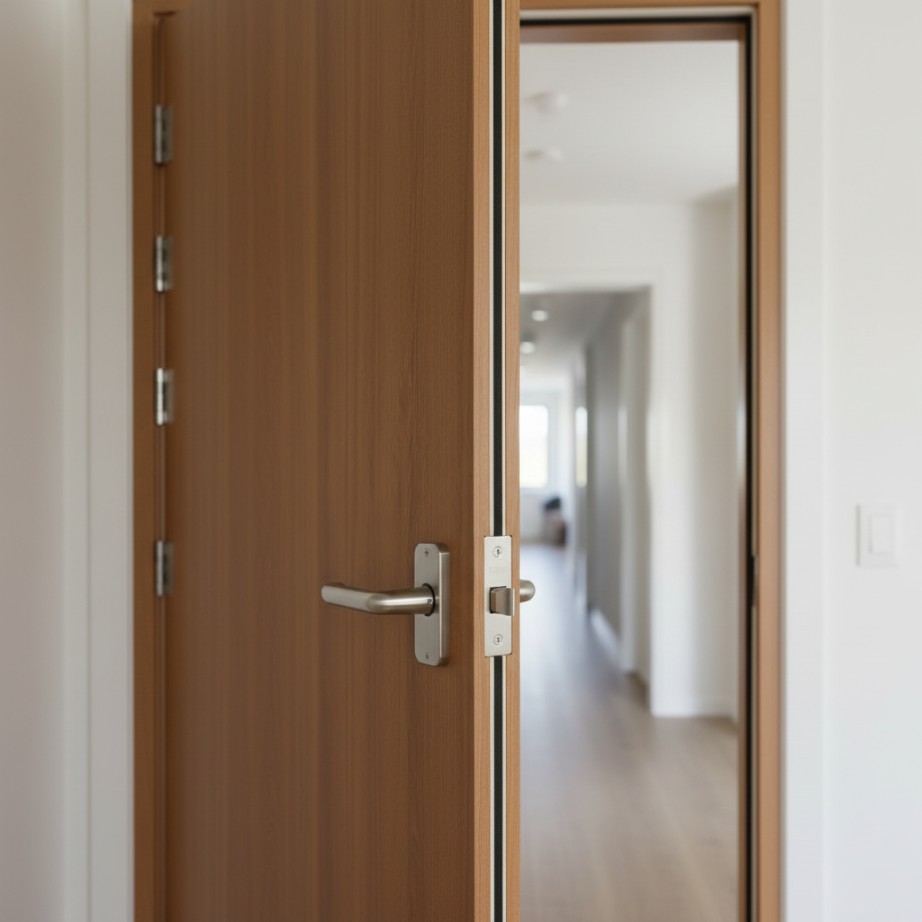
On site, most problems come from small details, missing seals, the wrong size, mixed seal types around one door, or gaps that do not suit the seal. This article explains the key concepts, the UK context, and the practical checks that help you get intumescent strips for firedoors right first time.
What intumescent strips do, and where they go
Intumescent seals are designed to expand under heat and fill the gap between the door leaf and the frame, helping prevent the passage of smoke and fire into other areas or compartments of a building. Because of that function, Firedoor Alliance guidance is clear that all fire doors must be fitted with the appropriate seals.
An intumescent strip for fire door use is usually located in grooves machined into the two vertical sections and the top edge of the door frame, because that position supports continuous sealing at the most critical edges. If it is not possible to fit them into the frame or lining, guidance allows intumescent seals to be fitted into the door edge instead. In plain terms, the performance requirement is about sealing the perimeter gap, whether the strip sits in the frame or the leaf.
It is also common to specify combined intumescent and smoke seals, which are designed to provide additional protection against cold smoke. In some circumstances, smoke seals are a Building Regulations requirement, so you should check whether the door needs an S suffix rating such as FD30S or FD60S.
For clarity when you are writing a scope of works, include a simple location statement like intumescent strips on door or frame, then follow it with the exact product reference and the door manufacturer requirements. That wording helps avoid the classic problem where the joiner fits a strip, but not in the location supported by the doorset evidence.
UK rules, test evidence, and fire door intumescent strip regulations
When people search for fire door intumescent strip regulations, they usually want to know which documents matter and what an inspector will expect to see. In the UK, Building Regulations Part B covers fire safety, and Approved Document B is the guidance document for Part B. Approved Document B includes Appendix B relating to fire doors, and it expects fire doors to have the appropriate performance for the rating claimed.
Performance evidence is typically demonstrated by testing to BS 476-22 or the European equivalent EN 1634, and the BWF fact card notes that test evidence or assessments should come from a UKAS accredited test facility. This matters because small differences in detail, including intumescent strips, frames, and ironmongery, can significantly affect the rating, so you cannot treat seals as an interchangeable accessory.
A second practical point in fire door intumescent strip regulations is smoke control. The BWF fact card explains that the suffix S indicates a smoke seal must be added, for example FD60S. It also lists examples of situations where smoke seals are required, including between houses and integral garages, between flats and common areas, and between escape routes and occupied or used areas such as offices. It also notes smoke seals are required in protected lobbies, along escape routes, and where escape routes are subdivided.
This is why intumescent strips for firedoors and smoke control should be discussed together early, not left as a late stage finishing decision. If a door is required to restrict smoke, the seal choice affects not just fire performance but also day to day usability, clearances, and threshold detailing.
Types of intumescent strips
There are several types of intumescent strips in the market, but the important point is not the marketing label, it is whether the strip is compatible with the specific fire door leaf or doorset and installed exactly as tested or assessed. Seal materials can differ between manufacturers, for example sodium silicate or graphite, and they can expand at different rates. Because of that, it is important to use the same type of seals around the door when installing or replacing seals.
When specifying types of intumescent strips, you will usually come across:
- Plain intumescent seals, focused on heat activated expansion to seal perimeter gaps.
- Combined intumescent and smoke seals, providing intumescent expansion plus a brush or blade element to limit cold smoke.
- Acoustic combinations, where acoustic performance is added to the same edge detail when needed for certain settings.
The phrase types of intumescent strips is also useful in specifications because it forces the conversation about what the door must achieve, fire only or fire and smoke, rather than assuming a single strip suits every FD rating. When you use that phrase, include the door rating and whether smoke sealing is required, because the BWF fact card links the S suffix to smoke seals and lists common situations where smoke seals are required.
Size and gap compatibility
A common question is what size seal is needed. Firedoor Alliance guidance gives recommended seal sizes for many modern timber fire doors, stating that for most modern 30 minute doors, other than doorsets, the recommended seal size is 15 mm x 4 mm. For most modern 60 minute fire doors, it gives 20 mm x 4 mm, or two 10 mm x 4 mm seals. It also states that intumescent seals must be used as recommended by the door leaf manufacturer.
The seal size only works if the gaps suit it. Firedoor Alliance guidance says that in general the gap between the door and the frame should not exceed 3 mm along the two long edges and across the top of the door leaf. It also notes the bottom gap is usually around 10 mm for non smoke conditions but 3 mm when smoke seals are required, and it highlights that you should check the door manufacturer instructions.
This is the practical heart of intumescent strips for firedoors: a correct intumescent strip for fire door use, fitted neatly, can still fail to do its job if the perimeter gaps are wrong for the strip that has been installed. In other words, fire door intumescent strip regulations are not just about having a strip present, they are about the complete installed assembly matching its test evidence.
Installation, inspection, and replacement
Correct installation starts with continuity. If the door is part of a wider remedial scope, aligning seal fit with the overall fire doors installation process (frames, clearances, hardware, commissioning) helps avoid repeat defects. Firedoor Alliance guidance states that uninterrupted intumescent strips should be fitted into the frame or lining where possible, and if that cannot be achieved they may be fitted into the door edge. During fit out, confirm the grooves are clean, the strip sits fully home, and the seal line is continuous around the required edges, with neat corner joints rather than missing sections.
A practical method statement for an intumescent strip for fire door work should include these basics:
- Follow the door leaf manufacturer requirements for seal type, size, and position, seals must be used as recommended by the door leaf manufacturer.
- Do not mix seal formulations around one leaf, because Firedoor Alliance warns materials differ and it is important to use the same type of seals around the door when installing or replacing.
- Check perimeter gaps, because Firedoor Alliance indicates 3 mm maximum along the long edges and top in general, and bottom gaps change when smoke seals are required.
If your scope includes intumescent strips on door or frame, confirm who is responsible for machining grooves in the frame, because it affects programme and quality control. Many remedial jobs fail because the strip is applied as a surface stick on, even when the doorset evidence expects a grooved, fitted seal.
When to replace intumescent strips
Intumescent strips for firedoors should be replaced when they are missing, damaged, painted over, or no longer continuous, because gaps in the seal line reduce its ability to seal the perimeter in fire conditions. Replacement is also appropriate when a door changes use, for example when smoke control becomes required and a combined seal is needed, since Firedoor Alliance explains combined intumescent and smoke seals are used to prevent the passage of cold smoke and may be required by Building Regulations in some circumstances.
When planning replacement, treat it as a compliance task, not a cosmetic repair. The BWF fact card stresses that differences in details such as intumescent strips can significantly affect the rating, and it warns that when installing a fire door you must use the components identified in the installation instructions or the door could fail. That same logic applies to maintenance, where the fact card notes it is recommended that products such as fire doors are provided with instructions on installation and maintenance.
Common mistakes to avoid
These points come up repeatedly in surveys and remedial programmes:
- Wrong seal for the door rating: Use the seal size and type supported by the door leaf manufacturer guidance, not a generic substitute, because Firedoor Alliance states seals must be used as recommended by the manufacturer.
- Gaps too big for the seal: If the gap exceeds the general 3 mm guidance at head and jambs, the strip may not bridge the gap effectively when activated.
- Smoke requirement missed: If the door is specified as FD30S or FD60S, smoke sealing is part of the requirement, and the BWF fact card explains the S suffix indicates a smoke seal must be added.
- Inconsistent seal types around one door: Firedoor Alliance highlights different materials expand differently and advises using the same type of seals around the door during installation or replacement.
This is also where the wording matters for SEO and procurement. If you describe the work simply as intumescent strips for firedoors, you can still end up with the wrong product unless you state rating, smoke requirement, size, location, and the permitted gap range for that specific doorset.
Specification checklist and FAQ
Use this checklist when writing or reviewing a specification for intumescent strips for firedoors:
- Door rating and smoke requirement: State FD rating and whether it is FD30S or FD60S, because the BWF fact card links the S suffix to smoke seals.
- Seal type: State whether it is a plain intumescent strip for fire door use, or a combined intumescent and smoke seal, which Firedoor Alliance describes as available for cold smoke protection.
- Seal size: Use manufacturer guidance, general reference is 15 mm x 4 mm for many modern 30 minute doors and 20 mm x 4 mm or two 10 mm x 4 mm for many modern 60 minute doors.
- Seal location and continuity: State frame groove preferred with uninterrupted strips, with door edge permitted where needed, as per Firedoor Alliance guidance.
- Evidence and certification: Require test evidence to BS 476-22 or EN 1634 from a UKAS accredited facility, aligning with the BWF fact card.
Do all fire doors need seals?
All fire doors must be fitted with the appropriate seals. The seals expand under heat to fill gaps and help prevent fire and smoke passage, which is a key part of how the door assembly provides compartmentation.
Are smoke seals always required?
No, but they are required in some situations. Smoke seals can be a Building Regulations requirement, and the BWF fact card lists common examples such as between flats and common areas and along escape routes.
What is the simplest way to stay compliant?
Follow the door leaf manufacturer instructions and keep the installed assembly consistent with its test evidence, because the BWF fact card warns small changes in details such as intumescent strips can significantly affect the rating. That is the most reliable interpretation of fire door intumescent strip regulations on real UK sites where responsibility can be split across trades.
Intumescent strips for firedoors are one of the smallest visible components on a fire door, but they are part of the performance critical perimeter seal. If you choose the right intumescent strip for fire door use, fit it continuously in the correct location, and confirm the gaps suit the seal and the doorset evidence, you protect the rating you have paid for and the escape routes the building depends on.