


Fire retardant boards are used across walls, ceilings, shaft linings, encasements, and service zones, but the term is often used too loosely and that creates specification mistakes before a project even reaches site. In UK construction, the important distinction is not the sales label alone, but whether the board is part of a tested system, what standard it is declared to, and how it performs in relation to fire resistance, fire protection, and reaction to fire.
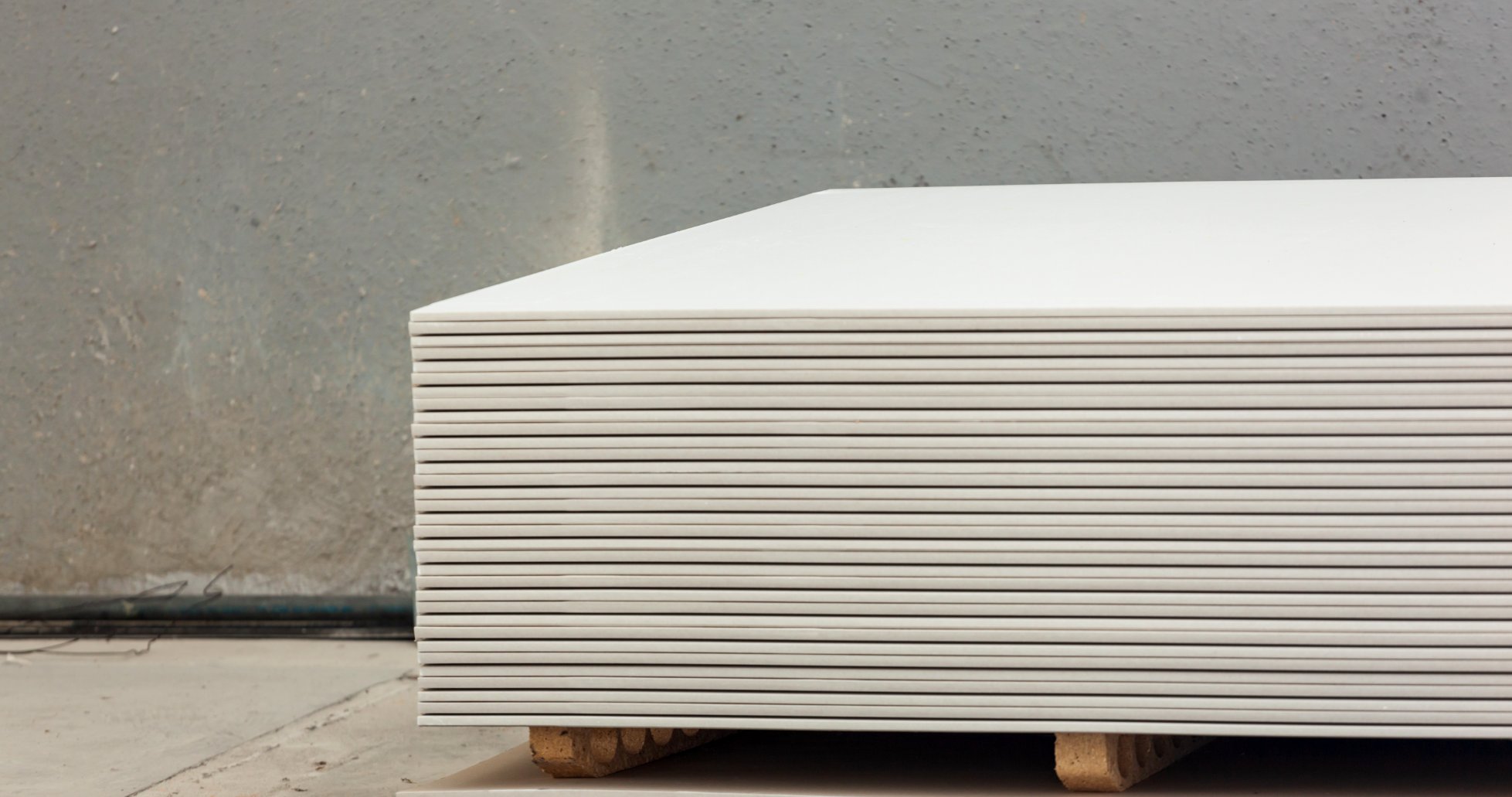
Many specifiers, buyers, and property owners use fire retardant boards as a catch all phrase for any board that helps with fire safety, yet different products do very different jobs. Bonfire’s technical guide separates fire resistant boards, which are designed to delay fire penetration, from fire retardant products, which are chemically treated to slow burning, and from non combustible boards classified A1 or A2 under EN 13501, which do not contribute to fire development in the same way. That distinction matters because a board that helps slow flame spread is not automatically the same thing as a board tested to deliver compartmentation in a wall or ceiling build up.
What are fire boards
When people search for a fire resistant board, they are usually looking for one of four product families, gypsum fire boards, glass reinforced gypsum boards, cement or fibre cement boards, or calcium silicate based boards for higher performance or specialist applications. British Gypsum describes Gyproc plasterboard products as part of drylining solutions for walls, ceilings, floors, partitions, and encasements, while Glasroc F specialist boards are used as the basis for specialised fire resistance and steel protection systems.
A good example of mainstream gypsum based fire boards is Gyproc FireLine. Its declaration of performance identifies it as EN 520 Type F plasterboard, available in 12.5 mm and 15 mm thicknesses, with a declared reaction to fire class of A2-s1,d0 and a thermal conductivity of 0.24 W/mK. Knauf Fire Panel is presented in a similar way, with compliance to EN 520 Type A and F and an intended role where enhanced fire performance is needed.
This is why the phrase fire resistant board should always be followed by the exact product family and intended use. A gypsum board for internal lining, a mineral fibre fire batt for sealing service penetrations, and a cement board for wet external exposure may all support fire safety, but they are not interchangeable.
Another point worth keeping clear is that some fire retardant boards are really part of passive fire stopping rather than wall lining. Protecta describes a fire rated board or fire batt as a high density mineral fibre board with an ablative coating, designed to seal openings in fire rated walls and floors around services and help maintain compartmentation. So when you write a specification, it is better to separate lining boards from penetration seal boards instead of assuming one product type covers both tasks.
The standards and data that matter most
The strongest specifications start with declared standards rather than marketing language. For gypsum products, the most obvious reference point is EN 520, which is the harmonised standard listed on the Gyproc FireLine declaration of performance, and that document also shows the measurable data you should expect to see on a proper datasheet, including reaction to fire, thickness, flexural strength, and thermal conductivity.
If you are reviewing fire rated gypsum board specifications, that is the level of detail you want in front of you. A board that is simply described as fireproof or fire rated without the underlying product standard, declared class, and intended use leaves too much room for substitution and misunderstanding.
The White Book from British Gypsum also makes a wider systems point that is often missed in early procurement. It states that fire performance includes fire resistance, fire protection for structural steelwork, and reaction to fire, and it emphasises that claimed performances are based on tested systems using the specified components together. It also says that the use of other components cannot be assumed to meet the same performance and quality standards when installed in tested systems.
That is why fire retardant boards should never be selected in isolation from the studs, framing, fixings, joint treatment, insulation, and perimeter details that surround them. The board is important, but the rating normally belongs to the wall, ceiling, shaft, or encasement system as a whole.
The same principle applies when you compare one manufacturer against another. Gyproc FireLine is declared as Type F with A2-s1,d0 performance, while Knauf Fire Panel is described as EN 520 Type A and F with enhanced fire performance, so the rational way to compare them is by standard, class, thickness, tested system use, and field application rather than by colour or product name.
Choosing boards for walls and ceilings
For internal partitions and wall linings, a fire resistant board is often specified where the objective is to delay fire penetration long enough to support compartmentation and safe escape. British Gypsum’s White Book shows that walls, partitions, shaftwalls, and encasements are all tested as full constructions, which is why board thickness and layer count must be matched to a known system rather than guessed on site.
Ceilings need even more care because people often assume the board alone creates the rating. Knauf states clearly that in suspended ceilings there is no such thing as a fire resistant tile or a fire resistant grid on its own, because fire resistance is only achieved by the combined tile and grid system and the tested construction behind it. British Gypsum’s ceiling guidance makes the same systems point, noting that quoted performances are achieved only when the recommended components and fixing methods are used throughout.
This is especially relevant when people search for fire retardant ceiling boards. In practice, fire retardant ceiling boards only deliver meaningful protection when they are part of a tested ceiling build up with the right framing, spacing, joints, and supporting structure. A suspended ceiling may also be tested beneath a timber floor or roof cavity to deliver fire resistance for a defined period, but that period belongs to the tested ceiling assembly, not to a loose board stack in isolation.
If your project brief calls for a 2 hour fire rated gypsum board solution, make sure the evidence refers to the complete ceiling or lining construction. The British Gypsum ceiling literature includes examples of systems stated as achieving 120 minutes fire resistance, which is the kind of evidence a 2 hour fire rated gypsum board specification needs to rely on. Put simply, a 2 hour fire rated gypsum board target is a system question first and a board question second.
That is also why fire retardant ceiling boards should be selected later in the process than many buyers expect. First define the required fire period and structural arrangement, then choose the ceiling system that has been tested to meet it, and only then lock the board type, thickness, framing, and joint treatment. This saves a lot of site arguments where a contractor buys a familiar pink board and assumes it will automatically deliver the same result in every ceiling.
External use, wet areas, and higher exposure conditions
One of the most common mistakes in this area is assuming that any fire resistant board can also be used outside. Standard gypsum fire boards are primarily internal lining products, and Gyproc FireLine is declared for plasterboard lining, while British Gypsum’s product literature notes that standard gypsum boards are unsuitable for areas subject to continuous moisture.
That is where the search term fire resistant board for external use becomes more specific. British Gypsum describes Glasroc X Sheathing Board as a weather resistant board that offers temporary weather protection for steel frames and is used as part of the GypLyner Xternal system, while also being easier to handle than cement board. For more robust external exposure, Proctor A1 Cement Board is described as an external grade fibre cement board suitable for internal and external wall applications and classified A1 non combustible.
If you need a fire resistant board for external use, fibre cement and specialist sheathing products are usually more realistic starting points than standard gypsum plasterboard. Roma Heating’s fibre cement board guidance also describes A1 fire rated cement boards as suitable for internal or external use on floors, walls, or ceilings, with resistance to fire, moisture, and mould. That makes them particularly relevant for façade zones, wet rooms, service areas, and other high exposure locations where internal lining boards would be the wrong choice.
Calcium silicate products also sit in this higher performance discussion. Promat describes its calcium silicate materials as having strong fireproofing and thermal properties, with some products available in rigid, self supporting formats and some water repellent variants aimed at demanding environments. In specification terms, that means the phrase fire resistant board should be tied not just to fire period, but also to humidity, external exposure, impact risk, and the structural role of the board.
A practical specification checklist for UK buyers
The cleanest way to choose between fire retardant boards is to write a short checklist before you start comparing prices. First, identify whether the board is for wall lining, ceiling lining, shaftwall construction, structural encasement, passive fire stopping, or external sheathing, because those uses point to different product families straight away.
Second, ask for the product standard and declared fire class. For gypsum boards that means checking EN 520 type and declared reaction to fire, while for external cement boards or specialist boards it means checking the declared A class or other relevant classification and intended application.
Third, confirm whether the board is being chosen as part of a tested system. The White Book is very clear that the claimed performance of partitions, walls, and ceilings depends on the specified components and the recommended installation method being used throughout. This matters just as much for fire retardant ceiling boards as it does for wall linings.
Fourth, check whether the environment changes the answer. A board suitable for a dry internal corridor may be the wrong choice for a façade backing wall, plant room, damp service zone, or other location where a fire resistant board for external use or moisture resistant cementitious board is the safer route.
Finally, read the datasheet properly. A useful product sheet should tell you the board thickness, declared standard, reaction to fire class, intended use, and any system dependency, because those are the details that allow you to compare one fire resistant board against another in a meaningful way.
In short, fire retardant boards are only useful when the board type matches the job, the standard matches the claim, and the installation matches the tested system. If you treat every board with a fire label as interchangeable, you risk over specifying in the wrong place and under specifying where performance matters most. The better approach is simple, choose the board family first, verify the declared performance second, and then lock it into a tested wall, ceiling, or sheathing system that is appropriate for the building and the exposure conditions.