


Fire rated cladding works only when the whole external wall build up is designed as a system, not when a single panel is labelled as safe. A strong specification focuses on the layers that drive fire behaviour, the test evidence that applies to the exact build up, and the details that stop hidden fire and smoke spread in cavities.
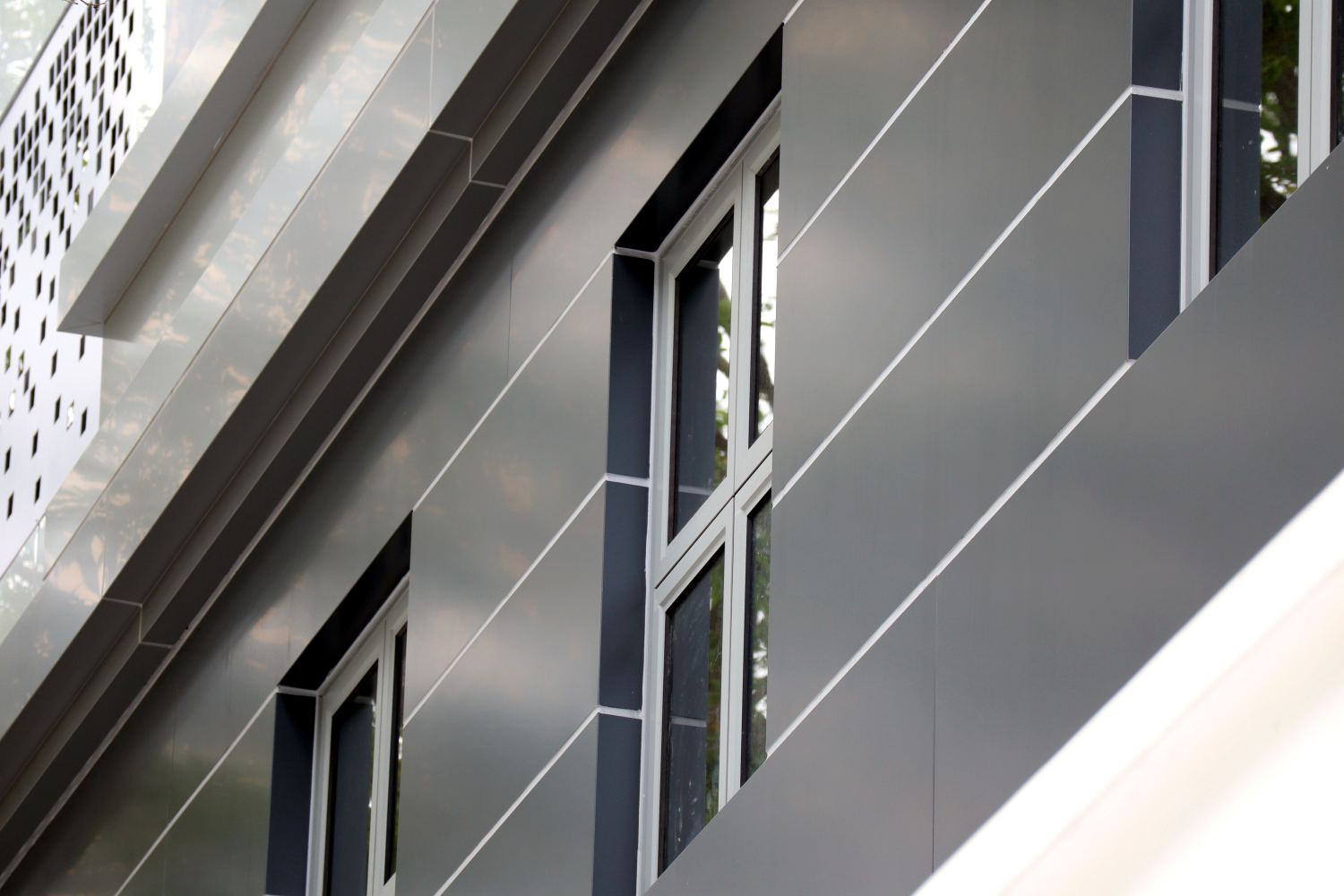
This article is a practical, project ready fire rated drop in for designers, main contractors, and client teams who need fire rated cladding specifications that are clear, buildable, and auditable. It prioritises materials, standards, and performance documentation over legal commentary, while still using the terminology that UK specifiers and Building Control recognise.
Fire performance terms that affect specification
Most confusion in fire rated cladding comes from mixing reaction to fire and fire resistance. Reaction to fire is the response of a material or component to a heat source, including flame spread over the surface and heat release, and CWCT explains that materials may be classified to EN 13501-1 as A1, A2, B, C, D, E, or F. CWCT also notes that EN 13501-1 classifications include smoke production and flaming droplets or particles ratings, expressed via s and d indexes.
Fire resistance is different, because it is the ability of a component or construction to satisfy performance criteria for a stated time, and CWCT summarises façade related criteria such as integrity and insulation. For external wall systems, you will often be dealing with reaction to fire classifications for surfaces and materials, then separately considering system behaviour in large scale façade fire scenarios.
When you write fire rated cladding specifications, define which of these you are asking for in plain language, then list the standard you expect the evidence to follow. That one step prevents the common mistake where a contractor submits a reaction to fire classification for a panel face when the project actually needs façade system performance evidence.
Fire rated cladding materials and where they fit
A useful way to choose fire resistant cladding materials is to work from the outside in, because every layer contributes to fire spread routes differently. For each layer, your specification should state the product family, acceptable materials, minimum reaction to fire class, and what supporting documents must be provided.
External face and fire resistant cladding panels
The external face is what most people picture when they say fire rated cladding, but it is only one part of the system. CWCT highlights a key nuance: a combustible material can sometimes have a non combustible facing that restricts surface spread, while a non combustible material can still have a combustible finish that allows fire spread over the surface.
Common external face options used in UK rainscreen projects include aluminium sheet, steel, zinc, terracotta, fibre cement, high pressure laminate, and aluminium composite material in different core grades. CWCT gives a practical example of why you must check Euroclass evidence, noting that polyethylene cored ACM can be class 0 under national classification yet only class D to EN 13501-1, and it notes that fire resistant ACM panels and limited combustibility ACM panels are available with class B and A2 respectively.
For fire resistant cladding panels, your spec should state:
- Required reaction to fire classification to EN 13501-1, including s and d where applicable
- Valid thickness range, substrate, and mounting conditions covered by the classification report
- Restrictions on finishes, because CWCT warns that a non combustible substrate can still have a combustible finish that affects surface spread
Use the phrase fire resistant cladding panels in your tender schedule to distinguish the visible panel from insulation, membranes, and cavity barriers, because many procurement issues come from assuming the panel classification covers the whole wall.
Insulation selection behind fire rated cladding
Insulation is often the biggest risk lever, because it sits in the cavity and can be exposed to hot gases and flames. CWCT notes that where there is a harmonised product standard, such as EN 13162 for mineral wool, EN 13166 for phenolic, and EN 13165 for PUR or PIR, relevant European standards should be used and the reaction to fire should be classified to EN 13501-1. CWCT also states that the UK Building Regulations classification of class 0 is no longer appropriate for such materials, because the products should be classified under EN 13501-1.
For external wall insulation, do not specify only thermal performance. Add requirements for:
- Product standard, declared reaction to fire classification, and Declaration of Performance
- Whether the insulation is intended to be in the cavity, in a cassette, or in an insulated spandrel zone, because CWCT warns that rigid foam insulation in spandrel areas can have no integrity against fire or hot smoke, allowing bypass of barriers
- Dimensional stability and fixing pattern, because voids and slumping create fire pathways
If you need a simple default for safer detailing, mineral wool based solutions are commonly used because they can support both thermal and fire performance, and CWCT notes that mineral wool is the only commonly used insulation material that can satisfy the definition of limited combustibility in some high rise contexts.
Membranes and barriers behind fire rated cladding
Membranes matter because they can be continuous along the façade, and if they ignite they can spread fire rapidly behind panels. CWCT discusses thin membranes for waterproofing, airtightness, and vapour control, noting they may be excluded from some combustibility requirements in certain contexts if detailed so they do not increase risk of fire spread, and it notes that Euroclass B rated membranes are available and may be specified in exposed or vulnerable areas. Separately, the England government FAQ on external wall rules notes that Approved Document B volume 2 gives guidance that membranes should achieve at least class B-s3,d0.
In practical fire rated cladding specifications, treat membranes as a controlled item:
- State minimum reaction to fire class for each membrane type, then lock the product reference
- Require details showing that membranes do not pass over the front of cavity barriers, aligning with CWCT advice for high rise contexts
- Require continuity rules around openings, because that is where site cutting and patching usually happens
Subframes, fixings, and thermal breaks
Metals do not burn in the same way as polymers, but they can conduct heat, distort, and create paths around barriers. CWCT notes that metal components passing through a fire stop can transfer heat by conduction, and in some cases metal on the protected side can become hot enough to ignite adjacent materials, which may require measures such as insulation of brackets or mineral boards.
Your fire rated cladding specifications should therefore include:
- Bracket and rail materials, corrosion category, and any requirements for protected zones at fire stops
- Limits on the amount and type of combustible thermal break material used in brackets, especially in high risk buildings
- A rule that any change of bracket, rail, or thermal break product triggers a fire performance review, not just a structural check
Fire rated cladding standards you should reference
A robust façade spec names the standards that underpin the evidence, then tells the contractor what to submit. Where stakeholders need the wider compliance landscape (beyond façade-specific tests), linking back to fire safety codes and standards keeps the specification language consistent with the rest of the project’s fire documentation.
Euroclass and EN 13501-1
EN 13501-1 is the core reaction to fire classification framework for construction products in the UK market, and CWCT sets out the A1 to F class ladder in its façade technical note. CWCT also highlights that EN 13501-1 classifications include smoke and droplets indexes, even though older guidance did not always use them explicitly.
In fire rated cladding standards language, this is where you write requirements like A2-s1,d0 or B-s3,d0, but you must also specify the test scope. Always ask for the full classification report and field of application, because a class achieved in one mounting condition may not apply to your build up.
Large scale façade testing, BS 8414 and BR 135
Where the risk profile, building height, or design approach requires it, large scale façade fire testing is used to assess system behaviour. Tecnalia lists BS 8414-1 and BS 8414-2 as large scale fire propagation test standards for façades and references BR 135 in the same system testing context. CWCT also states that testing to BS 8414 with assessment to BR 135 may be used as an alternative route to some prescriptive requirements for some wall types, and it notes that testing is applicable to rainscreens and externally insulated render systems.
In fire rated cladding standards terms, a key specification habit is to avoid vague claims like tested to BS 8414. Instead, require:
- The full BS 8414 test report for the exact system build up
- The BR 135 assessment that interprets performance against the criteria
- Confirmation that the proposed build matches the tested configuration, including cavity depth, insulation type, fixings, and cavity barriers
Product standards for specific cladding forms, including sandwich panels
If your project uses insulated metal panels, self supporting sandwich panels are covered by EN 14509, and Metecno notes that reaction to fire for sandwich panels is assessed in that standard and specified using EN 13501-1 classifications with s and d indexes. This matters for industrial, logistics, and plant buildings, where these panels are common and the fire behaviour depends on core type, jointing, and installation.
For sandwich panels, add to your fire rated cladding specifications:
- EN 14509 compliance and DoP
- Reaction to fire class to EN 13501-1, plus any fire resistance evidence where relevant to compartment boundaries
- Joint and edge detailing requirements, because panel joints are where hot gases can enter the core